

Key Takeaways
- Design your outdoor space around your real habits, schedule, and climate - not an idealized version of either.
- Matching maintenance demands to available time prevents neglect and keeps your yard looking its best.
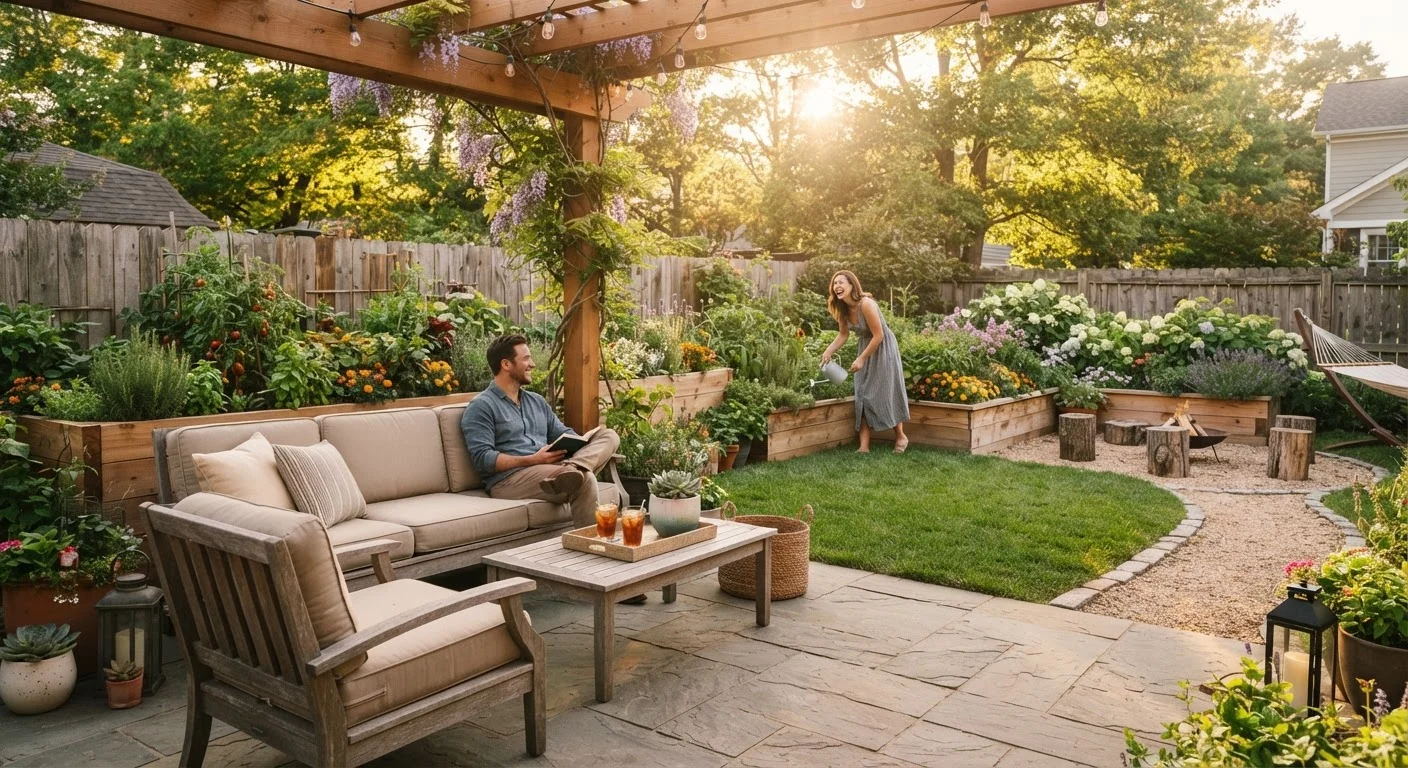
- Zoning your yard into functional areas - dining, play, planting, relaxation - makes every square foot work harder.
- Native and climate-adapted plants dramatically reduce the effort needed to sustain a healthy outdoor space.
- Starting with one well-executed zone beats stretching a limited budget across the whole yard at once.
Start With Honest Questions, Not Pinterest Boards
Most outdoor spaces fail not because of bad taste, but because they were designed for a fantasy lifestyle rather than a real one. Before choosing a paver pattern or plant palette, spend a week observing how you actually use your yard. When do you go outside? For how long? Do you eat meals outdoors, or mostly step out briefly? Are there kids or pets whose needs shape the space?
Write down your honest answers. A homeowner who spends evenings outside needs different lighting, seating, and plantings than one who's mostly outside on weekend mornings. Someone with two young children needs durable, open turf; a couple who entertains monthly needs a defined dining zone with privacy screening.
This same logic applies indoors, too - just as open-plan living has real practical trade-offs worth understanding before committing, outdoor layouts carry consequences that are costly to reverse. Think before you build.
Match Maintenance Load to Available Time
One of the most common mistakes homeowners make is installing a high-maintenance yard they don't have time to sustain. A lush perennial border or a fine-fescue lawn can look stunning, but if you can only commit two hours per week to upkeep, that beauty will unravel quickly.
For those with limited time, mulch is one of the most effective tools available - it suppresses weeds, retains moisture, and reduces how often beds need tending. Similarly, native plants adapted to your local climate require far less watering, fertilizing, and pest management than non-native ornamentals.
If you're working with a constrained budget, prioritize ruthlessly. Our guide on getting the most from a small renovation budget offers a useful framework for sequencing projects so early investments support later ones.
Zone Your Space for How You'll Actually Use It
Rather than treating your yard as a single undifferentiated area, divide it into zones based on activity. Common zones include: a hardscape area for dining or seating, a lawn or open area for play or recreation, a planting zone for edibles or ornamentals, and a utility zone for compost, storage, or a tool shed.
Zoning also helps you make smarter decisions about sun exposure, drainage, and traffic flow. A vegetable garden needs full sun and easy access from the kitchen. A seating area benefits from afternoon shade and wind protection. A compost system should be accessible but not in the center of social space - our guide to composting at home can help you site and manage it well.
For shaded corners that seem unusable, don't give up - shade gardening opens up spots where most plants struggle, turning problem areas into restful green retreats.
Plan for the Whole Year, Not Just Summer
A yard designed only for peak season will look bare or neglected for months. Think about what your outdoor space needs to offer across all four seasons - even if you live somewhere with mild winters.
In spring, consider early-blooming bulbs and cool-season edibles. Summer calls for shade structures, irrigation planning, and pest awareness. Fall is the ideal time for lawn aeration, overseeding, and putting beds to rest. In winter, structure and evergreen plants keep the space from looking abandoned. Our year-round lawn care task guide gives a season-by-season breakdown worth bookmarking.
If you're planning to grow food, starting a vegetable garden from scratch works best when you account for your local frost dates and sunlight patterns before ever picking up a trowel. And once plants are established, knowing when and how to prune correctly helps them stay healthy rather than setting them back.
Good outdoor design is less about aesthetics and more about rhythm - building a space that supports your life through every season, with maintenance demands you can actually meet. That's the yard worth having.