

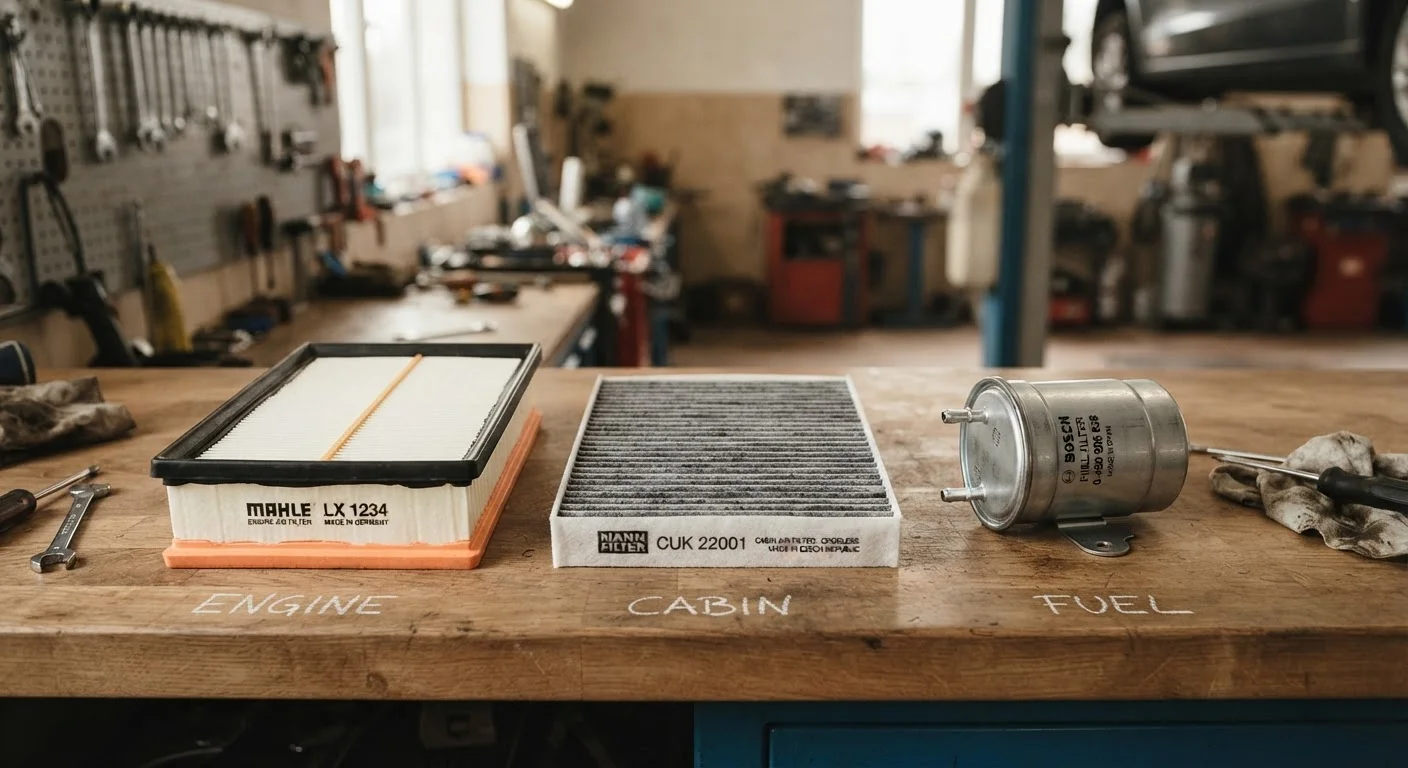
| Engine Air Filter Interval | Every 15,000-30,000 miles (varies by environment) (General manufacturer guidance; consult your owner's manual) |
| Cabin Air Filter Interval | Every 15,000-25,000 miles (General manufacturer guidance; urban/high-pollen areas may require more frequent changes) |
| Fuel Filter Interval | 30,000-60,000 miles for serviceable filters; some modern filters are lifetime-rated (Varies significantly by vehicle make and model) |
| What Engine Air Filter Protects | Engine combustion system |
| What Cabin Air Filter Protects | Passenger compartment air quality |
| What Fuel Filter Protects | Fuel injectors and fuel delivery components |
Three Filters, Three Jobs
Most drivers know their car has filters, but few can name what each one actually protects. Your vehicle runs at least three: an engine air filter, a cabin air filter, and a fuel filter. They share nothing but the word "filter" - each guards a completely different system, fails for different reasons, and has its own replacement schedule.
| Engine Air Filter Interval | Every 15,000-30,000 miles (varies by environment) (General manufacturer guidance; consult your owner's manual) |
| Cabin Air Filter Interval | Every 15,000-25,000 miles (General manufacturer guidance; urban/high-pollen areas may require more frequent changes) |
| Fuel Filter Interval | 30,000-60,000 miles for serviceable filters; some modern filters are lifetime-rated (Varies significantly by vehicle make and model) |
| What Engine Air Filter Protects | Engine combustion system |
| What Cabin Air Filter Protects | Passenger compartment air quality |
| What Fuel Filter Protects | Fuel injectors and fuel delivery components |
Confusing them is understandable. Shops sometimes bundle replacement recommendations without explanation, leaving drivers unsure whether a $20 swap is genuinely necessary or just upselling. Understanding what each filter does gives you the context to make that call confidently.
For a broader look at what else lives under the hood, see our guide to vehicle fluids.
Engine Air Filter: Protecting the Combustion Process
The engine air filter sits between the outside air intake and your engine. Its job is straightforward: remove dust, pollen, debris, and contaminants before they enter the combustion chamber. Engines need a precise mix of air and fuel to run efficiently - dirty or obstructed air intake throws that balance off.
A severely clogged engine air filter can reduce power, increase fuel consumption, and in extreme cases allow abrasive particles into the engine, accelerating wear on cylinders and piston rings. Most manufacturers recommend inspecting it every 15,000-30,000 miles, though drivers in dusty or rural environments may need more frequent changes.
Checking the engine air filter is typically a straightforward task - the housing is usually accessible without tools. A filter that looks visibly grey, matted, or packed with debris is overdue for replacement. A qualified mechanic can confirm the assessment if you're unsure.
Engine Air Filter
A replaceable filter that removes airborne contaminants - dust, pollen, and debris - from air entering the engine's combustion system. Keeping it clean helps maintain fuel efficiency and engine longevity.
Cabin Air Filter
A filter that cleans air flowing into the passenger compartment through the HVAC system. It captures pollen, exhaust particles, and mold spores to improve in-vehicle air quality.
Fuel Filter
A filter in the fuel delivery system that removes sediment, rust, and debris from gasoline or diesel before it reaches the injectors or carburetor. It protects precision fuel system components from damage.
Fuel Injectors
Precision components that spray a measured amount of fuel into the engine's combustion chamber. They have very tight tolerances and can clog or malfunction if contaminated fuel reaches them.
HVAC System
Heating, Ventilation, and Air Conditioning - the integrated system that controls temperature and airflow inside the vehicle cabin. The cabin air filter is a key component of this system.
Cabin Air Filter: What You're Actually Breathing
The cabin air filter is entirely separate from the engine air filter. It cleans the air that enters the passenger compartment through your heating, ventilation, and air conditioning (HVAC) system. It captures pollen, dust, exhaust particles, and mold spores before they reach you and your passengers.
Signs of a clogged cabin filter include reduced airflow from your vents, musty odors when the HVAC system runs, and increased allergy symptoms inside the vehicle. Many drivers overlook this filter entirely because it doesn't directly affect engine performance - but air quality inside a car with windows up can be significantly worse than outside air if the filter is neglected.
Replacement intervals typically fall between 15,000 and 25,000 miles, though this varies by manufacturer and driving environment. Urban drivers dealing with heavy traffic and exhaust may benefit from more frequent changes. The filter is commonly located behind the glove box or under the dashboard; access difficulty varies by vehicle model. If your home HVAC maintenance habits shape how you think about air filtration, note that vehicle cabin filters operate on similar principles - see how home HVAC filter care works for comparison.
Fuel Filter: Guarding the Fuel System
The fuel filter removes contaminants - rust particles, sediment, and debris - from gasoline or diesel before it reaches the fuel injectors or carburetor. Injectors have extremely fine tolerances; even small particles can clog them, cause misfires, or trigger hard starting and rough idle.
Fuel filters are often located either along the fuel line under the vehicle or inside the fuel tank as part of the fuel pump assembly. Because fuel system work involves flammable liquid and pressurized lines, this is generally a job for a qualified mechanic rather than a DIY task.
Replacement intervals have extended considerably in modern vehicles - some manufacturers rate integrated tank-mounted filters to last the life of the vehicle under normal conditions, while serviceable inline filters may be recommended at 30,000-60,000 miles. Check your owner's manual for the specification that applies to your vehicle. Symptoms of a failing fuel filter can include hesitation under acceleration, difficulty starting, or a significant drop in engine performance.
Always consult your vehicle's owner's manual and a qualified mechanic before undertaking any maintenance work. Fuel system repairs in particular carry safety risks and should not be attempted without appropriate training and equipment.