

Key Takeaways
- Pruning at the wrong time of year can eliminate flower buds or leave plants vulnerable to frost damage.
- Removing more than one-third of a plant's growth at once stresses roots and slows recovery.
- Dull or dirty tools create ragged wounds that invite disease and slow healing.
- Flush cuts that remove the branch collar disrupt the plant's natural wound-closure process.
- Not all plants follow the same pruning rules - knowing your species matters before you cut.
Why Pruning Goes Wrong More Often Than You'd Think
Pruning looks straightforward: grab your shears, remove what's overgrown, and step back. In practice, it's one of the most misunderstood tasks in home gardening. A poorly timed or poorly executed cut doesn't just look bad - it can stunt flowering, invite fungal infections, or take years to correct. Many of these errors stem from applying generic advice to plants with very specific needs, or simply inheriting habits passed down without much explanation.
Understanding what actually goes wrong - and why - is the most efficient path to healthier plants. This guide walks through the most common pruning mistakes everyday gardeners make, paired with practical guidance for avoiding them. For broader context on widely repeated gardening advice that deserves scrutiny, see our guide to garden myths.
Pruning spring-blooming shrubs in fall or early spring, just before they flower.
Why it happens: Gardeners assume the dormant season is always the right time to prune, not realizing spring bloomers set buds the previous growing season.
Removing more than one-third of a plant's total growth in a single pruning session.
Why it happens: An overgrown plant can tempt gardeners into drastic cuts, especially when the goal is to restore a tidy shape quickly.
Using dull or dirty pruning tools that crush stems and spread disease.
Why it happens: Blade maintenance gets overlooked because the cuts look passable to the eye, even when the plant experiences real trauma at the tissue level.
Making flush cuts that remove the branch collar along with the branch.
Why it happens: Flush cuts look cleaner aesthetically, and older pruning guides sometimes recommended them before research clarified the branch collar's role in wound closure.
Applying the same pruning schedule and method to every plant in the yard.
Why it happens: Gardeners often follow a single seasonal routine - trim everything in spring or fall - without accounting for the specific needs of each species.
Leaving long stubs when removing branches, expecting them to die back neatly.
Why it happens: Stubs seem like a conservative choice - cutting less feels safer. In reality, stubs die back unpredictably and create sites for rot and boring insects.
Timing, Technique, and a Healthier Garden
Getting pruning right is less about memorizing rules and more about understanding how plants grow. Most issues come down to three fundamentals: knowing when to prune your specific plant, knowing how much to remove, and using tools that are sharp and clean enough to make cuts the plant can actually heal from.
1/3
Maximum foliage to remove in one session
Horticultural extension programs generally advise removing no more than one-third of a plant's canopy at once to avoid shock and divert energy from root health.
45°
Recommended cut angle above a bud
A cut angled roughly 45 degrees about a quarter-inch above an outward-facing bud allows water to drain away and directs new growth outward from the plant's center.
Spring-blooming shrubs like lilacs and forsythia set their flower buds in summer and fall - pruning them in late fall or early spring removes next season's blooms before they ever open. Summer bloomers, by contrast, flower on new growth and generally tolerate late-winter pruning well. When in doubt, observe: note when your plant flowers, then research whether it blooms on old or new wood. That single distinction resolves the majority of timing confusion.
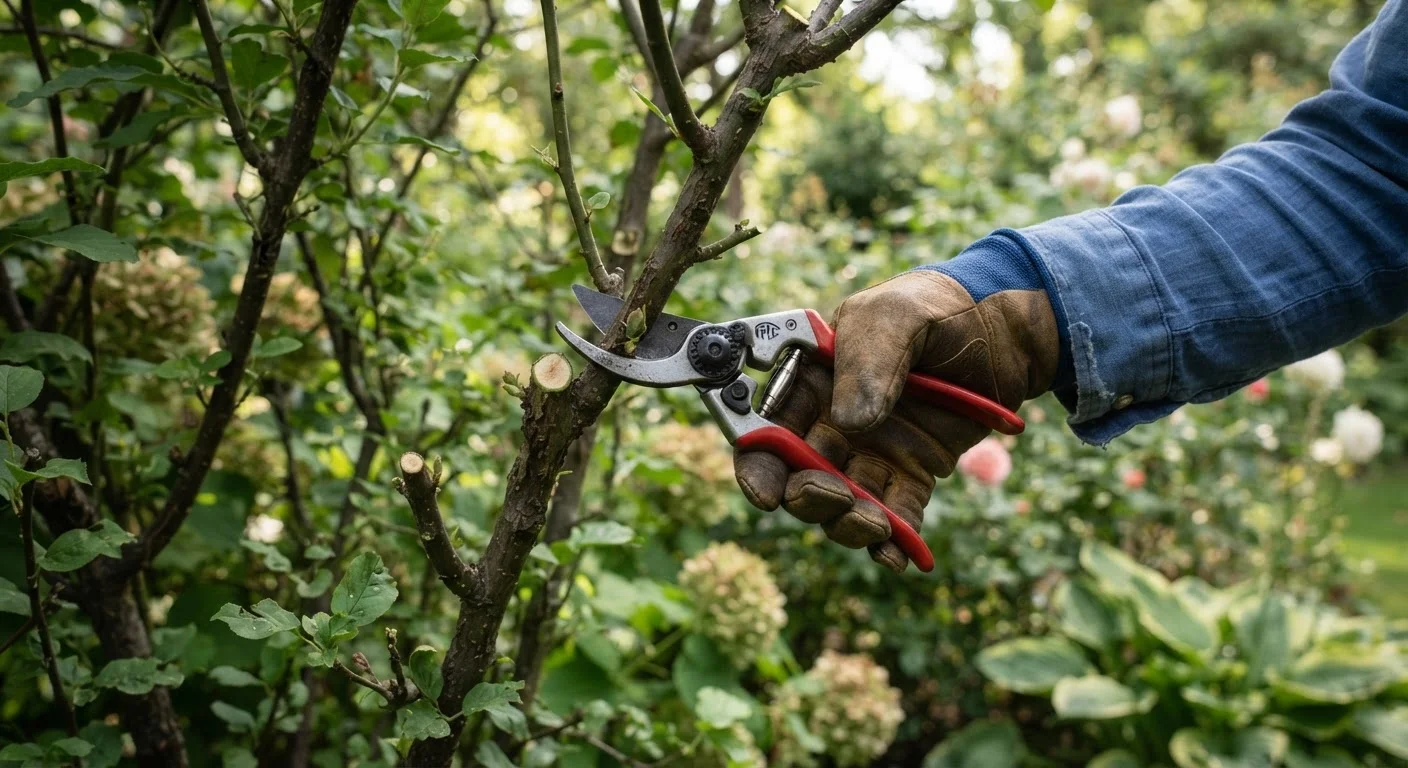
For cut placement, always aim just outside the branch collar - the slightly swollen ring of tissue where a branch meets the trunk or larger limb. This collar contains specialized cells that seal wounds. Cutting through it, or leaving a long stub that bypasses it, interferes with that process and creates an entry point for decay. A clean, angled cut just outside the collar is the most protective choice you can make.
Tool hygiene is often overlooked entirely. Pruning cuts made with blades contaminated from a diseased plant can spread pathogens like fire blight between cuts. Wiping blades with a diluted disinfectant solution between plants - or even between cuts on heavily infected material - is a straightforward habit that pays real dividends. Pair that with regular sharpening, and your tools become assets rather than liabilities.
Finally, resist the urge to over-correct in a single session. A neglected shrub trimmed back by more than a third at once channels the plant's energy into emergency regrowth rather than root development and flowering. Spread heavy rejuvenation pruning over two or three seasons for better outcomes. Your overall garden design benefits too - thoughtful pruning supports the kind of cohesive, livable outdoor space described in our outdoor lifestyle design guide.