

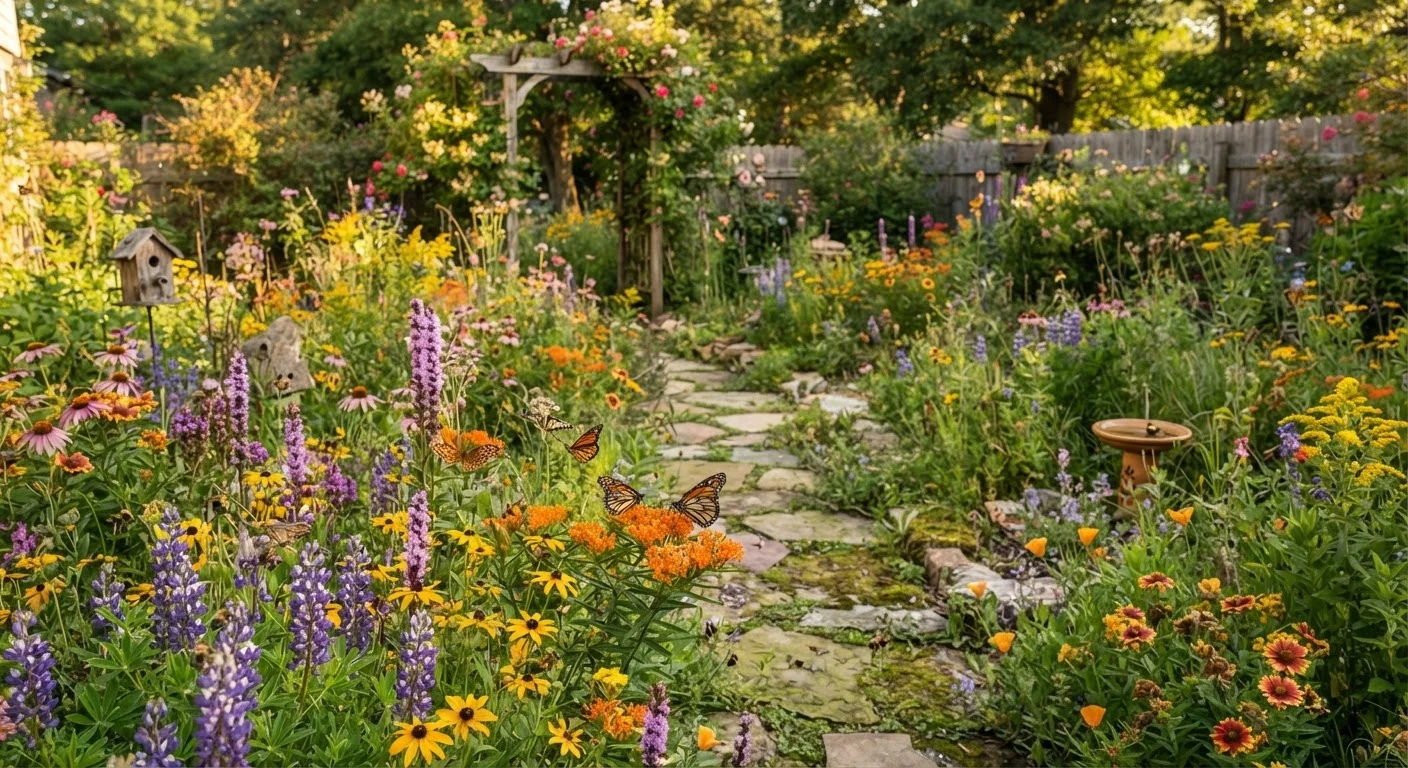
Key Takeaways
- Native plants are adapted to local soils and climate, often needing less water and fertilizer once established.
- They support local pollinators, birds, and other wildlife more effectively than most exotic ornamentals.
- The transition period requires patience - establishment can take one to three growing seasons.
- Some native plants spread aggressively, so plant selection and placement matter.
- Mixing natives with thoughtfully chosen non-invasive plants is a practical approach for most homeowners.
Lower water needs once established
Native plants are adapted to local precipitation patterns, so most require little to no supplemental irrigation after their first one to two seasons in the ground.
Reduced need for fertilizers and pesticides
Because they evolved in local soils alongside local insects, natives generally thrive without synthetic inputs, lowering both costs and chemical runoff.
Strong support for pollinators and wildlife
Native plants provide the specific food sources - pollen, nectar, seeds, and caterpillars - that local birds and beneficial insects depend on for survival and reproduction.
Deep root systems improve soil health
Many native perennials and grasses develop extensive root systems that reduce erosion, improve water infiltration, and build organic matter over time.
Long-term reduction in yard maintenance
Once a native planting is established, it typically requires less mowing, watering, and chemical treatment than a conventional lawn or ornamental bed.
Slow establishment period can test patience
Most native plants spend their first season building roots rather than producing showy growth, which can look sparse or unfinished compared to conventional plantings.
Limited availability at mainstream garden centers
True native species - as opposed to cultivars or mislabeled plants - can be difficult to source locally, often requiring specialty nurseries or plant society sales.
Some natives spread aggressively
Certain native groundcovers, grasses, and perennials spread by runners or self-seeding and can overtake neighboring plants if not placed and managed thoughtfully.
Requires regional research to get right
A plant native to one part of the country may be irrelevant or even unsuitable in another region, meaning gardeners need to invest time in identifying locally appropriate species.
Aesthetic transition may not suit all preferences
Native plantings, especially meadow-style designs, can look less manicured than traditional landscaping, which may conflict with neighborhood norms or personal taste.
Our Verdict
Native plants offer genuine, well-documented advantages for homeowners willing to invest time upfront in planning and establishment. They tend to reduce long-term maintenance, support local ecosystems, and perform reliably in the conditions they evolved in. The main challenges - slower establishment, limited retail availability, and occasional aggressive spreading - are manageable with good planning.
Homeowners who want a lower-maintenance, ecologically supportive yard and are willing to research regional species and commit to a multi-season establishment process.
What 'Native Plant' Actually Means
A native plant is one that evolved in a specific region over thousands of years without human introduction. This is more precise than it sounds: a plant native to the Southeast isn't necessarily native to the Pacific Northwest, even if it grows well there. Region, local soil type, rainfall patterns, and even elevation all shape what qualifies as truly native to a given area.
This distinction matters because native plants have co-evolved with local insects, birds, fungi, and soil microbes. Those relationships are often invisible to the eye but critical to a functioning yard ecosystem. When you replace them with ornamental exotics - even well-behaved ones - you can unintentionally sever those ecological threads. Understanding how soil conditions affect plant performance is a good first step before selecting any new additions to your yard.
The Real Advantages of Going Native
Once established, native plants typically ask less of you than conventional landscaping. Their deep root systems - some prairie grasses develop roots six feet or more deep - access groundwater that shallow-rooted exotics cannot, reducing irrigation needs significantly in many climates.
Lower water needs once established
Native plants are adapted to local precipitation patterns, so most require little to no supplemental irrigation after their first one to two seasons in the ground.
Reduced need for fertilizers and pesticides
Because they evolved in local soils alongside local insects, natives generally thrive without synthetic inputs, lowering both costs and chemical runoff.
Strong support for pollinators and wildlife
Native plants provide the specific food sources - pollen, nectar, seeds, and caterpillars - that local birds and beneficial insects depend on for survival and reproduction.
Deep root systems improve soil health
Many native perennials and grasses develop extensive root systems that reduce erosion, improve water infiltration, and build organic matter over time.
Long-term reduction in yard maintenance
Once a native planting is established, it typically requires less mowing, watering, and chemical treatment than a conventional lawn or ornamental bed.
Beyond water savings, natives eliminate or sharply reduce the need for synthetic fertilizers, because they're adapted to the nutrient levels in local soils. Pesticide use often drops too, since local insects and the plants they rely on have evolved a degree of balance. That balance supports pollinators: research from the University of Delaware and other institutions has consistently found that native trees, shrubs, and perennials support dramatically more caterpillar species - a foundational food source for nesting birds - than ornamental exotics.
Pairing a native planting scheme with smart mulching practices compounds these benefits. See our guide to mulch as a low-maintenance gardening tool for practical application advice.
The Honest Drawbacks
Native plants aren't a plug-and-play solution. The establishment phase - generally the first one to three growing seasons - can be slow and visually underwhelming. Plants spend that time building root systems, so top growth may be minimal. Impatient gardeners often mistake this for failure and pull plants prematurely.
Slow establishment period can test patience
Most native plants spend their first season building roots rather than producing showy growth, which can look sparse or unfinished compared to conventional plantings.
Limited availability at mainstream garden centers
True native species - as opposed to cultivars or mislabeled plants - can be difficult to source locally, often requiring specialty nurseries or plant society sales.
Some natives spread aggressively
Certain native groundcovers, grasses, and perennials spread by runners or self-seeding and can overtake neighboring plants if not placed and managed thoughtfully.
Requires regional research to get right
A plant native to one part of the country may be irrelevant or even unsuitable in another region, meaning gardeners need to invest time in identifying locally appropriate species.
Aesthetic transition may not suit all preferences
Native plantings, especially meadow-style designs, can look less manicured than traditional landscaping, which may conflict with neighborhood norms or personal taste.
Sourcing is another practical challenge. Many garden centers stock a limited native selection, and the plants labeled 'native' are sometimes cultivars (cultivated varieties) bred for showier blooms or compact form - traits that can reduce their ecological value compared to straight species. Reputable native plant nurseries, botanical garden sales, and regional native plant societies are generally more reliable sources.
Finally, it's worth recognizing that some natives spread vigorously. Native groundcovers and certain prairie species can overwhelm neighboring plants if placed without thought. Planning your outdoor space around how you actually use it helps you anticipate which plants belong where before they're in the ground.
How to Start Rethinking Your Yard
A full lawn conversion isn't necessary - or always advisable. Many successful native gardens begin with a single bed or a problem area, like a dry slope or a shaded patch where conventional grass struggles. Starting small lets you learn what works in your specific microclimate without committing the entire yard.
Check Your Region Before You Plant
What counts as 'native' depends heavily on geography. A plant native to coastal California may be poorly suited to the Midwest or Mid-Atlantic. Your state's cooperative extension service or a regional native plant society can provide free, location-specific planting guides. These resources typically account for your soil type, climate zone, and local wildlife needs in ways that general gardening guides do not.
Identify your region's native plant palette through your state's native plant society, a cooperative extension service, or resources from the Lady Bird Johnson Wildflower Center's plant database. These sources account for regional variation that national gardening guides often miss.
Be realistic about maintenance expectations in year one. Weed pressure is typically higher in freshly planted beds before natives fill in and shade out competitors. Consistency with weeding during establishment pays dividends in later seasons when the planting becomes more self-sustaining. Avoiding common gardening myths that can undermine even well-chosen plants will also help you make better decisions throughout the process.