

Key Takeaways
- Mulch reduces how often you need to water by slowing moisture evaporation from the soil surface.
- A 2-3 inch layer is the general sweet spot - too thin and it doesn't suppress weeds; too thick and it can suffocate roots.
- Organic mulches like wood chips and straw improve soil health as they break down over seasons.
- Keeping mulch a few inches away from plant stems and tree trunks prevents rot and pest problems.
- Different mulch types suit different garden situations - no single material works best everywhere.
Mulch
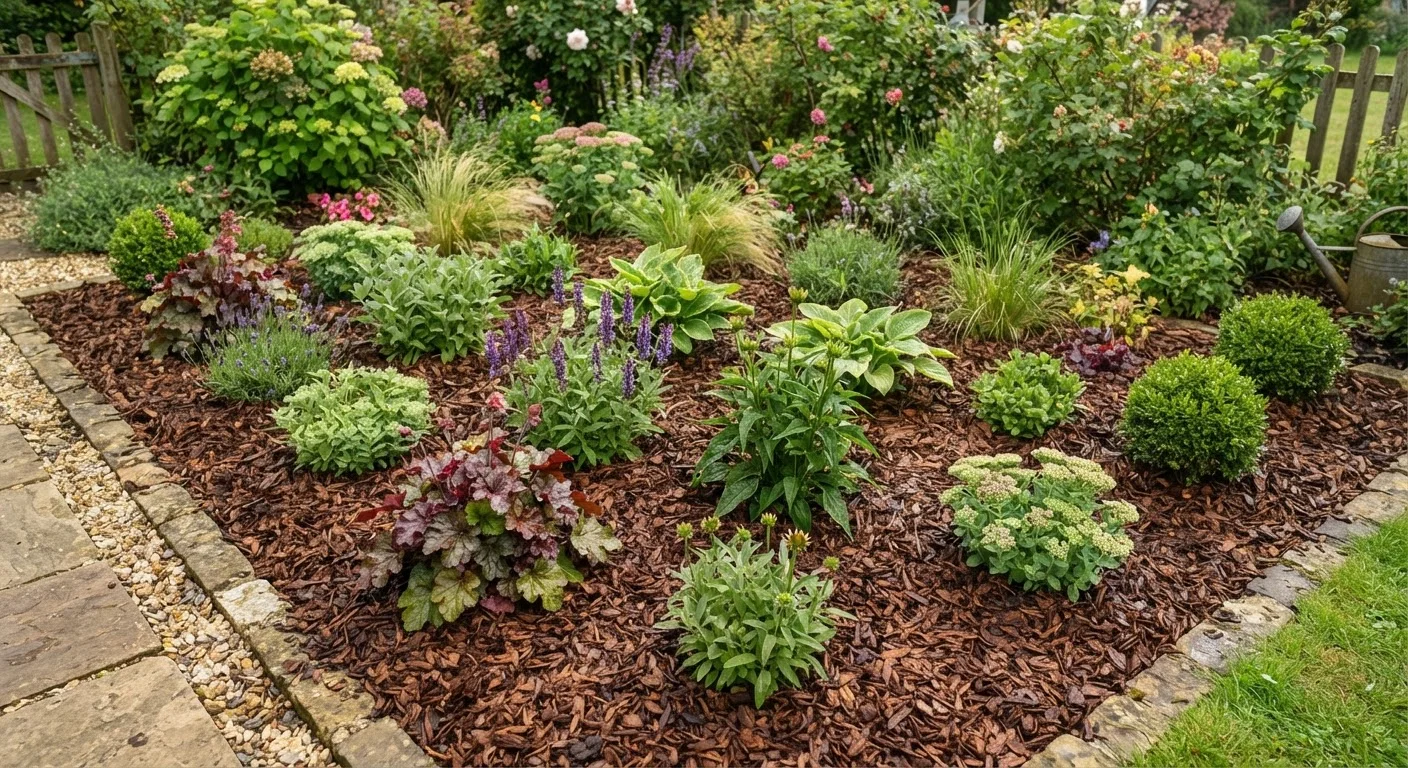
Mulch is any material spread over the surface of soil to protect and improve it. It acts as a barrier between the soil and the open air, slowing moisture loss, moderating soil temperature, and blocking weed growth. Mulch can be organic - meaning it breaks down over time - or inorganic, such as gravel or landscape fabric.
Organic mulches contribute to soil structure and microbial activity as they decompose, gradually adding organic matter that improves drainage in clay soils and water retention in sandy ones.
What Mulch Actually Does for Your Garden
Mulch works quietly in the background, performing several functions at once without requiring much attention after initial application. Its most immediate effect is moisture retention: a proper mulch layer can reduce the frequency of watering needed by slowing evaporation from the soil surface. For gardeners looking to use water more efficiently, this pairs well with other strategies - see our comparison of drip, sprinkler, and soaker hose irrigation for a fuller picture.
Beyond water savings, mulch moderates soil temperature. In summer, it acts as insulation that keeps roots cooler than they'd be in bare soil exposed to direct sun. In winter, that same insulating layer buffers roots against hard freezes. Soil that swings less dramatically in temperature tends to support more consistent plant growth.
Weed suppression is mulch's most visible benefit for most gardeners. A solid layer blocks light from reaching the soil surface, which prevents many weed seeds from germinating. Those that do sprout are easier to pull because the mulch keeps surface soil loose and moisture-retentive.
25-50%
Reduction in soil moisture loss with mulch
University extension programs consistently cite mulched beds requiring significantly less irrigation than unmulched equivalents under the same conditions.
2-3 inches
Recommended mulch depth for most garden beds
This depth is widely recommended by cooperative extension services as the effective range for weed suppression and moisture retention without harming roots.
10°F or more
Soil temperature buffering effect of mulch
Research from horticultural institutions suggests mulched soil can remain measurably cooler in summer heat compared to bare soil in the same conditions.
Organic vs. Inorganic: Choosing the Right Type
The broad split in mulch materials comes down to whether they decompose. Organic mulches break down over time and contribute nutrients and structure to your soil. Inorganic mulches are more permanent but don't improve the soil beneath them.
Common Organic Mulches
- Wood chips and shredded bark: Long-lasting, widely available, and effective around trees and shrubs. They break down slowly, so they don't need replacing as often as finer materials.
- Shredded leaves: A free resource from your own yard. Run a lawn mower over fallen leaves to shred them, then apply them to beds. They break down relatively quickly and add valuable organic matter.
- Straw: A good choice for vegetable gardens - lightweight, easy to apply, and it decomposes by season's end. Avoid hay, which contains viable weed seeds.
- Compost: When spread as a mulch layer, finished compost feeds soil life while suppressing weeds. It's an especially good option when paired with a homemade compost system - see our guide to composting kitchen scraps at home for how to get started.
Inorganic Options
- Gravel and crushed stone: Suitable for paths, drought-tolerant plantings, or areas where permanence matters more than soil improvement.
- Landscape fabric: Often used under stone or chip mulch to suppress weeds. Note that it degrades over years, can impede water infiltration, and tends to become difficult to remove - many experienced gardeners use it selectively if at all.
How to Apply Mulch Correctly
Application technique matters as much as material choice. Follow these principles for reliable results:
- Start with a clean bed. Pull existing weeds before mulching. Mulch suppresses new weed germination but won't smother established weeds already competing with your plants.
- Apply 2-3 inches evenly. This depth provides effective weed suppression and moisture retention without depriving roots of air and water. Use a rake to spread evenly.
- Keep mulch away from stems and trunks. Leave a gap of at least 2-3 inches around the base of plants and 6 inches around tree trunks. Mulch piled against stems traps moisture and creates conditions for rot and fungal problems - a mistake sometimes called "volcano mulching" around trees.
- Refresh as needed. Organic mulches decompose into the soil over time, which is beneficial - but it means the layer thins. Check depth each spring and fall and top up when it drops below 2 inches.
Avoid the "Volcano" Mulching Mistake
Piling mulch into a cone shape against a tree trunk - a common sight in residential landscapes - causes more harm than bare soil would. The constant moisture against bark invites rot, fungal disease, and can attract boring insects. Always keep the base of the trunk clear and spread mulch outward in a flat, even layer over the root zone.
Mulch is a natural complement to thoughtful plant selection. Gardens built around native plants often need less supplemental watering to begin with - combine them with mulched beds and your maintenance load drops substantially.
Matching Mulch to the Garden Situation
Not every mulch suits every spot. Here's a practical guide to matching material to context:
| Garden Area | Recommended Mulch | Why It Works |
|---|---|---|
| Vegetable beds | Straw, shredded leaves, compost | Breaks down quickly, adds nutrients, easy to incorporate at season's end |
| Trees and shrubs | Wood chips, shredded bark | Long-lasting, mimics natural forest floor conditions |
| Perennial flower beds | Shredded bark, compost | Stable layer that persists through the growing season without needing frequent replacement |
| Shade gardens | Shredded leaves, wood chips | Mimics natural woodland duff; suits plants adapted to shaded, moist conditions. See more about preparing shaded garden areas |
| Pathways | Gravel, coarse wood chips | Durable under foot traffic; purely functional |
Mulch also fits naturally into a broader seasonal garden routine. If you want a fuller picture of what to do in your yard across the year, our seasonal lawn care guide covers when mulching fits alongside other essential tasks.