

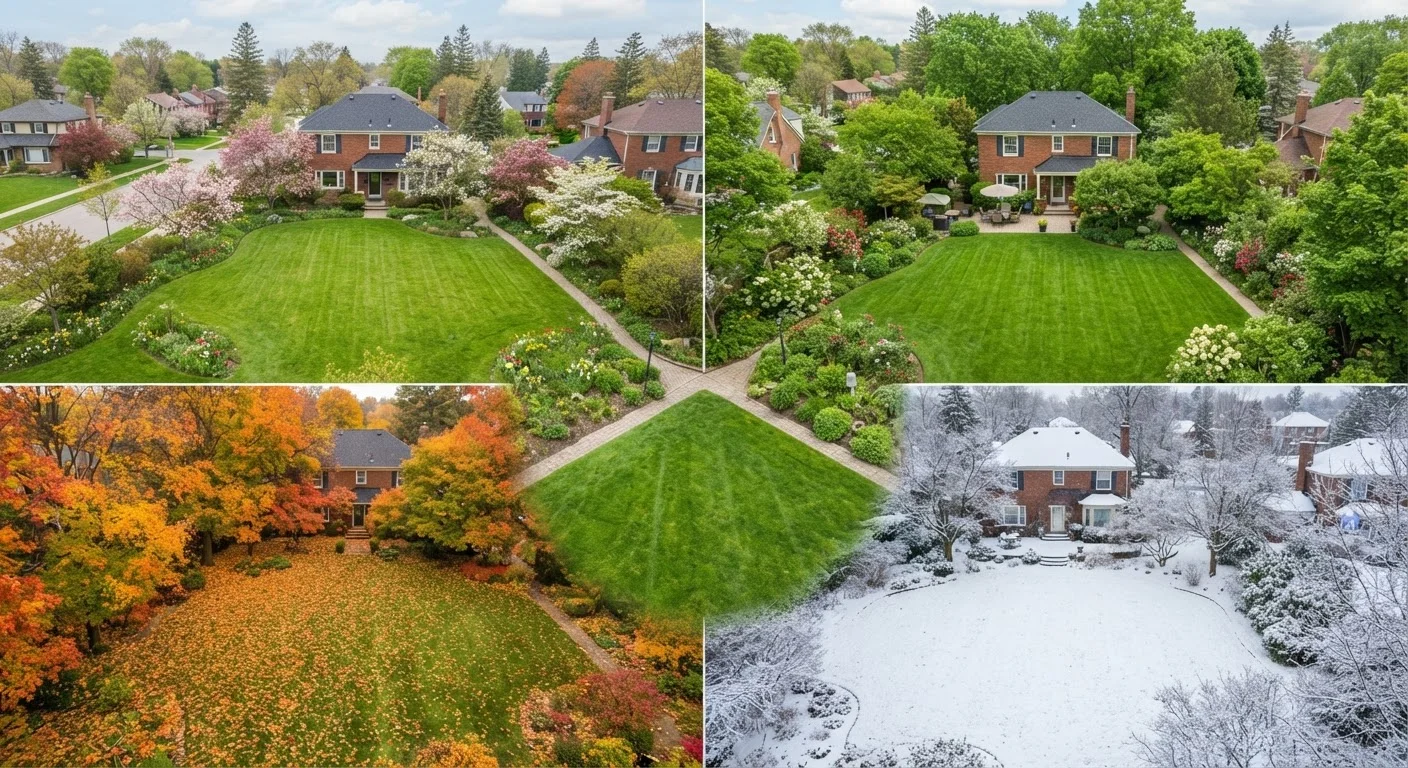
Key Takeaways
- Spring is the most critical season for setting your lawn up for year-round success.
- Summer care focuses on protecting grass from heat and drought stress.
- Fall is the ideal time to aerate, overseed, and prepare roots for winter.
- Winter dormancy requires minimal intervention but benefits from a few protective steps.
- Matching your lawn care routine to your grass type improves results significantly.
Summary
24 items · 30-60 minutes to review; ongoing seasonal implementation
Why Seasonal Lawn Care Matters
A healthy lawn doesn't happen by accident - it's the result of timed, consistent attention that works with the natural growth cycle of grass rather than against it. Different seasons create different conditions: shifting temperatures, rainfall patterns, and daylight hours all influence how your lawn grows, recovers, and prepares for what's ahead.
Skipping seasonal tasks - or applying the right treatment at the wrong time - can lead to thin turf, weed pressure, disease, and soil compaction that compounds over years. This checklist walks you through what your lawn actually needs in each season, helping you stay ahead of problems rather than reacting to them.
Your specific grass type matters too. Cool-season grasses (like Kentucky bluegrass, fescue, and ryegrass) thrive in spring and fall and go dormant in summer heat. Warm-season grasses (like Bermuda, zoysia, and St. Augustine) peak in summer and go dormant in winter. Many tasks in this guide apply broadly, but timing will shift based on which type you have. When in doubt, check with your local cooperative extension office for region-specific guidance.
This guide pairs well with your home's full seasonal maintenance cycle, since yard care is just one piece of keeping your property in top shape year-round.
Spring Lawn Care
Summer Lawn Care
Fall Lawn Care
Winter Lawn Care
Tools and Supplies You'll Need
Having the right equipment on hand before each season begins saves time and prevents mid-project trips to the hardware store. Below are the core tools referenced throughout this checklist.
Lawn Mower with Adjustable Deck
Used throughout the growing season; adjustable height allows season-appropriate cutting.
Core Aerator
Removes small plugs of soil in fall to relieve compaction and improve root access to nutrients.
Broadcast or Drop Spreader
Evenly distributes seed, fertilizer, and lime across the lawn.
Soil Testing Kit
Measures pH and basic nutrient levels to guide fertilizer and amendment decisions.
Garden Rake
Removes dead thatch, debris, and leaf buildup that can smother grass if left in place.
Oscillating Sprinkler or Drip Irrigation
Delivers consistent, deep watering with less water waste than hand-watering.
Dethatcher or Power Rake
Removes heavy thatch buildup that blocks water and nutrients from reaching soil.
You don't need to own every item - many equipment rental centers carry aerators, dethatchers, and spreaders at reasonable daily rates. For more on how ground-level materials like mulch support your overall lawn and garden strategy, see our guide on mulch in low-maintenance gardening.
Common Mistakes to Avoid Year-Round
Even well-intentioned lawn care can backfire if a few key missteps aren't avoided. Here are the most common pitfalls homeowners encounter across all seasons:
- Mowing too short: Cutting grass below its recommended height weakens roots and opens the door to weeds and disease. Most grass types do best when no more than one-third of the blade is removed per mowing.
- Overwatering: More water is not always better. Most established lawns need about one inch of water per week, including rainfall. Watering deeply and infrequently encourages deeper root growth.
- Fertilizing at the wrong time: Applying nitrogen-heavy fertilizer during summer heat or right before dormancy can stress or damage grass. Always fertilize according to your grass type's active growing season.
- Ignoring soil health: Compacted or pH-imbalanced soil limits how well grass absorbs nutrients and water. A simple soil test every two to three years guides smarter amendments.
Don't Apply Pre-Emergent and Seed at the Same Time
Pre-emergent herbicides work by preventing seed germination - and they can't distinguish between weed seeds and grass seed. If you're overseeding, wait until new grass is fully established (typically after two to three mowings) before applying any pre-emergent product. Applying both simultaneously will result in poor or failed germination of your desired grass.
Use Caution with Fertilizer Near Water Features
Fertilizer runoff into storm drains, ponds, or streams contributes to nutrient pollution and algae blooms. Apply fertilizer when rain is not forecast for at least 24-48 hours, and leave a buffer zone near any water features or property edges. Check your local municipality's guidelines, as some areas restrict certain fertilizer applications seasonally.
For a broader view of how lawn and outdoor care fits into your overall property upkeep, visit our complete home maintenance overview.