

Key Takeaways
- Aeration relieves soil compaction so air, water, and nutrients can reach grass roots.
- Core aeration is more effective than spike aeration for most home lawns.
- Cool-season grasses benefit most from fall aeration; warm-season grasses from late spring.
- Heavy clay soils and high-traffic lawns need aeration most urgently.
- Aerating at the wrong time or too frequently can stress rather than help your lawn.
Lawn Aeration
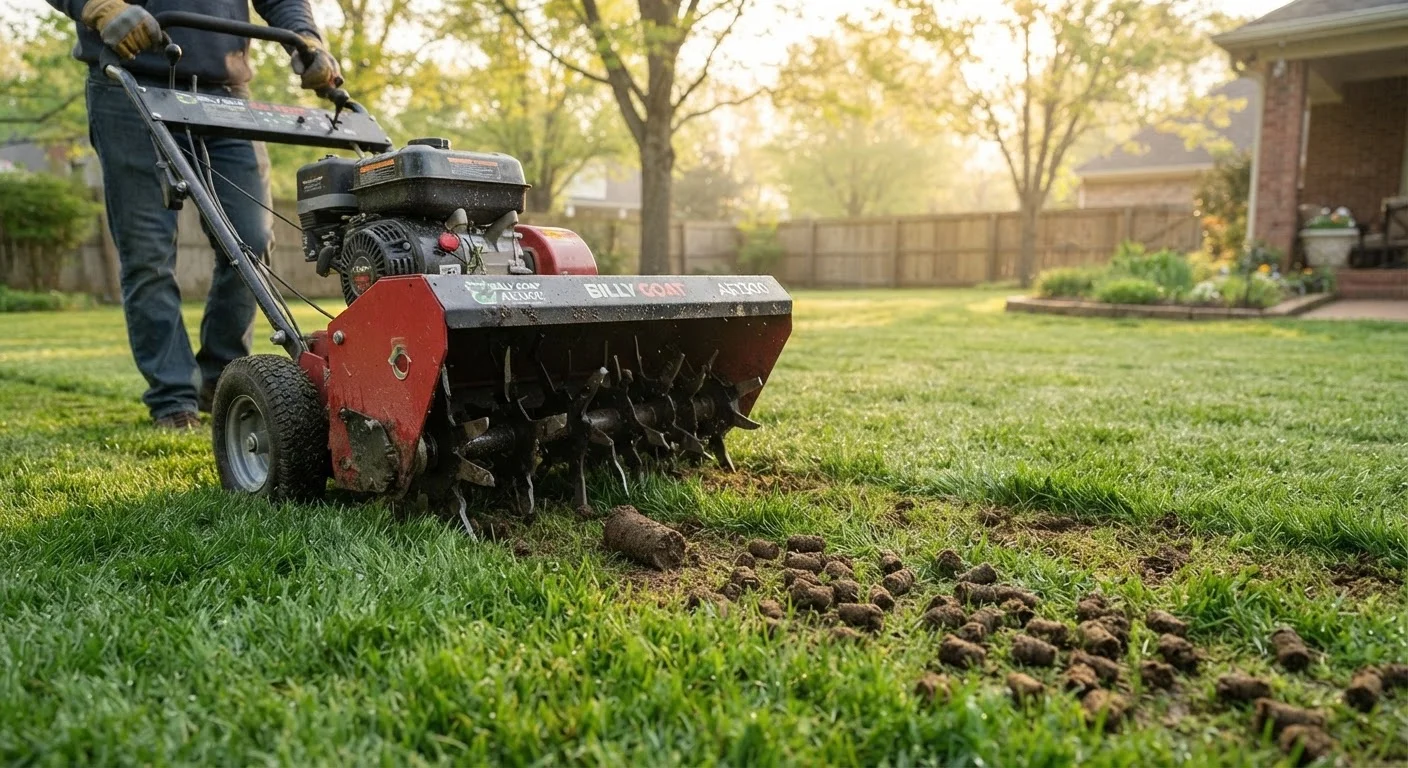
Lawn aeration is the process of creating small holes or channels in your lawn's soil to relieve compaction. These openings allow air, water, and nutrients to penetrate more deeply to grass roots. The most effective method - core aeration - removes small plugs of soil rather than simply poking holes, giving roots genuine room to expand.
Core (or plug) aeration is generally preferred over spike aeration because removing soil reduces compaction, whereas spike aeration can further compress surrounding soil particles.
What Compacted Soil Actually Does to Your Grass
Soil compaction happens gradually, often invisibly. Every time someone walks across a lawn, parks a vehicle on it, or even heavy rainfall hammers its surface, soil particles are pressed closer together. Over time, those gaps between particles - the ones that hold air and allow water to move - nearly disappear.
Without adequate air space, grass roots can't expand, water pools on the surface instead of soaking in, and fertilizer has nowhere to go. The grass may look thin, feel spongy underfoot, or develop bare patches despite regular watering. If you notice water running off your lawn rather than absorbing, compaction is a likely cause. Understanding your lawn watering habits alongside soil health gives you a more complete picture of what's holding your grass back.
2-3 inches
Ideal core depth for effective aeration
Tines that penetrate at least two to three inches reach the primary root zone where compaction most limits growth.
½ inch
Thatch thickness that signals a problem
A thatch layer exceeding half an inch can prevent water and air from reaching soil - often found alongside compaction issues.
2-4 inches
Recommended spacing between aeration holes
Closer spacing increases the benefit; most professional-grade aerators are set to this range for residential lawns.
How Aeration Fixes the Problem
Core aeration uses hollow tines - metal tubes mounted on a machine - to pull small cylinders of soil out of the ground, typically two to three inches deep and spaced about two to four inches apart. These channels immediately open pathways for air, water, and nutrients to move deeper into the soil profile where roots need them.
The removed plugs are left on the surface. Within a week or two, they break down and reintroduce organic matter back into the soil, which further improves soil structure over time. This is one reason core aeration consistently outperforms spike aeration: rather than displacing soil laterally (which can create further compaction around each hole), it actually removes material.
Aeration also makes an ideal preparation for overseeding, since grass seed has direct contact with loosened soil and establishes more reliably. If you're weighing options for a lawn overhaul, our comparison of grass seed vs. sod can help you decide what makes sense next.
Aerate Before You Overseed
If you plan to overseed your lawn, do it immediately after aerating. The open channels give seeds direct contact with loosened soil and significantly improve germination success. Apply a starter fertilizer at the same time to support new seedling development.
When Aeration Actually Helps - and When It Doesn't
Timing is what separates effective aeration from wasted effort. The general rule: aerate when your grass is in its active growing season so it can recover quickly and fill in the holes.
- Cool-season grasses (Kentucky bluegrass, tall fescue, ryegrass) grow most vigorously in fall. Aerating in late August through October lets the lawn recover before winter and gives overseeded grass a strong start.
- Warm-season grasses (Bermuda, zoysia, St. Augustine) peak in late spring and early summer. Aerate between May and early July for best results.
Heavy clay soils benefit most from regular aeration. Sandy soils drain naturally and compact less readily, making annual aeration less critical. A simple test: push a screwdriver into your lawn. If it meets significant resistance after a few inches, compaction is likely present.
Aeration won't solve every lawn problem. If your grass is struggling due to soil pH imbalance, for instance, loosening the soil won't fix nutrient lockout. Our article on soil pH and plant health explains how to identify and address that separate but related issue. For a full calendar of what your lawn needs and when, the year-round lawn care task guide is a reliable seasonal reference.
Signs Your Lawn Is Telling You It Needs Aeration
Not every lawn needs aeration every year. Watch for these signals that compaction has become a real problem:
- Water puddles or runs off the lawn after rain or irrigation, even on level ground
- The lawn feels hard underfoot or the soil is difficult to penetrate with a garden fork
- Grass thins in high-traffic areas like pathways, play areas, or along fence lines
- Thatch - the spongy layer of dead organic matter - is thicker than half an inch
- Grass looks stressed even with adequate water and fertilizer
If you recognize two or more of these signs, aeration is likely to produce a noticeable improvement within one growing season. Always water your lawn well the day before aerating - moist (not waterlogged) soil allows the tines to pull cores cleanly and reach adequate depth. Check out common garden myths to make sure other well-intentioned habits aren't working against your results.