

Key Takeaways
- Soil pH directly controls how well plants can absorb essential nutrients, regardless of how much fertilizer you apply.
- Most vegetables and lawn grasses perform best in slightly acidic to neutral soil, around pH 6.0-7.0.
- A simple soil test is the only reliable way to know your soil's actual pH.
- Lime raises pH in acidic soil; sulfur lowers pH in alkaline soil - but changes take time.
- Some plants, like blueberries and azaleas, actually prefer more acidic conditions.
Soil pH
Soil pH is a measure of how acidic or alkaline your soil is, expressed on a scale from 0 to 14. A pH of 7 is neutral; numbers below 7 indicate acidic soil, while numbers above 7 indicate alkaline (basic) soil. Most garden plants grow best in soil that falls somewhere between 6.0 and 7.0, where nutrients are most readily available to roots.
pH stands for 'potential of hydrogen' and reflects the concentration of hydrogen ions in the soil solution. Even small shifts on the scale represent significant chemical changes, since pH is logarithmic.
Why pH Matters More Than Most Gardeners Realize
You water faithfully. You fertilize on schedule. Yet your plants look pale, patchy, or simply stuck. Before assuming you need more fertilizer, consider what's often the real culprit hiding below the surface: soil pH that's out of range for what you're growing.
pH controls something called nutrient availability - essentially, whether the minerals already present in your soil exist in a form plant roots can actually absorb. Nitrogen, phosphorus, iron, and other essential nutrients each have a narrow pH window where they become chemically accessible. Outside that window, they lock up in the soil and become useless to your plants, no matter how much you've added.
Think of it this way: if your fertilizer is the food and the soil is the plate, pH determines whether plants can actually eat what's served. Understanding this relationship is foundational to diagnosing why plants struggle - and to building a productive vegetable garden from the beginning.
6.0-7.0
Optimal pH range for most garden plants
According to the University of Minnesota Extension, this range supports the broadest availability of essential nutrients for common vegetables and ornamentals.
4.5-5.5
pH range preferred by blueberries
Blueberries are among the most pH-sensitive common garden crops, requiring substantially more acidic conditions than the typical vegetable garden.
~3-6 months
Time for lime to meaningfully shift soil pH
Cooperative extension guidelines generally advise gardeners to allow at least one season after amendment application before retesting, as pH changes happen gradually.
Reading the Scale: What the Numbers Mean
The pH scale runs from 0 (extremely acidic) to 14 (extremely alkaline), with 7.0 as the neutral midpoint. In practical garden terms, the range you'll work within is far narrower - generally between 5.0 and 8.0.
- Below 6.0 (acidic): Phosphorus becomes less available. Manganese and aluminum may reach toxic levels. Common in pine-heavy areas or regions with heavy rainfall.
- 6.0-7.0 (slightly acidic to neutral): The sweet spot for most vegetables, grasses, and ornamental plants. Nutrient availability is broadest here.
- Above 7.5 (alkaline): Iron, manganese, and zinc become scarce. Plants may show yellowing between leaf veins - a symptom called chlorosis. Common in dry climates and areas with limestone-heavy soil.
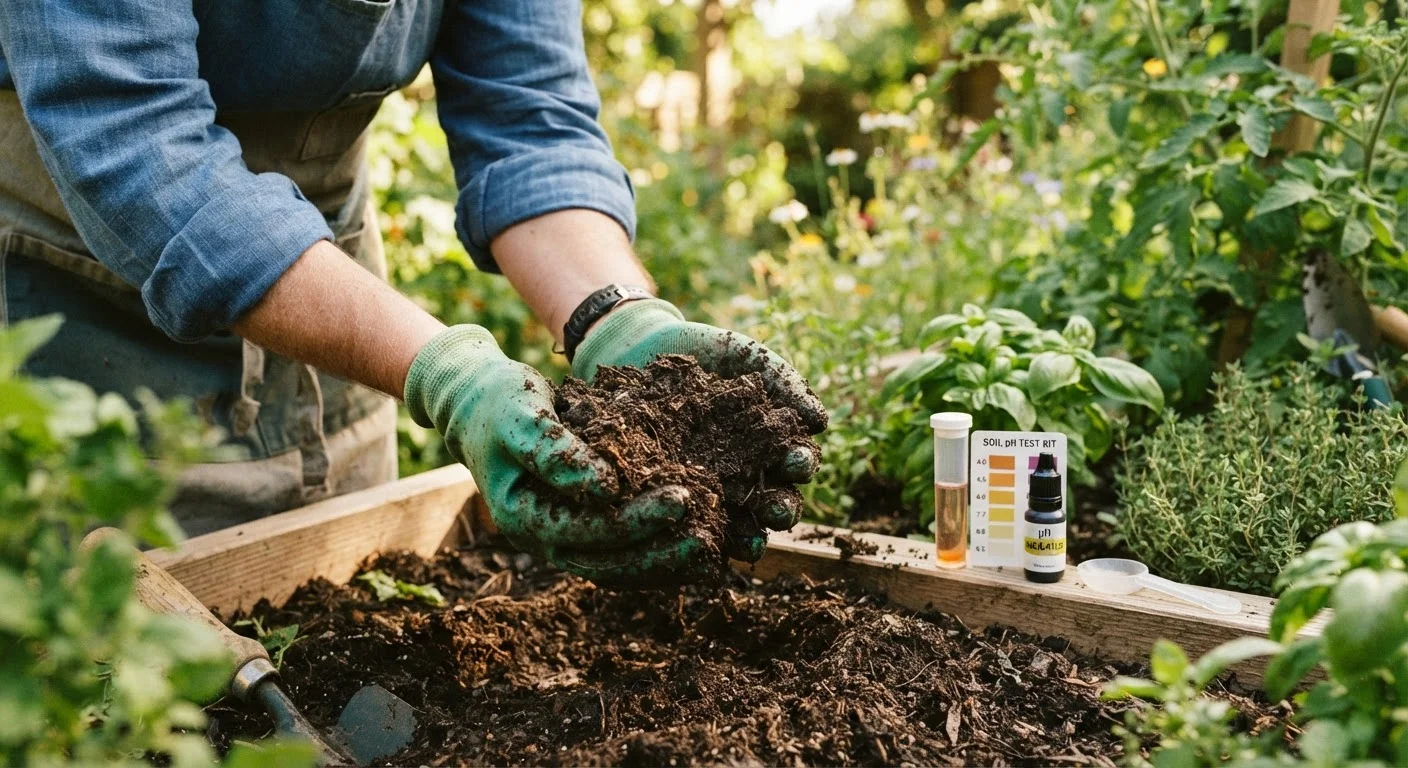
Knowing your region's typical soil tendencies gives you a useful starting point, but a proper soil test is the only way to know where your garden actually stands. Many university cooperative extension programs offer affordable testing - it's worth the investment before making any amendments.
How to Correct Soil pH - and What to Expect
Once you have a soil test result, you can take targeted action rather than guessing. Two primary amendments are used to shift pH:
- Garden lime (to raise pH): Ground limestone - either calcitic or dolomitic - is the standard solution for acidic soil. Dolomitic lime also adds magnesium, which can be beneficial in deficient soils. Work it into the top several inches of soil; don't just leave it on the surface.
- Elemental sulfur (to lower pH): Sulfur reacts with soil moisture and bacteria to gradually acidify the soil. It's the most practical amendment for bringing alkaline soil into range. Results are slower than lime, so patience is essential.
Spread amendments according to soil test recommendations - over-correction is a real risk. Retest after three to six months to evaluate progress. Since pH changes are gradual, this is a long-game effort, not a weekend fix. Pairing proper pH management with good soil structure - including practices like lawn aeration to reduce compaction - gives roots the most favorable environment possible.
Test Before You Amend
Never add lime or sulfur without a soil test first. Guessing at your pH - and applying amendments without data - can push the balance further out of range and create new nutrient problems. A test that costs a few dollars can save a full season's worth of frustration. Many state cooperative extension services offer inexpensive or subsidized testing.
Plant-Specific pH Preferences and Smarter Plant Choices
Not every plant wants the same soil conditions. Understanding pH preferences before you plant can save a lot of troubleshooting later.
If your soil consistently runs acidic and you find yourself fighting to raise it, consider leaning into that condition rather than battling it. Acid-loving native plants - many of which are well-adapted to regional soil types - can thrive where others struggle. Our article on native plants and yard design explores how working with your landscape's natural tendencies can reduce maintenance while supporting local ecosystems.
On the fertilizer side, knowing your pH also helps you interpret what N-P-K numbers mean more practically. If your pH is off, those numbers matter less - because plants can't access what's being offered. Fix the pH first, then fertilize purposefully.
This article provides general gardening information and education. Soil conditions vary widely by region and property. Consult your local cooperative extension service for soil testing resources and amendment guidance specific to your area.