

Key Takeaways
- Watering too frequently encourages shallow roots that are vulnerable to drought and heat stress.
- Midday watering wastes water through evaporation and can stress grass blades unnecessarily.
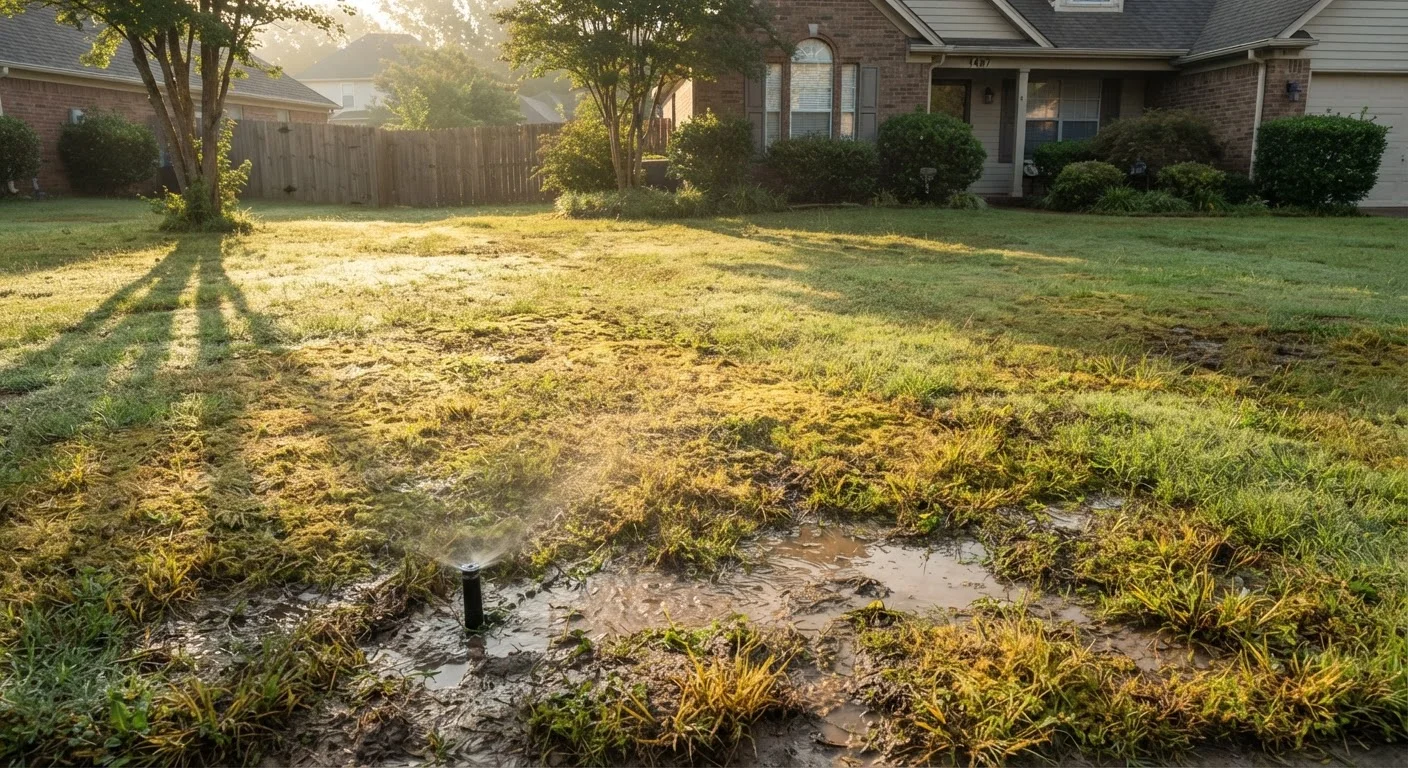
- Overwatering is one of the most common causes of lawn disease, thatch buildup, and weed pressure.
- Most established lawns need about one inch of water per week, including rainfall.
- Adjusting your watering schedule seasonally and after rainfall is essential for lawn health.
Why Good Intentions Lead to Lawn Problems
Most homeowners who damage their lawns with water aren't being careless - they're being attentive. The instinct to water more when grass looks stressed, or to stick to a rigid schedule regardless of weather, feels responsible. But lawn grass communicates stress in ways that are easy to misread, and water is frequently applied at the wrong time, in the wrong amount, and in the wrong way.
Understanding where these habits go wrong - and what to do instead - can make the difference between a lawn that merely survives and one that genuinely thrives. If you've noticed persistent thin patches, yellowing turf, or a spongy feel underfoot despite regular watering, the habits below are worth examining. Many of the same misunderstandings that affect irrigation also show up in broader lawn and garden myths worth questioning.
Watering every day on a fixed schedule regardless of recent rainfall or season.
Why it happens: Automated irrigation timers make it easy to set a schedule and forget it. Many homeowners assume consistency equals good care.
Watering lightly and frequently, which produces shallow, weak root systems.
Why it happens: Short daily watering sessions feel sufficient because the surface looks wet, but moisture rarely penetrates deep enough to encourage roots to grow downward.
Watering in the middle of the day when temperatures and evaporation rates are highest.
Why it happens: Midday watering is convenient, and some homeowners believe that wilting grass seen in afternoon heat needs immediate water.
Ignoring uneven coverage and assuming all lawn areas receive the same amount of water.
Why it happens: Sprinkler patterns overlap inconsistently, and slopes, shaded areas, and soil variation all affect how water is absorbed across a yard.
Overwatering, which leads to thatch buildup, fungal disease, and weed proliferation.
Why it happens: More water feels like more care, and browning or discoloration - which can actually be caused by overwatering - is often interpreted as a sign that more water is needed.
Building a Smarter Watering Routine
Correcting these habits doesn't require expensive equipment or a full irrigation overhaul. The most effective changes are scheduling and observation-based. Start by placing a small rain gauge or even an empty tuna can in your yard to measure how much water your sprinkler applies in a given run - this simple tool eliminates guesswork.
~50%
Outdoor water wasted through inefficient irrigation
According to the U.S. Environmental Protection Agency, roughly half of the water used for landscape irrigation is wasted due to overwatering, evaporation, and runoff.
1 inch
Weekly water most established lawns need
Most turfgrass extension programs from land-grant universities recommend approximately one inch of water per week, including rainfall, for established cool- and warm-season grasses.
Water deeply and infrequently: aim for one inch per week (including rainfall), delivered in one or two sessions rather than daily sprinkles. Early morning - generally between 6 a.m. and 10 a.m. - remains the most efficient window. Grass blades dry before evening, reducing fungal risk, and less water is lost to midday heat evaporation.
If your soil is compacted and water runs off before it can soak in, consider whether aeration might help. Lawn aeration loosens compacted soil so water, air, and nutrients can actually reach grass roots - particularly useful before establishing a new deep-watering routine.
For those looking to upgrade beyond a standard oscillating sprinkler, comparing irrigation methods can help you match the right delivery system to your yard's layout and soil type. And if you're starting fresh with new turf, watering needs differ significantly between established lawns and newly planted areas - see grass seed vs. sod for guidance on what each establishment method requires.
Don't Rely on Grass Color Alone
A yellowing or browning lawn can signal both drought stress and overwatering - two opposite problems. Before adding more water, probe the soil for moisture and look for other clues like spongy texture, fungal patches, or standing water. Acting on color alone often makes underlying problems worse rather than better.