

| Crack Width Threshold | ¼ inch or wider warrants professional evaluation (General structural inspection guideline) |
| Most Common Early Water Sign | Brown or yellow ceiling stain |
| Gas Leak Response | Leave immediately; call utility provider from outside (Standard safety protocol) |
| Attic Check Frequency | At least once per year, ideally each season (General home maintenance recommendation) |
| Sticking Doors or Windows | May indicate foundation movement or moisture swelling |
| Musty Odor Source | Often mold or mildew, typically linked to persistent moisture |
Your Home Is Always Communicating - Learn to Listen
Every house gives off signals. A faint musty smell, a door that suddenly sticks, a hairline crack along the baseboard - these aren't random quirks. They're your home's way of flagging something that needs attention. The difference between a minor fix and a costly repair is almost always how early you catch it.
Unlike a car with a dashboard full of warning lights, a house communicates subtly. Knowing what to look for - and where to look - is one of the most practical skills any homeowner can develop. This reference guide covers the most common early warning signs organized by category, so you can scan quickly and act confidently.
For a broader foundation, see the first-time homeowner's upkeep roadmap - it pairs well with this guide as a starting point for building regular maintenance habits.
| Crack Width Threshold | ¼ inch or wider warrants professional evaluation (General structural inspection guideline) |
| Most Common Early Water Sign | Brown or yellow ceiling stain |
| Gas Leak Response | Leave immediately; call utility provider from outside (Standard safety protocol) |
| Attic Check Frequency | At least once per year, ideally each season (General home maintenance recommendation) |
| Sticking Doors or Windows | May indicate foundation movement or moisture swelling |
| Musty Odor Source | Often mold or mildew, typically linked to persistent moisture |
Warning Signs by Category: What to Look For
Cracks and Structural Signals
Not all cracks are equal. Hairline cracks in drywall near window corners or door frames are common as a house settles and are usually cosmetic. Horizontal cracks in a basement or foundation wall, stair-step cracks in brick or block, or cracks wider than ¼ inch are more serious - these can indicate shifting soil, drainage problems, or structural stress. If doors or windows that previously opened smoothly suddenly stick or jam, that's worth noting alongside any visible cracks, as both can point to foundation movement.
Before undertaking any wall modification, review what homeowners should understand about load-bearing walls.
Water Stains, Dampness, and Odors
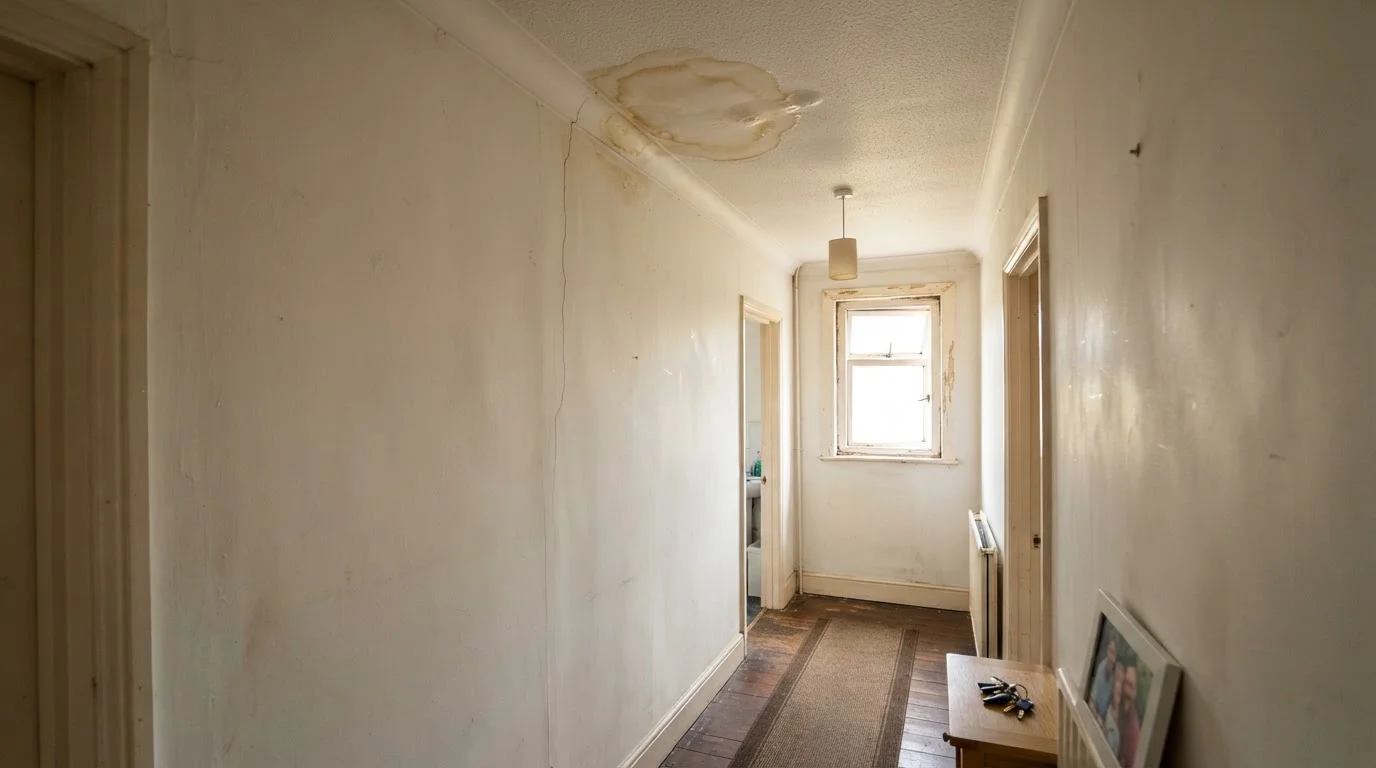
Brown or yellowish stains on ceilings or walls almost always mean water has been - or still is - present. Check if the stain is dry (older leak, possibly resolved) or soft and cool to the touch (active moisture). Musty odors in basements, closets, or crawl spaces strongly suggest mold or mildew. Even without visible staining, persistent dampness under sinks, around toilets, or near the water heater warrants investigation. See our guide on plumbing upkeep every homeowner can handle for a practical starting point.
Roof and Exterior Red Flags
From the ground, look for missing, curling, or granule-shedding shingles. Inside, check your attic after heavy rain for any daylight coming through, damp insulation, or dark staining on rafters. Peeling exterior paint or bubbling siding can indicate trapped moisture behind the surface - something covered in depth in what every homeowner should know about exterior paint and siding. For how roof materials age over time, roof lifespan and when repairs become urgent is a helpful companion read.
Sounds and Smells That Deserve Attention
A rotten-egg smell near gas appliances should prompt you to leave the home and call your utility provider immediately - do not attempt to investigate it yourself. Clicking or banging in walls when heating comes on is often just pipe expansion, but persistent banging may indicate a water hammer issue. Scurrying sounds in walls or ceilings, especially at night, commonly point to rodent or wildlife activity. Buzzing near outlets or in walls can signal electrical issues - always contact a licensed electrician for any electrical concern.
Efflorescence
White, chalky deposits that appear on concrete, brick, or masonry surfaces. They form when water moves through the material, dissolving salts that are then deposited on the surface as the water evaporates - often an early indicator of moisture intrusion.
Water Hammer
A banging or thumping sound in pipes caused by a sudden stop or change in water flow. It's usually harmless but can stress pipe joints over time if left unaddressed.
Vapor Barrier
A sheet of plastic or foil installed in crawl spaces or walls to limit moisture movement into the structure. A damaged or missing vapor barrier can allow ground moisture to elevate humidity levels throughout the home.
Soffit Vent
An opening in the underside of roof overhangs (soffits) that allows outside air to flow into the attic. Blocked soffit vents reduce ventilation, which can lead to heat buildup, ice dams, and moisture condensation in the attic.
Settlement Crack
A crack that forms as a building gradually compresses or shifts into the ground after construction. Minor settlement cracks near door frames and windows are common, but horizontal or widening cracks may indicate a more serious structural issue.
Hidden Spaces: Attics and Crawl Spaces
Problems in attics and crawl spaces often go unnoticed for years. Check attics for blocked soffit vents, condensation on the underside of the roof deck, or insulation that appears wet or compressed. Crawl spaces should be dry, with vapor barriers intact and no signs of standing water or pest damage. For a complete walkthrough, see attic and crawl space upkeep.
When to Call a Professional
Many of the signs above can be monitored by the homeowner, but some demand a licensed professional. Any suspected structural movement, gas odors, active electrical issues, or significant water intrusion affecting multiple areas should be evaluated by a qualified contractor, engineer, or inspector without delay. Permits may also be required before certain repairs are made - your local building department can clarify what applies in your jurisdiction.
Keep in mind that a standard home inspection has limitations. If you're buying a home or investigating a specific concern, a specialist - such as a structural engineer or waterproofing contractor - may give you a more complete picture than a general inspection alone. Why the home inspector's report isn't the final word explains these limits in detail.
Ultimately, reading your home regularly - walking through it with fresh eyes each season - is a habit that pays consistent dividends. The goal isn't to become an expert in everything; it's to recognize when something has changed and act before small signals become serious problems.