

Key Takeaways
- Testing shut-off valves annually ensures they'll work when you need them most.
- Slow drains and drips are early warning signs worth addressing before they escalate.
- Most basic plumbing upkeep requires no license - just the right knowledge and tools.
- Checking supply lines and flappers regularly can prevent hidden leaks and wasted water.
- Know when to call a licensed plumber - gas lines, main sewer issues, and burst pipes are not DIY tasks.
Why Routine Plumbing Maintenance Matters
Water damage is one of the most common - and costly - problems homeowners face. The good news is that many plumbing failures don't appear without warning. They start small: a valve that hasn't been exercised in years, a supply line showing early wear, or a toilet that runs just long enough to ignore. Catching these signals early is the core idea behind good upkeep.
This kind of routine attention is part of a broader home care habit. If you're building out a full maintenance calendar, the season-by-season maintenance guide is a useful companion - it maps out when plumbing checks fit naturally into your year. New owners will also find a solid starting point in the first-time homeowner's upkeep roadmap.
The tasks below are genuinely manageable for most adults. None require a plumbing license, and each one meaningfully reduces your risk of a surprise repair bill.
Exercise Your Shut-Off Valves Annually
Every fixture in your home - sinks, toilets, washing machines, water heaters - has an individual shut-off valve. These are your first line of defense when something goes wrong. The problem is that valves left untouched for years can seize or corrode, making them useless in an emergency.
Once a year, turn each valve fully clockwise (to close), then counterclockwise (to reopen). This keeps the mechanism limber. If a valve feels stiff, grinds, or leaks at the stem when you turn it, flag it for a plumber. Also locate your main shut-off valve - usually near the water meter or where the supply line enters the house - and make sure every adult in the household knows where it is.
A seized shut-off valve is useless in an emergency - test yours every year.
Inspect Supply Lines Under Sinks and Behind Toilets
The braided steel or plastic supply lines connecting your shut-off valves to fixtures are under constant low-level pressure. Over time, the fittings can loosen, the material can crack, or corrosion can set in - especially in humid under-sink cabinets.
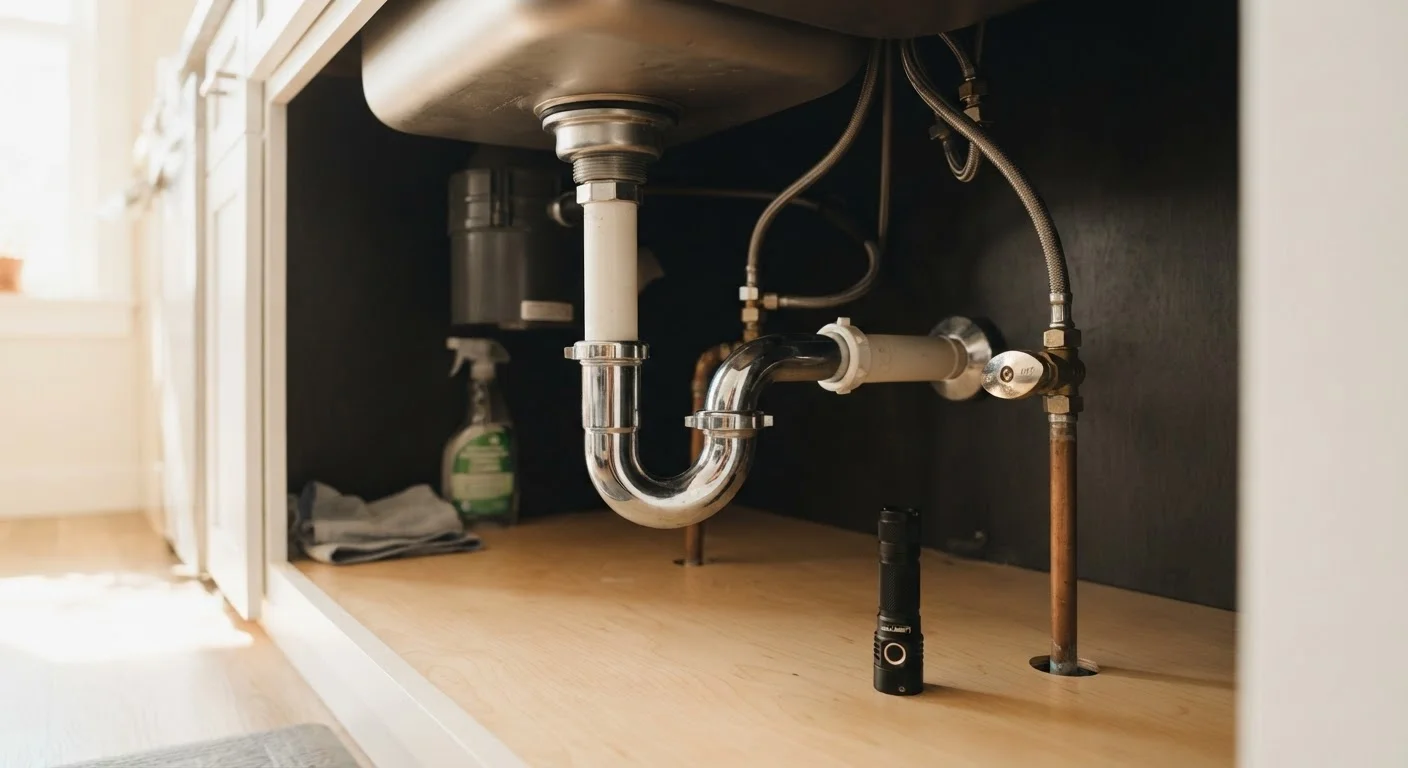
Every six months, clear out the cabinet beneath each sink and look at the supply lines with a flashlight. Feel for moisture around the connections. Look for bulging, discoloration, or any white mineral crust that indicates a slow drip. Supply lines are inexpensive and straightforward to replace when they show wear - waiting until one fails can mean a flooded cabinet or subfloor damage.
Supply line failures often give visible warnings - inspect them before they burst.
Check Your Toilet Flapper and Fill Valve
A running toilet is rarely a plumbing emergency, but it wastes a surprising amount of water and signals parts that need attention. The most common culprit is a worn flapper - the rubber seal at the bottom of the tank that controls water flow into the bowl.
To test yours, add a few drops of food coloring to the tank and wait 10-15 minutes without flushing. If color appears in the bowl, the flapper isn't sealing properly. Flappers are inexpensive and can be replaced without tools in most cases. While the tank lid is off, also check the fill valve: if the water level is creeping above the overflow tube, adjust or replace the fill valve to prevent constant running.
A simple dye test can reveal a leaking flapper before it wastes thousands of gallons.
Address Slow Drains Before They Clog Completely
A drain that empties slowly is telling you that buildup is accumulating in the pipe. Hair, soap residue, and grease gradually narrow the passage until water barely moves - or stops entirely.
For bathroom sink and tub drains, remove the stopper or drain cover and clear any visible debris by hand or with a small drain tool (often called a drain snake or hair clog remover). For kitchen drains, avoid pouring fats or cooking oil down the sink; wipe greasy pans with a paper towel before washing. Flushing drains periodically with hot water can help slow buildup. Avoid relying heavily on chemical drain cleaners - they can degrade older pipes over time and are hard on septic systems.
Clearing a slow drain today is far simpler than hydro-jetting a fully blocked pipe later.
Monitor Water Pressure and Check for Hidden Leaks
Normal household water pressure typically falls between 40 and 80 psi (pounds per square inch). Pressure significantly above that range stresses pipes, joints, and appliance connections. An inexpensive pressure gauge (threaded onto a hose bib) gives you a quick reading. If pressure is consistently high, a licensed plumber can install or adjust a pressure-reducing valve.
To check for hidden leaks, read your water meter, then avoid using any water for two hours. Read the meter again. Any movement in the reading points to a leak somewhere in the system - even if you can't see one. This test is especially worth running if your water bills seem higher than usual without an obvious reason. For a broader look at how this kind of proactive detection applies across your home, see the early warning signs guide.
A two-hour meter test can reveal a hidden leak with no tools beyond a notepad.
Give Your Water Heater Basic Attention
Your water heater is a plumbing appliance that benefits from periodic simple maintenance. Sediment - naturally occurring minerals in tap water - settles at the bottom of the tank over time, reducing efficiency and shortening the unit's life.
Flushing a small amount of water from the drain valve at the base of the tank once a year clears accumulated sediment. Also visually inspect the area around the unit for any signs of moisture or corrosion. The water heater efficiency guide walks through these steps in detail, including checking the anode rod - a component that protects the tank interior from corrosion and should be inspected every few years.
Annual sediment flushing is one of the easiest ways to extend a water heater's lifespan.
Staying Ahead of Bigger Problems
Plumbing upkeep overlaps with a broader principle: the earlier you catch a problem, the cheaper and simpler the fix. That same logic applies to other home systems - the guide to reading early warning signs covers how stains, odors, and sounds telegraph trouble before it becomes serious.
Keep a Simple Plumbing Reference at Home
Write down the location of your main shut-off valve, note which valves serve which fixtures, and keep a basic kit on hand: an adjustable wrench, plumber's tape (Teflon tape), a drain snake, and replacement flappers. Having these ready means you can respond quickly to minor issues before they grow. Snap a photo of your meter reading monthly - it takes seconds and gives you a baseline for leak detection.
Finally, know your limits. Tasks involving your main sewer line, gas-adjacent piping, or anything that requires cutting into walls or floors should be handled by a licensed plumber. Permits and inspections may be required for certain repairs depending on your municipality - always verify local requirements before starting any work beyond basic maintenance. When in doubt, a professional consultation is money well spent.