

Key Takeaways
- Solo travel carries real risks, but most are manageable with preparation and awareness.
- Traveling alone increases personal freedom but removes the built-in safety net of a companion.
- Simple habits - like sharing your itinerary and securing digital accounts - reduce your exposure significantly.
- Risk levels vary widely by destination, time of year, and individual traveler circumstances.
- Official government travel advisories are a reliable starting point for destination-level risk assessment.
Complete freedom over your itinerary and pace
Solo travelers can change plans at will, linger longer, or move on faster - without negotiating anyone else's preferences. This flexibility often leads to more authentic, spontaneous experiences.
Stronger self-reliance and problem-solving skills
Handling every logistical challenge alone builds real-world competence. Many solo travelers describe coming home with significantly greater confidence in their ability to manage uncertainty.
More opportunities for genuine local connection
Without an existing social group to retreat to, solo travelers often interact more with locals and other travelers. These encounters frequently become the most memorable parts of a trip.
Simpler decision-making on budget and priorities
Every spending choice reflects only your preferences - no splitting compromises or coordinating around different financial comfort levels. This can make budget management more straightforward.
No immediate backup when things go wrong
Illness, theft, missed connections, or emergencies must be handled entirely alone. The cognitive and emotional load of managing a crisis solo is meaningfully higher than handling it with a companion.
Higher visibility as a potential target for petty crime
Solo travelers - especially those who appear unfamiliar with their surroundings - are more commonly targeted by pickpockets and scammers in tourist-heavy areas than travelers in groups.
Digital security risks often go unmanaged
Relying heavily on a phone or laptop for navigation, banking, and communication while using public Wi-Fi creates real credential and data exposure that many travelers underestimate.
Medical situations are significantly harder alone
A minor illness or injury that a travel companion could help manage becomes a major logistical challenge when you're alone. Language barriers and unfamiliar health systems compound the difficulty.
Loneliness and decision fatigue are underreported realities
Extended solo travel can be socially and mentally taxing. Making every decision alone, with no one to share experiences with, contributes to burnout that can affect judgment and mood.
Our Verdict
Solo travel is a genuinely rewarding way to see the world, and for many people the benefits - autonomy, self-reliance, flexibility - outweigh the added caution required. The risks are real but rarely catastrophic when approached with honest preparation. No itinerary eliminates uncertainty, but informed solo travelers consistently manage it better than unprepared ones.
Best suited for travelers who are comfortable making independent decisions, willing to invest time in destination research, and prepared to handle unexpected situations without immediate support from a companion.
What Solo Travel Actually Looks Like
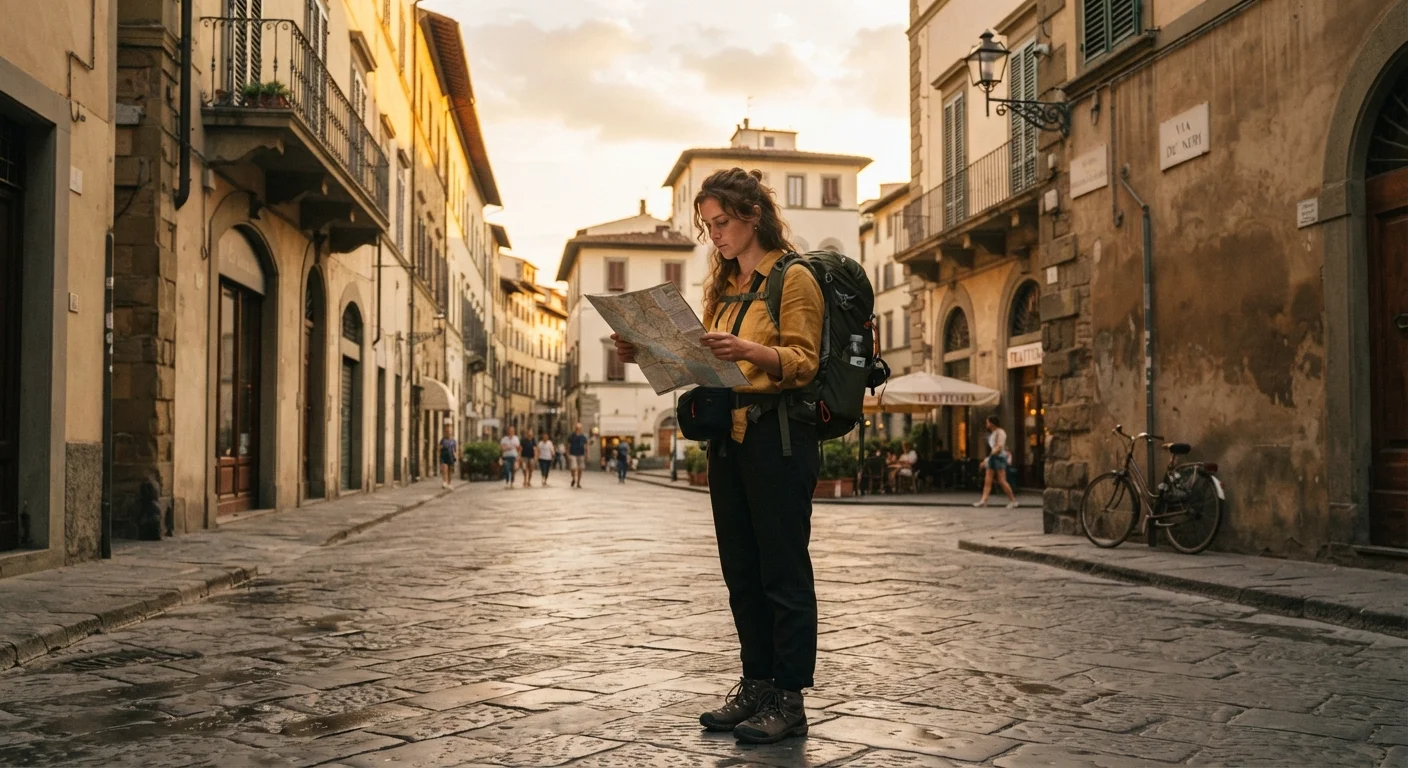
Solo travel means navigating every decision - logistics, budget, safety, even where to eat - on your own. That independence is often cited as the primary appeal: no compromises, no waiting, no group dynamics. But it also means there's no one next to you to notice if something goes wrong.
The experience varies enormously depending on destination, traveler profile, and preparation level. A solo trip through major Western European cities carries very different risk considerations than a remote trekking route in a region with limited infrastructure or political instability. Treating those as equivalent misrepresents both the opportunity and the hazard.
Before assessing risks, it helps to understand what most solo travelers are actually doing: booking mainstream destinations, staying in well-reviewed accommodations, using established transport, and following standard travel precautions. For those travelers, the practical risks are real - but largely the same ones any traveler faces, just without a companion buffer.
The Genuine Advantages
Complete freedom over your itinerary and pace
Solo travelers can change plans at will, linger longer, or move on faster - without negotiating anyone else's preferences. This flexibility often leads to more authentic, spontaneous experiences.
Stronger self-reliance and problem-solving skills
Handling every logistical challenge alone builds real-world competence. Many solo travelers describe coming home with significantly greater confidence in their ability to manage uncertainty.
More opportunities for genuine local connection
Without an existing social group to retreat to, solo travelers often interact more with locals and other travelers. These encounters frequently become the most memorable parts of a trip.
Simpler decision-making on budget and priorities
Every spending choice reflects only your preferences - no splitting compromises or coordinating around different financial comfort levels. This can make budget management more straightforward.
Solo travel builds a specific kind of confidence that's hard to replicate. When you navigate an unfamiliar transit system alone, resolve a booking problem in a foreign language, or find your footing in a new city without anyone to defer to, the competence you develop transfers well beyond the trip itself. Many solo travelers report that the self-reliance developed abroad changes how they handle challenges at home.
Compared to group trips, solo travel also tends to encourage more authentic local interaction. Without a ready-made social group, solo travelers are more likely to talk to locals, join hostel common rooms, or accept spontaneous invitations - experiences that often define the trip. See our honest look at group travel dynamics for context on how the two approaches compare.
The Real Risks Worth Taking Seriously
No immediate backup when things go wrong
Illness, theft, missed connections, or emergencies must be handled entirely alone. The cognitive and emotional load of managing a crisis solo is meaningfully higher than handling it with a companion.
Higher visibility as a potential target for petty crime
Solo travelers - especially those who appear unfamiliar with their surroundings - are more commonly targeted by pickpockets and scammers in tourist-heavy areas than travelers in groups.
Digital security risks often go unmanaged
Relying heavily on a phone or laptop for navigation, banking, and communication while using public Wi-Fi creates real credential and data exposure that many travelers underestimate.
Medical situations are significantly harder alone
A minor illness or injury that a travel companion could help manage becomes a major logistical challenge when you're alone. Language barriers and unfamiliar health systems compound the difficulty.
Loneliness and decision fatigue are underreported realities
Extended solo travel can be socially and mentally taxing. Making every decision alone, with no one to share experiences with, contributes to burnout that can affect judgment and mood.
The risks of solo travel aren't imaginary, and downplaying them doesn't serve anyone well. The most consistent concern is that solo travelers have no immediate backup. A missed flight, a medical episode, a theft, or a sudden change in local conditions lands entirely on you to resolve. In a group, one person handles logistics while another makes calls - alone, that all falls to you at your most stressed.
Petty crime is the most statistically common risk in tourist-heavy areas worldwide. Pickpocketing, phone snatching, and distraction-based theft disproportionately target travelers who are visibly unfamiliar with their surroundings. Solo travelers, often consulting their phones or looking around unfamiliar streets, can stand out more than they realize.
Digital safety is increasingly part of the travel risk picture. Using unsecured public Wi-Fi to access banking or email accounts exposes solo travelers to credential theft. Our guide on public Wi-Fi risks covers this in practical detail worth reading before you travel.
~72%
Solo travelers reporting petty theft as top concern
Surveys by travel insurance providers consistently find theft and loss of belongings are the most frequently reported travel incidents among solo travelers globally.
1 in 6
Americans who traveled solo in the past year
Travel industry research indicates solo travel has grown steadily as a share of overall leisure travel, with millions of Americans taking at least one solo trip annually.
Practical Precautions That Make a Difference
Experienced solo travelers tend to rely on a consistent set of habits rather than elaborate systems. The foundation is information: understanding your destination before you arrive. Government travel advisories - from sources like the U.S. Department of State - provide destination-specific risk levels and current alerts. These are a baseline, not a ceiling. Our guide on how to research a destination before you book covers a broader toolkit for building an accurate picture.
- Share your itinerary with someone at home who knows how to reach you and when to be concerned if they don't hear from you.
- Keep digital copies of your passport, travel insurance, and emergency contacts in a secure cloud account.
- Use a money belt or hidden pouch for your passport and a backup card; carry only what you need day-to-day in your wallet.
- Stay aware of your surroundings - headphones in both ears while navigating unfamiliar areas reduces situational awareness significantly.
- Know your emergency numbers for each country you're visiting; 911 is not universal.
Health preparation matters too. Solo travelers dealing with illness or injury abroad face those challenges without a companion to help. Review health and safety considerations for international travelers well before departure, and confirm your travel insurance covers medical evacuation, not just trip cancellation.
Travel Insurance Is Not Optional for Solo Trips
Travel insurance is especially important when you're traveling alone because there's no companion to share the burden of an emergency - financial or logistical. Policies vary widely; look specifically for coverage that includes emergency medical treatment and medical evacuation, not just trip cancellation. Read the actual policy document, not just the summary, and verify coverage limits apply to your destination. A licensed insurance agent can help you compare options appropriate to your circumstances.
Putting Risk in Perspective
Solo travel risk is real but often overstated in ways that discourage people from traveling at all - or that cause them to over-prepare for unlikely scenarios while missing practical ones. The traveler who spends hours researching theoretical dangers but doesn't back up their phone, share their itinerary, or check a travel advisory is less prepared than the one who does the basics well.
Risk also isn't static. It changes with destination, neighborhood, time of day, how you dress and carry yourself, your local knowledge, and - candidly - your traveler profile. Staying situationally aware in unfamiliar cities is a learnable skill, not a fixed trait. Most solo travelers who run into serious problems report in hindsight that there were warning signs they dismissed or didn't recognize - which is an argument for better preparation, not for staying home.
None of this guarantees a problem-free trip. Travel involves genuine uncertainty, and solo travel more so than most. But that uncertainty is part of what makes it formative - and with honest preparation, it's a risk that millions of people manage successfully every year.