

Key Takeaways
- Group travel reduces per-person costs in several categories but adds significant coordination overhead.
- Decision-making slows down as group size increases, affecting everything from restaurant choices to departure times.
- Shared accommodations and transportation are where groups typically see the clearest financial benefits.
- Mismatched budgets and travel styles are the most common sources of group travel friction.
- Setting expectations and designating a point person before departure prevents many common problems.
Shared costs reduce per-person expenses
Vacation rentals, car rentals, and private tours often cost meaningfully less per person when split across a group. Accommodation in particular can shift from a budget strain to a real saving.
Built-in safety and mutual support
Traveling with others reduces vulnerability in unfamiliar environments and ensures someone is present if a medical issue, travel disruption, or safety concern arises.
Shared experiences compound the memory value
Experiences are often more meaningful when witnessed together. Group travel creates a shared reference point that sustains relationships long after the trip ends.
Greater access to group-rate activities
Some tours, cooking classes, and guided experiences offer group pricing that's unavailable to solo or couple travelers, expanding the range of accessible options.
Confidence for less-experienced travelers
First-time or anxious travelers often find navigating unfamiliar airports, transit systems, and destinations significantly easier with experienced companions nearby.
Decision-making slows with every added person
Reaching consensus on restaurants, activities, and timing becomes progressively harder as group size increases. What takes a solo traveler two minutes can consume a group hour.
Mismatched budgets create sustained friction
When some travelers are comfortable spending freely and others are watching every dollar, every meal and excursion decision carries financial tension that doesn't dissipate on its own.
Different pacing needs cause resentment
Early risers, late sleepers, avid walkers, and low-energy travelers can coexist on a trip - but only if the itinerary is explicitly designed to accommodate the variation.
Logistics multiply, not just add
Coordinating check-in times, dietary needs, transportation capacity, and activity reservations for a group is a fundamentally different task than planning for one or two people.
Relationship strain is a real risk
Extended time in close quarters under travel stress surfaces personality differences and conflict styles that day-to-day life keeps quiet. Some travel friendships don't survive the trip.
Less spontaneity and individual flexibility
Impromptu itinerary changes that work easily for one traveler require renegotiating with the whole group, which can make group travel feel rigid compared to traveling independently.
Our Verdict
Group travel genuinely delivers on cost-sharing and shared memories, but it requires deliberate planning that solo and couples travel simply doesn't demand. The larger the group, the more structure you need to keep things from unraveling. For travelers who go in with realistic expectations and do upfront coordination work, it's often worth it.
Best for travelers who prioritize shared experiences, have flexibility on pace, and are willing to invest time in pre-trip logistics with people who have similar travel temperaments.
Why Group Travel Appeals - and Why It Complicates
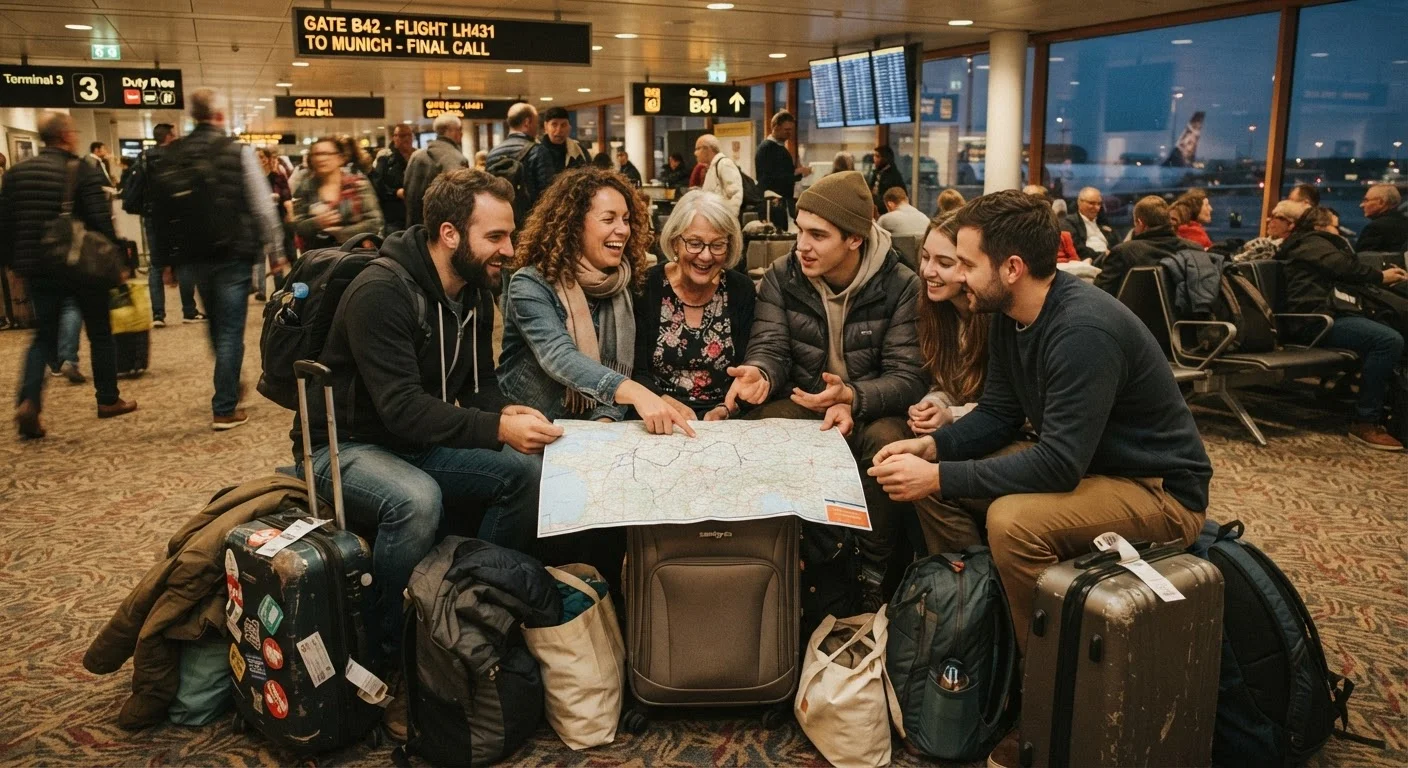
Traveling with friends or family is one of those ideas that sounds instantly appealing: split the costs, share the memories, and never eat alone at a restaurant. In practice, group travel can absolutely deliver on those promises. But it introduces a layer of coordination that solo or couple travel never requires. Understanding both sides honestly is the first step to making it work.
A group doesn't just add bodies - it multiplies decision points. Every preference, dietary restriction, budget ceiling, and activity interest becomes a variable to reconcile. The trip that felt simple at the planning stage can feel like a small logistics operation by day two. That's not a reason to avoid group travel, but it is a reason to plan differently than you otherwise would. Our trip planning guide walks through the structural layers that matter even more when multiple people are involved.
The Real Advantages of Traveling as a Group
Group travel's financial benefits are real and worth naming specifically. Shared vacation rentals, split vehicle rentals, and divided private tour costs can each represent meaningful savings per person compared to traveling individually.
Shared costs reduce per-person expenses
Vacation rentals, car rentals, and private tours often cost meaningfully less per person when split across a group. Accommodation in particular can shift from a budget strain to a real saving.
Built-in safety and mutual support
Traveling with others reduces vulnerability in unfamiliar environments and ensures someone is present if a medical issue, travel disruption, or safety concern arises.
Shared experiences compound the memory value
Experiences are often more meaningful when witnessed together. Group travel creates a shared reference point that sustains relationships long after the trip ends.
Greater access to group-rate activities
Some tours, cooking classes, and guided experiences offer group pricing that's unavailable to solo or couple travelers, expanding the range of accessible options.
Confidence for less-experienced travelers
First-time or anxious travelers often find navigating unfamiliar airports, transit systems, and destinations significantly easier with experienced companions nearby.
3-4x
Increase in planning touchpoints vs. solo travel
Travel researchers and group trip coordinators commonly note that decision points scale faster than group size, with coordination demands multiplying rather than adding linearly.
40-60%
Potential savings on accommodation per person
Vacation rental platforms frequently show per-person costs dropping significantly as the number of guests sharing a property increases from two to six or more.
Beyond cost, there are practical safety advantages - particularly relevant in unfamiliar destinations. Groups attract less opportunistic attention, can navigate unfamiliar transit together, and have built-in support if something goes wrong. For travelers with health considerations or those heading into remote areas, a travel companion isn't just convenient; it can be genuinely important.
Shared experiences also have an underappreciated emotional value. The dinners, the wrong turns, the unexpected moments - they tend to stick differently when they're witnessed together.
Where Group Travel Gets Difficult
The friction points in group travel are predictable once you know what to look for. Decision fatigue sets in fast when seven people need to agree on a dinner spot. Itinerary conflicts emerge when one person wants a museum morning and another wants to sleep in. Financial awkwardness surfaces when budgets don't align - a dynamic that strains friendships quickly.
Decision-making slows with every added person
Reaching consensus on restaurants, activities, and timing becomes progressively harder as group size increases. What takes a solo traveler two minutes can consume a group hour.
Mismatched budgets create sustained friction
When some travelers are comfortable spending freely and others are watching every dollar, every meal and excursion decision carries financial tension that doesn't dissipate on its own.
Different pacing needs cause resentment
Early risers, late sleepers, avid walkers, and low-energy travelers can coexist on a trip - but only if the itinerary is explicitly designed to accommodate the variation.
Logistics multiply, not just add
Coordinating check-in times, dietary needs, transportation capacity, and activity reservations for a group is a fundamentally different task than planning for one or two people.
Relationship strain is a real risk
Extended time in close quarters under travel stress surfaces personality differences and conflict styles that day-to-day life keeps quiet. Some travel friendships don't survive the trip.
Less spontaneity and individual flexibility
Impromptu itinerary changes that work easily for one traveler require renegotiating with the whole group, which can make group travel feel rigid compared to traveling independently.
Pacing is one of the most overlooked sources of tension. Over-scheduled group itineraries are especially prone to collapse - something our itinerary planning article addresses in depth. When one person is exhausted and another is energized, the group either fractures or someone quietly resents the compromise.
How to Manage the Coordination Before You Go
Most group travel problems are solvable in advance. The key is treating pre-trip planning as an actual project, not a casual group chat. A few habits that reduce friction significantly:
- Designate one point person per booking category - accommodation, transportation, activities. Shared responsibility often means no one follows through.
- Set a shared budget range early - not as a ceiling but as a range everyone's genuinely comfortable with. Mismatched expectations about money are the most common trip-ender.
- Build in opt-out time - structured free hours where individuals or smaller sub-groups do their own thing. This prevents the resentment that comes from forcing consensus on every moment.
- Use a shared document for confirmations, addresses, and timing. Relying on a group chat for critical logistics is a reliable way to lose information.
Group Size Changes Everything
The dynamics of a three-person trip and a ten-person trip are fundamentally different. Smaller groups (three to five people) retain enough flexibility to make real-time decisions together. Larger groups often need more rigid pre-planning - set itineraries, advance reservations, and designated decision-makers - to avoid paralysis. If your group is on the larger side, treat coordination as a dedicated pre-trip task, not an afterthought.
If your group is mixing travelers with very different comfort levels - some first-timers, some frequent fliers - consider timing your trip around conditions that suit the less-experienced travelers. Peak vs. off-season timing affects crowd levels and logistical complexity, which matters more when you're managing a group than when you're traveling alone.