

| N stands for | Nitrogen - promotes leafy green growth |
| P stands for | Phosphorus - supports roots, flowers, and seeds |
| K stands for | Potassium - builds plant resilience and stress tolerance |
| Numbers represent | Percentage by weight of each nutrient in the bag |
| Best way to choose a blend | Start with a soil test to identify what's missing |
| Remaining bag content | Carrier/filler material (not active nutrients) |
What Those Three Numbers Mean
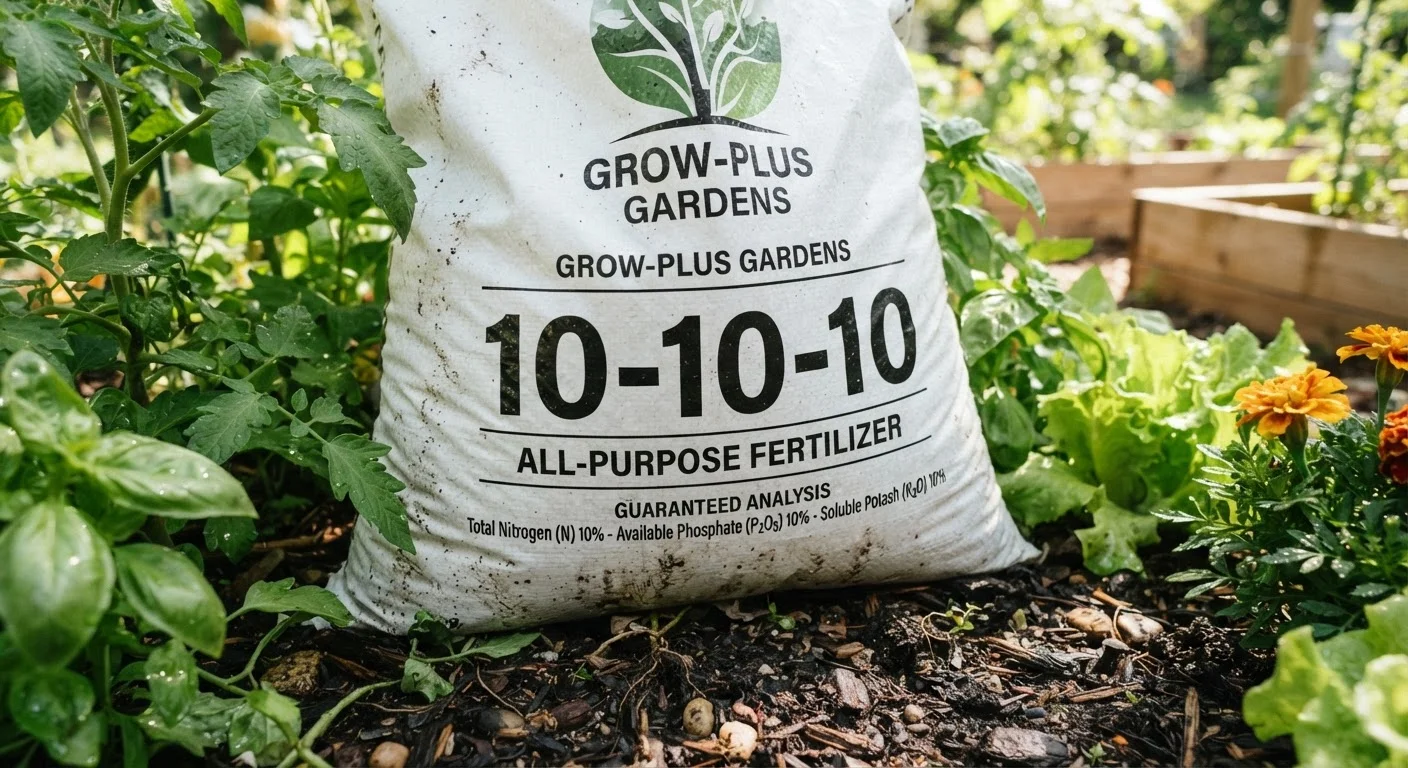
Every bag of fertilizer sold in the U.S. displays three numbers separated by hyphens - something like 10-10-10 or 21-0-0. These numbers represent the percentage by weight of three primary plant nutrients: nitrogen (N), phosphorus (P), and potassium (K), always listed in that exact order. Together, this trio is called the N-P-K ratio.
| N stands for | Nitrogen - promotes leafy green growth |
| P stands for | Phosphorus - supports roots, flowers, and seeds |
| K stands for | Potassium - builds plant resilience and stress tolerance |
| Numbers represent | Percentage by weight of each nutrient in the bag |
| Best way to choose a blend | Start with a soil test to identify what's missing |
| Remaining bag content | Carrier/filler material (not active nutrients) |
A bag labeled 10-5-5, for example, contains 10% nitrogen, 5% phosphorus, and 5% potassium. The remaining 80% is filler material - typically carrier agents that help distribute the nutrients evenly. This standardized labeling is regulated so you can compare products accurately before applying anything to your soil.
What Each Nutrient Does for Your Plants
Understanding what each element does helps you match the right fertilizer to your garden's actual needs - rather than guessing.
Nitrogen (N) - the growth driver
Nitrogen is responsible for leafy, green, vigorous growth. It fuels the production of chlorophyll, the pigment that enables photosynthesis. Lawns, leafy vegetables, and fast-growing annuals tend to be heavy nitrogen consumers. A deficiency typically shows up as yellowing leaves starting from the bottom of the plant upward.
Phosphorus (P) - the root and bloom builder
Phosphorus supports strong root development, flowering, and seed production. It's especially important when establishing new plants or encouraging transplants to anchor into the soil. Gardeners often use higher-phosphorus blends when starting seeds or planting bulbs. Note that phosphorus moves slowly through soil, so placement near the root zone matters.
Potassium (K) - the plant strengthener
Potassium regulates water movement within plant cells, supports disease resistance, and helps plants handle temperature stress. It plays a role in fruit quality and overall plant resilience. Deficiency signs include scorched or brown leaf edges, particularly on older leaves.
N-P-K ratio
The three-number code on fertilizer labels representing the percentage of nitrogen, phosphorus, and potassium by weight, always listed in that order.
Macronutrients
Nutrients plants need in the largest quantities. Nitrogen, phosphorus, and potassium are considered the three primary macronutrients.
Slow-release fertilizer
A fertilizer formulated to break down and deliver nutrients gradually over time, reducing runoff risk and the need for frequent reapplication.
Soil test
A laboratory or at-home analysis of your soil's nutrient levels and pH. Results help you choose the right fertilizer blend rather than applying nutrients blindly.
Chlorophyll
The green pigment in plant cells that captures sunlight for photosynthesis. Nitrogen is essential for its production.
How to Choose the Right N-P-K Ratio
The most reliable starting point is a soil test. Many university cooperative extension programs and garden centers offer affordable testing kits that tell you what your soil already contains, and what it lacks. Applying nutrients your soil doesn't need can cause harm - excess nitrogen, for instance, can burn plants and contribute to runoff.
As a general guide:
- Established lawns: Often benefit from higher nitrogen (e.g., 30-0-4 or 28-3-8), especially during active growing seasons.
- New lawns or seeding: A balanced or higher-phosphorus blend encourages root establishment.
- Vegetable gardens: Balanced formulas (10-10-10) work well at the start of the season; switch to lower-nitrogen options once fruiting begins.
- Flowering plants and bulbs: Higher phosphorus supports bloom development.
- Trees and shrubs: Slow-release, balanced or low-nitrogen formulas support steady growth without forcing excessive soft growth.
Keep in mind that nutrient availability is closely tied to soil pH. Even if the right nutrients are present, plants can't absorb them efficiently outside a suitable pH range. See our guide to soil pH and plant health for more on this connection.
Granular, Liquid, and Slow-Release Forms
N-P-K numbers don't tell the whole story - the form of fertilizer affects how quickly nutrients become available to plants.
- Granular fertilizers are spread dry and typically require watering in. They're easy to apply over large areas.
- Liquid fertilizers are diluted and applied through a hose-end sprayer or watering can. They act quickly but may need more frequent reapplication.
- Slow-release formulas deliver nutrients steadily over weeks or months, reducing the risk of over-application and nutrient runoff.
Whether a fertilizer is organic or synthetic also shapes how it feeds your soil and plants over time. Learn how organic and synthetic fertilizers differ to decide which approach fits your garden goals.
This article provides general gardening education. Fertilizer application needs vary by soil type, plant species, climate, and local regulations. Always follow label instructions, and consult your local cooperative extension service for guidance specific to your region.