

Key Takeaways
- Aging-in-place modifications reduce fall risk and improve daily comfort for all household members.
- Many accessible upgrades - like lever handles and better lighting - are low-cost and high-impact.
- Structural changes such as wider doorways may require permits and a licensed contractor.
- Planning accessibility improvements early costs less than retrofitting after a health event.
- Universal design principles make homes more functional for children, parents, and guests of all abilities.
Why Accessible Design Works for Every Household
The phrase "aging in place" often conjures images of older adults planning for retirement years - but the home modifications that support safe, comfortable living as we age tend to benefit everyone under the same roof. A well-placed grab bar helps a parent recovering from knee surgery just as much as it steadies a toddler learning to use the toilet. Wider doorways ease the path for a stroller, a delivery cart, or a wheelchair alike.
Universal design - the idea that spaces should work for people across a wide range of abilities and life stages - is increasingly influencing how homeowners approach renovation. The good news: many of these changes are modest in cost, and the most meaningful ones often pay dividends in comfort and safety long before anyone has a specific mobility need. If you're already thinking about stretching your renovation budget, accessible upgrades are an especially smart place to focus.
Below are eight modifications worth considering, ordered roughly from simplest to more involved. Each can meaningfully improve daily life - not just someday, but right now.
Swap Doorknobs for Lever Handles
Round doorknobs require a firm grip and wrist rotation - difficult for anyone with arthritis, wet hands, or limited hand strength. Lever-style door handles operate with a simple downward push of the elbow or forearm, making them useful for people carrying groceries, pushing a stroller, or managing reduced hand function.
Lever handles are widely available, straightforward to install with basic tools, and come in finishes that suit any interior style. This is one of the most cost-effective accessibility upgrades a homeowner can make, with minimal disruption.
Lever handles work with an elbow push - a genuine upgrade for everyone, not just older adults.
Install Grab Bars in Bathrooms
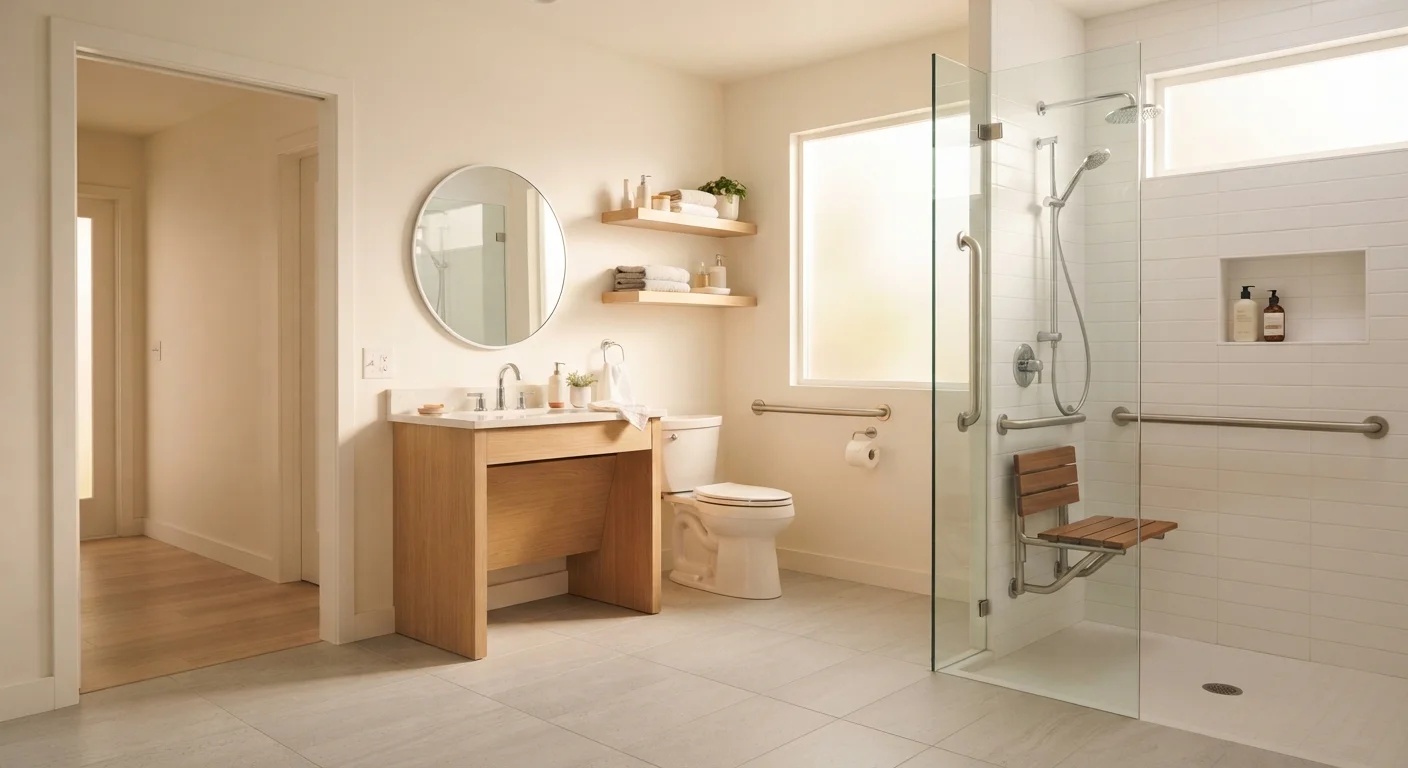
Falls are among the most common home injuries for all age groups, and the bathroom is a frequent location. Grab bars installed near the toilet and inside the shower or tub give users a secure handhold during transitions - sitting, standing, stepping over a threshold - that meaningfully reduce fall risk.
Modern grab bars are available in brushed nickel, matte black, and other finishes that blend with contemporary design. For bars to be load-bearing, they must be anchored into wall studs or with wall anchors rated for the appropriate weight. When in doubt, hire a professional to ensure correct installation.
Properly anchored grab bars must be fastened into studs - never rely on standard drywall anchors alone.
Improve Lighting Throughout the Home
Adequate lighting is one of the most overlooked safety factors in home design. Stairways, hallways, and entry points are especially important. Motion-activated night lights in bathrooms and hallways allow for safe navigation without the need to find a switch in the dark - a practical benefit for everyone from young children to older adults.
Adding under-cabinet lighting in kitchens, illuminating switches with locator lights, and ensuring exterior entry areas are well-lit all reduce trip hazards and improve daily confidence. These are low-disruption upgrades that often don't require a licensed electrician for simple plug-in or battery-powered solutions.
Motion-activated night lights in hallways and bathrooms are among the simplest safety upgrades available.
Add a Handrail to Every Staircase
Building codes in most jurisdictions require at least one handrail on any staircase with more than a certain number of steps, but many older homes were built before stricter standards or may have rails that are loose, low, or poorly positioned. A secure handrail on both sides of a staircase is strongly worth considering.
Rails should be graspable along their entire length and return to the wall or post at both ends - this prevents a sleeve from catching. Verify that any existing rails are firmly anchored before relying on them, and check home maintenance guidance for ongoing inspection habits.
A graspable handrail that runs the full length of the staircase is a non-negotiable safety feature.
Widen Doorways to 36 Inches
Standard interior doorways are typically 28-30 inches wide - functional for most pedestrians but too narrow for a wheelchair, walker, or wide medical equipment. Widening doorways to 36 inches makes a home substantially more navigable for anyone using mobility aids, and also simply easier to move furniture through.
This is a structural change that generally requires a permit and a licensed contractor, particularly if the wall is load-bearing. Plan for this during a broader renovation if possible - it's far less costly when done alongside other work. Consult a professional to assess your specific wall configuration before beginning.
Widening doorways to 36 inches during an existing renovation is far cheaper than retrofitting later.
Install a Walk-In or Curbless Shower
Traditional tub-shower combinations require stepping over a ledge - a balance challenge that increases fall risk significantly. A curbless (zero-threshold) shower eliminates that step entirely and also makes cleaning easier. Paired with a fold-down shower bench and a handheld showerhead on an adjustable slide bar, this creates a bathing space that works comfortably across ability levels.
Walk-in shower conversions involve plumbing work, waterproofing, and often tile work. This is a project that requires licensed plumbing and potentially a building permit. Prioritize non-slip tile or textured flooring inside the shower for additional safety. You may also want to review basic plumbing maintenance habits to keep the new installation in good condition.
A curbless shower with a fold-down bench and adjustable handheld head suits virtually any user.
Arrange a Main-Floor Bedroom and Full Bath
Stair climbing becomes more difficult during illness, injury, pregnancy, or as strength declines with age. Homes with a bedroom and full bathroom on the main floor provide a meaningful safety net - whether for a temporary recovery from surgery or as a permanent arrangement over time.
If reconfiguring your floor plan isn't feasible now, consider whether a home office or ground-floor room could be adapted in the future. Thinking through this scenario in advance - before there's an urgent need - allows for calmer, less expensive planning. It also increases your home's appeal to a broader range of future buyers.
A ground-floor bedroom and bath provides a practical fallback for injury, illness, or long-term planning.
Use Contrast and Texture to Improve Spatial Awareness
Visual contrast between surfaces helps people of all ages - but particularly those with low vision - navigate a home more safely. A contrasting color on stair nosings (the front edge of each step), threshold strips between flooring types, and different countertop colors from cabinet fronts all reduce the chance of misjudging a step or surface edge.
Texture changes at transitions - such as a tactile mat at the top of stairs - add a non-visual cue as well. These modifications are largely cosmetic and require no structural work, making them accessible to renters and homeowners alike. They're especially worth considering during a flooring replacement or kitchen refresh.
Contrasting colors on stair nosings and surface transitions reduce missteps for users at any vision level.
Planning Your Modifications Thoughtfully
Not every upgrade on this list requires a contractor, but some do. Structural work - widening doorways, installing walk-in showers, or reconfiguring floor plans - typically involves permits, inspections, and licensed trades. Always verify local building code requirements before starting, and consult a licensed professional for any work involving load-bearing walls, plumbing connections to the main line, or electrical systems. Our guide to reading your home for early warning signs can also help you spot structural issues before you renovate.
Consider a Home Access Assessment
Occupational therapists and certified aging-in-place specialists (CAPS) can walk through your home and identify specific modification priorities based on your household's current and anticipated needs. Many local Area Agencies on Aging can connect you with low-cost or subsidized assessments. This professional perspective often reveals quick wins that homeowners overlook.
Ultimately, a home that's easier to navigate and safer to live in is one that ages well - for the house and its occupants alike. Whether you're planning ahead or responding to a current need, these modifications are investments in long-term livability that tend to hold their value. For related thinking on how physical needs shift over time, our piece on strength training across the lifespan offers a useful parallel perspective.