

| Core training principle | Progressive overload applies at every age |
| When muscle decline begins | Gradually from the early 30s (sarcopenia) (General medical consensus) |
| Recommended training frequency | 2-3 sessions per week for most adults (U.S. Physical Activity Guidelines for Americans) |
| Most important beginner focus | Correct movement patterns before heavier loads |
| Key benefit for 50+ adults | Supports muscle mass, balance, and fall prevention (General geriatric health research consensus) |
The Fundamentals That Never Change
Regardless of whether you're 25 or 75, the core logic of strength training stays constant: apply a challenging load, allow recovery, and progressively increase the demand over time. This principle - known as progressive overload - is the engine behind virtually every effective resistance training program, at any fitness level.
Across every life stage, the body responds to resistance by repairing and reinforcing muscle fibers, improving bone density, and strengthening connective tissue. The mechanisms are the same; what changes is the starting point, the recovery needs, and the specific goals that make training meaningful to you.
| Core training principle | Progressive overload applies at every age |
| When muscle decline begins | Gradually from the early 30s (sarcopenia) (General medical consensus) |
| Recommended training frequency | 2-3 sessions per week for most adults (U.S. Physical Activity Guidelines for Americans) |
| Most important beginner focus | Correct movement patterns before heavier loads |
| Key benefit for 50+ adults | Supports muscle mass, balance, and fall prevention (General geriatric health research consensus) |
Consistency also remains non-negotiable at every age. A program done moderately and regularly outperforms an aggressive program done sporadically - this is true whether you're building muscle in your 30s or maintaining mobility in your 60s.
Strength Training by Life Stage
Teens and Young Adults (roughly 15-30)
In this window, the body is primed for rapid adaptation. Muscle-building (hypertrophy) comes relatively quickly, bone density is still accumulating, and recovery between sessions is generally faster. The primary focus here should be on learning movement patterns correctly - squats, hinges, pushes, and pulls - before chasing heavy loads. Poor technique learned early tends to stick.
Adults in Midlife (roughly 30-50)
Muscle mass naturally begins a gradual decline starting in the early 30s, a process called sarcopenia. Consistent resistance training is one of the most well-supported strategies for slowing this process. Recovery may take slightly longer than it did at 22, so programming rest days intentionally matters more. This is also a stage when life demands - career, family - compete with workout time, making shorter, well-structured sessions a practical reality for many people.
Adults 50 and Beyond
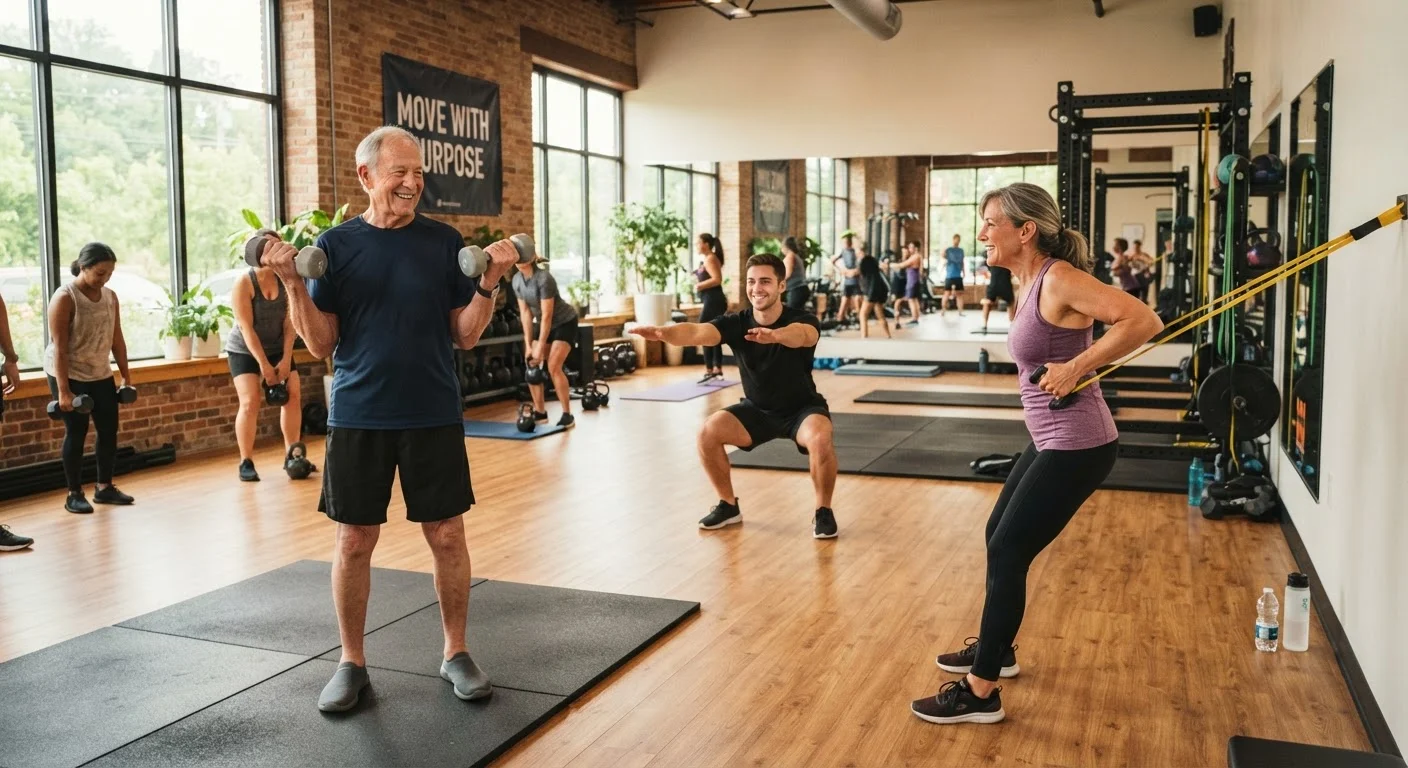
Maintaining strength and muscle mass becomes a direct investment in independence and fall prevention. Bone density concerns, joint health, and balance all become more prominent considerations. Resistance training at this stage often benefits from a wider warm-up window, attention to range of motion, and lighter loads paired with controlled tempo. That said, older adults can and do make meaningful strength gains - the body's capacity to adapt does not simply switch off. Those managing chronic conditions or returning after a long break should consult a healthcare provider or certified fitness professional before starting a new program.
Special Populations: A Note on Guidance
Older adults, pregnant individuals, and those managing chronic conditions such as osteoporosis, heart disease, or diabetes should get clearance from a healthcare provider before starting or significantly changing a strength training program. A certified exercise physiologist or physical therapist can also design a program tailored to specific health needs and limitations. General guidelines are a starting point - not a prescription.
Pair your training approach with age-appropriate nutrition - protein needs, in particular, shift across the lifespan. See our guide on how dietary needs shift from childhood to older adulthood for context.
Choosing Your Training Environment
One element that genuinely varies by age and life stage is where and how you train best. Some people thrive with the structure and social energy of a group class; others build more consistency training solo. Neither is universally superior - what matters is what keeps you showing up. Our article on group fitness classes vs. solo training walks through both environments to help you weigh the fit.
For older adults, the home environment itself can support or hinder a training habit. Stable surfaces, adequate space, and accessible storage for bands or light weights all contribute. For broader ideas on making any home more movement-friendly, aging-in-place home modifications offers practical, relevant ideas.
Sarcopenia
The gradual, age-related loss of muscle mass and strength that typically begins in the early 30s and accelerates after 60. Regular resistance training is one of the most evidence-supported ways to slow this process.
Progressive Overload
The practice of gradually increasing the challenge placed on muscles over time - through heavier loads, more repetitions, or less rest - so the body continues to adapt and grow stronger.
Hypertrophy
An increase in muscle size resulting from resistance training. It occurs when muscle fibers are stressed enough to trigger repair and growth during recovery.
Bone Density
A measure of how much mineral (primarily calcium) is packed into a segment of bone. Weight-bearing and resistance exercise are known to support and maintain bone density across the lifespan.
Connective Tissue
Tendons and ligaments that attach muscles to bones and stabilize joints. Strength training gradually strengthens connective tissue, though it adapts more slowly than muscle and benefits from controlled progression.
This article is for general informational purposes only and is not a substitute for professional medical or fitness advice. Always consult a qualified healthcare provider before beginning a new exercise program, especially if you have existing health conditions or concerns.