

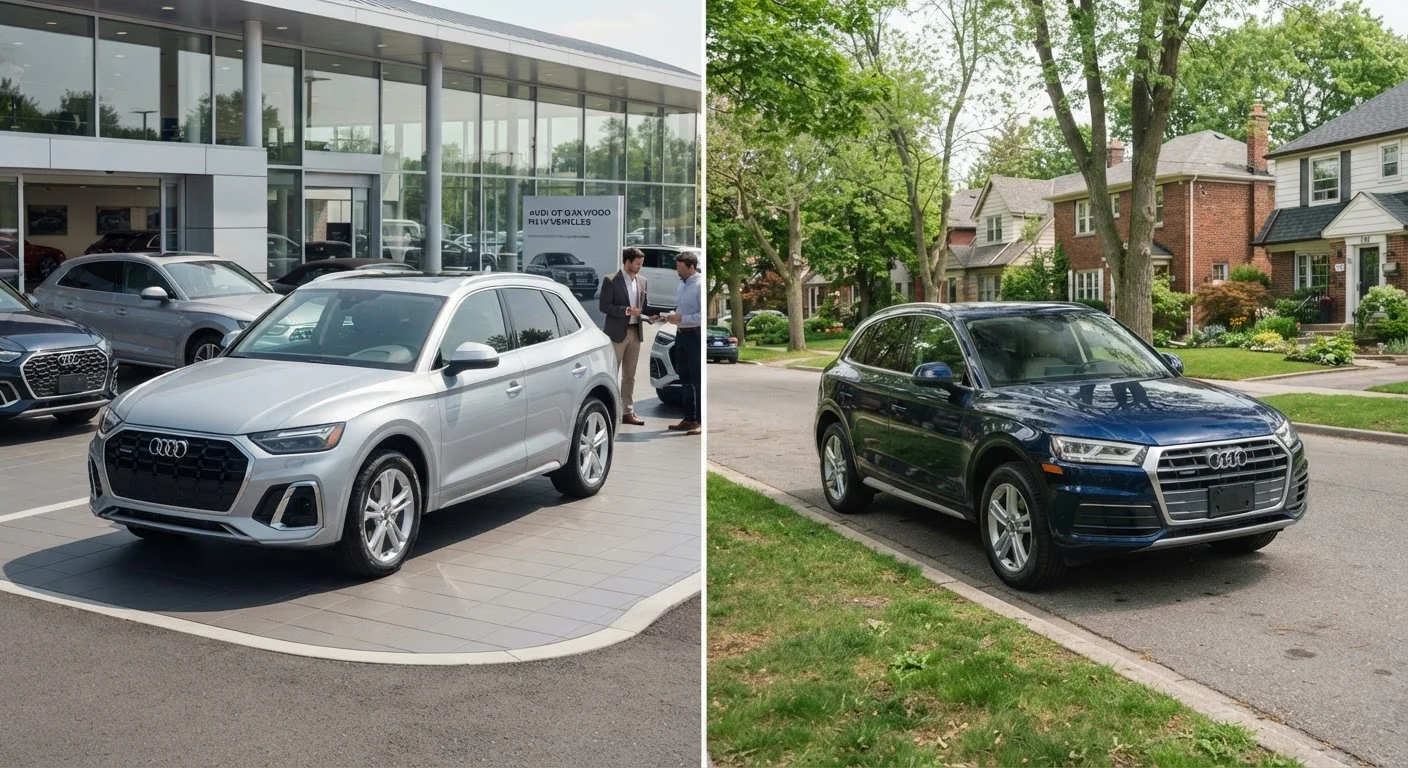
Key Takeaways
- New cars depreciate rapidly - often losing 15-20% of their value in the first year alone.
- Used cars typically cost less upfront, but may carry higher interest rates and shorter or no factory warranties.
- Certified pre-owned (CPO) vehicles offer a middle ground with inspections and limited warranty coverage.
- Financing terms, insurance rates, and long-term reliability costs all differ meaningfully between new and used.
- Neither choice is universally better - the right answer depends on your budget, driving habits, and risk tolerance.
Option A
New Car
The factory-fresh, full-warranty option.
Best for: Buyers who want the latest safety technology, predictable ownership costs, and full manufacturer support.
Option B
Used Car
The value-focused, depreciation-aware alternative.
Best for: Cost-conscious buyers willing to do more upfront research in exchange for a significantly lower purchase price.
If you drive high annual mileage and want the lowest total cost of ownership
Used Car
Avoiding first-year depreciation alone can save thousands of dollars, and many three- to five-year-old vehicles still have significant life remaining.
If advanced safety features and manufacturer warranty coverage are top priorities
New Car
New vehicles include the latest driver-assistance systems and full factory warranties, providing maximum peace of mind for safety-focused buyers.
If you want a balance of lower price and some warranty protection
Used Car
A certified pre-owned vehicle combines a reduced purchase price with a manufacturer-backed inspection and limited warranty - a practical middle ground.
If you plan to keep your vehicle for ten or more years
New Car
Buying new and holding long-term spreads the depreciation hit across many years, potentially making it competitive with used-car total costs.
If your budget is tight and flexibility matters most
Used Car
Lower sticker prices reduce the loan amount needed, monthly payments, and often the required down payment, easing immediate financial pressure.
The Depreciation Reality Every Buyer Should Understand
Depreciation - the loss of a vehicle's market value over time - is the single most important financial concept in the new-vs.-used debate. New cars typically lose a significant portion of their value in the first year of ownership, with the steepest drop occurring the moment the vehicle leaves the lot. By years three to five, depreciation slows considerably, meaning a used vehicle in that age range has already absorbed the heaviest financial hit.
For buyers of new cars, this isn't necessarily a catastrophe - if you plan to hold the vehicle for a decade, you'll spread that initial loss across many years of service. But if you trade in or sell within two to four years, depreciation can cost you far more than any repair bill a used car might generate. Understanding how trade-in valuations work can help you anticipate this impact before you buy.
| Criterion | New Car | Used Car |
|---|---|---|
| Purchase Price | Higher - full retail | Lower - absorbs prior depreciation |
| Depreciation Impact | Steepest in year one | Slower curve after year two |
| Factory Warranty | Full, from day one | Varies; may be expired or partial |
| Financing Rates | Generally lower | Generally higher |
| Insurance Cost | Higher (replacement value) | Lower (lower value to insure) |
| Technology & Safety Features | Latest available systems | Depends on model year |
| Mechanical Uncertainty | Very low | Moderate - history-dependent |
| CPO Option Available | Not applicable | Yes, through manufacturer programs |
Warranties, Reliability, and Hidden Costs
New cars come with factory warranties - typically a bumper-to-bumper coverage period (often three years or 36,000 miles) and a longer powertrain warranty covering the engine and transmission. These warranties transfer zero uncertainty to the buyer: if something fails due to a manufacturing defect, the manufacturer covers it.
Used cars present a more varied picture. A vehicle that's two years old and lightly driven may be almost as reliable as a new one, while a high-mileage example with an unknown maintenance history carries genuine risk. This is where certified pre-owned (CPO) programs become relevant - they offer a manufacturer-inspected vehicle with some remaining or added warranty coverage, sitting between a bare used car and a brand-new purchase in both price and protection.
Before purchasing any used car, a pre-purchase inspection by an independent, qualified mechanic is strongly advisable. This modest upfront cost can surface issues that neither a vehicle history report nor a test drive will reveal.
~20%
Typical new car value lost in year one
Industry analysts commonly cite first-year depreciation of 15-20% for most new vehicles, with some models depreciating more steeply.
3-5 yrs
Sweet spot age for used car value
Vehicles in the three-to-five-year age range have typically absorbed the sharpest depreciation while still retaining significant remaining service life.
Higher APR
Used car loan rates vs. new car loans
According to Federal Reserve consumer credit data, interest rates on used vehicle loans have historically averaged noticeably higher than those for new vehicles.
Financing, Insurance, and the Total Monthly Picture
Financing a new car often comes with lower interest rates. Lenders view new vehicles as less risky collateral, and manufacturers occasionally offer promotional financing rates through their captive finance arms. Used car loans typically carry higher interest rates, which can partially offset the savings from a lower sticker price - particularly on shorter loan terms.
Auto insurance also tends to cost more for new vehicles, since the replacement cost is higher and comprehensive and collision coverage (which most lenders require when financing) is priced against a higher value. A three-year-old used car will generally cost less to insure, all else being equal.
For a fuller picture of how your purchase method interacts with these costs, see our guide to financing vs. paying cash for a car. And if you're weighing monthly payments against long-term ownership, leasing vs. buying may also be worth exploring.
Making the Decision: Key Questions to Ask Yourself
No single answer fits every buyer. Before deciding, consider these factors honestly:
- How long do you plan to keep the vehicle? Longer ownership favors new; short-term ownership favors used.
- How important is having the latest technology? New cars offer current driver-assistance features; older used vehicles may lack them.
- What's your tolerance for mechanical uncertainty? A used car, even a well-maintained one, carries more unknowns than a new one.
- What does your overall budget allow? Consider not just the purchase price but insurance, financing costs, and potential repairs.
For buyers still navigating the broader process, The Complete Guide to Buying a Car in America covers every stage from budgeting to closing - whether you're shopping new or used. If you're considering the used route and debating where to shop, buying from a private seller vs. a dealership is a useful next read.