

Key Takeaways
- Private sellers typically list vehicles at lower prices, but buyers assume more risk without warranties or legal protections.
- Dealerships offer financing options, certified pre-owned programs, and consumer protections that private sales do not.
- A pre-purchase inspection by an independent mechanic is strongly recommended for any used vehicle, regardless of source.
- Title transfer, payment security, and fraud risk differ significantly between private and dealer transactions.
- Neither channel is universally better - the right choice depends on your risk tolerance, budget, and vehicle priorities.
Our Verdict
Private sellers can offer genuine cost savings, but those savings come with meaningful risks around vehicle history, legal recourse, and financing. Dealerships provide more structure, consumer protections, and convenience - at a price premium. Neither route suits every buyer, and understanding both before you shop is the clearest path to a sound decision.
| Best for | Recommended |
|---|---|
| Budget-conscious buyers with mechanical knowledge or access to a trusted mechanic | Private Seller |
| Buyers who want financing, warranties, and a more structured purchase process | Dealership |
| First-time car buyers seeking guidance and legal recourse protections | Dealership |
| Experienced buyers seeking a specific used model at the lowest possible out-of-pocket cost | Private Seller |
How the Two Buying Channels Actually Differ
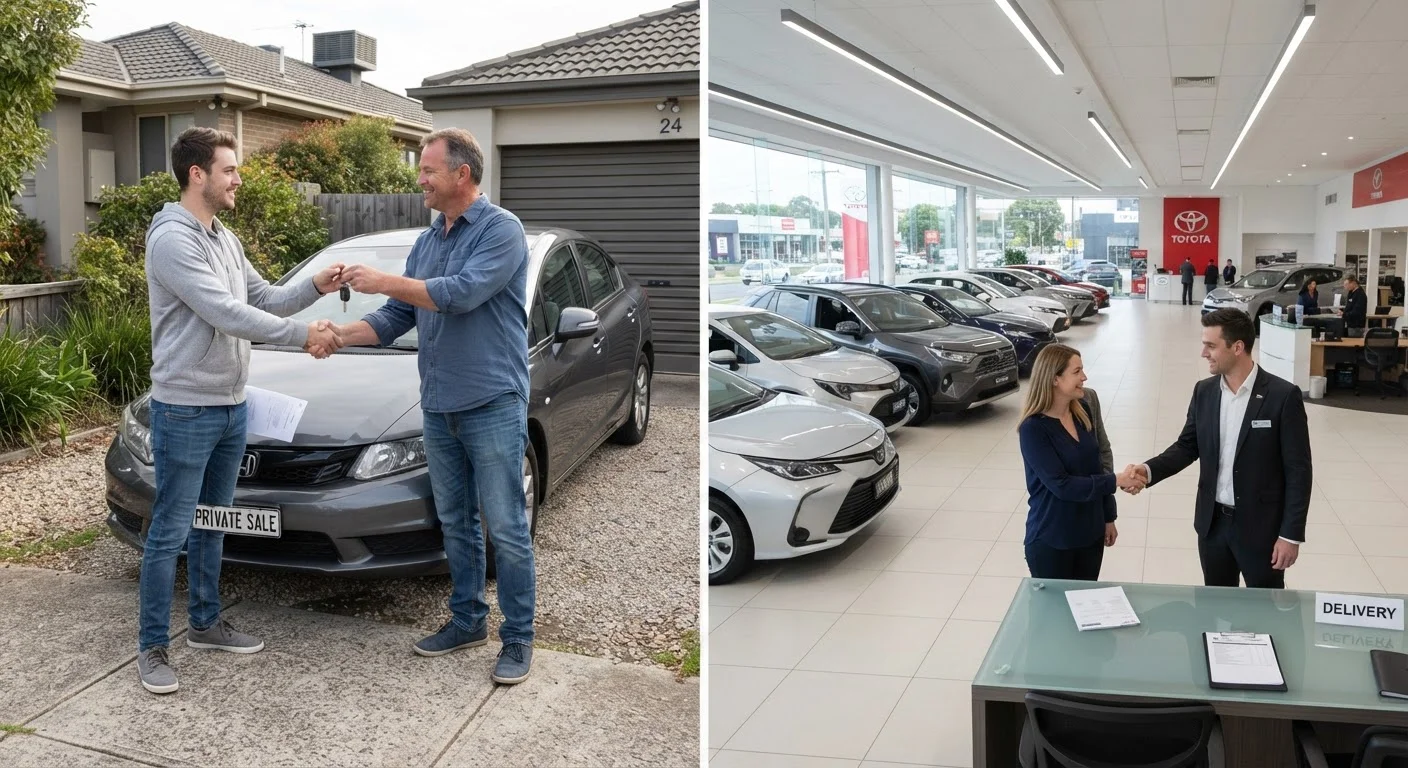
When you buy a car from a private seller - typically an individual listing their own vehicle on a marketplace or classifieds site - you're dealing directly with the owner. There's no intermediary, no finance office, and no service department involved. That simplicity can work in your favor, but it also means the safeguards built into a dealer transaction are absent.
A licensed dealership, by contrast, operates under state and federal regulations that govern how vehicles are advertised, sold, and financed. Dealers must comply with consumer protection laws such as the FTC's Used Car Rule, which requires a Buyers Guide disclosing warranty information on used vehicles. Private sellers have no such obligation.
Understanding the full car buying process from budget-setting to signing paperwork can help you evaluate where each channel fits your situation.
| Private Seller | Dealership | |
|---|---|---|
| Typical Price | Often below retail market value | At or above retail; negotiable |
| Warranty / As-Is | As-is; no warranty obligation | CPO or limited warranty available |
| Financing Options | Must arrange independently | In-house financing available |
| Consumer Protections | Minimal; limited legal recourse | State-regulated; FTC Buyers Guide required |
| Paperwork Handling | Buyer manages title/registration | Dealer handles most documentation |
| Fraud / Title Risk | Higher; buyer must verify independently | Lower; dealer legally accountable |
| Vehicle Inspection Access | Must arrange independently | Pre-inspected; CPO inspection documented |
Price: Where Private Sales Have the Edge
Private sellers often list vehicles below dealer retail prices, and there's a structural reason for that. Dealerships carry overhead - staff, facilities, reconditioning costs, and profit margins - that get factored into the sticker price. A private seller is usually motivated to move a vehicle quickly and doesn't have those expenses built in.
That said, lower asking price doesn't always mean lower total cost. A vehicle with undisclosed mechanical issues, a salvage title, or an incomplete service history could cost you significantly more in repairs after the fact. Always run a vehicle history report using the VIN (Vehicle Identification Number) and budget for an independent pre-purchase inspection regardless of how clean the car looks.
At the dealership end, prices are negotiable - though the range of movement tends to be more limited than buyers expect. See our practical guide to dealership negotiation for what actually influences the final number.
Always Get a Pre-Purchase Inspection
Before finalizing any used vehicle purchase - private or dealer - have an independent, licensed mechanic inspect the car. This typically costs $100-$200 and can surface hidden issues that aren't visible during a test drive. A seller who refuses an inspection should be treated as a red flag worth taking seriously.
Risk, Recourse, and Protections
Private sales are typically completed on an "as-is" basis, meaning once the title transfers, the vehicle - and any problems with it - become entirely the buyer's responsibility. Unless the seller made specific written representations about the vehicle's condition that proved false, you'll have very limited legal recourse after the sale.
Dealerships, especially franchised new-car dealers, offer more layers of protection. Certified Pre-Owned (CPO) vehicles - used cars that have passed a manufacturer-specified inspection - come with limited warranties. Even non-CPO used vehicles from dealers typically include some form of disclosure and often a limited return window, though policies vary by state and dealership.
Financing also differs sharply. Dealers can arrange loans directly through their finance department, giving you a single place to handle the purchase. Private sales almost always require you to arrange financing independently through a bank or credit union before the transaction. If you're considering how insurance factors into vehicle ownership, the auto insurance hub covers coverage types and cost considerations.
Watch for Title and Payment Scams
Private vehicle sales carry a higher exposure to fraud. Common issues include vehicles with undisclosed liens, salvage or rebuilt titles, and fraudulent payment schemes. Always verify the title is clean through your state's DMV, meet in a safe public location, and never accept personal checks from an unknown buyer or seller. Cashier's checks should be verified with the issuing bank before handing over keys or title.
Paperwork, Title, and the Transaction Process
One of the most overlooked differences between the two channels is how the transaction itself unfolds. At a dealership, staff handle most of the paperwork - title transfer, registration, tax documentation - as part of the sale. It's more convenient, though it also creates opportunities for add-on products to enter the conversation. Review any dealer extras carefully; our breakdown of dealership add-ons explains which ones may warrant consideration and which are largely optional.
Private sales require the buyer to manage more of the process independently. You'll need to verify that the seller holds a clean title (no liens), handle payment securely - cash, cashier's check, or a secure payment platform - and complete the title transfer and registration through your state's DMV. Paying off an existing loan on a private seller's vehicle adds another layer of complexity and should be handled carefully to ensure the lien is released before or at the time of purchase.
For buyers weighing how this fits into a broader financial picture, the considerations around new versus used vehicles - including depreciation and financing - are worth reviewing before settling on a channel.