

Key Takeaways
- Start the documentation and refill process at least four to six weeks before international travel.
- Many countries regulate or prohibit medications that are legal and common in the United States.
- Keeping medications in original, labeled containers reduces border delays significantly.
- A letter from your prescribing physician is a practical safeguard for international trips.
- Time-zone shifts require a clear dosing schedule adjustment plan confirmed with your provider.
- Always carry enough medication in your carry-on bag to cover delays or lost checked luggage.
What you will need
Why Medication Planning Is a Critical Pre-Travel Step
Managing prescription medications while traveling internationally is more complex than simply packing a pill bottle. Different countries classify medications differently - a drug available over the counter in the U.S. may be a controlled substance abroad, and vice versa. Import restrictions, documentation requirements, and quantity limits vary significantly, and failing to comply - even unintentionally - can lead to confiscation, fines, or worse at customs.
Beyond legal considerations, the physical demands of travel - changing sleep schedules, disrupted routines, temperature extremes, and time zone shifts - can affect how medications work and how reliably you take them. Planning ahead is not optional for travelers with ongoing medical needs; it is a fundamental part of trip preparation, as important as arranging your accommodations or travel documents.
For a broader view of pre-departure health planning, see our pre-trip health and safety checklist, which covers vaccinations, emergency contacts, and other essentials alongside medication preparation.
Controlled Substances Require Extra Verification
Medications classified as controlled substances in the U.S. - such as stimulants for ADHD or certain pain relievers - are frequently subject to strict import limits or outright bans in other countries. Carrying even a small personal supply without proper documentation can have serious legal consequences abroad. Contact the embassy or consulate of every country on your itinerary well in advance to verify current regulations for your specific medication.
This article provides general information for educational purposes and is not a substitute for personalized medical or legal advice. Always consult your prescribing healthcare provider and verify regulations with official government sources before traveling.
What You'll Need Before You Start
What you will need
Physician's Travel Letter
Official documentation confirming your diagnosis, medications, and medical necessity - required or strongly advised at many international borders.
Original Pharmacy-Labeled Containers
Demonstrates that medications are legitimately prescribed to you and helps customs officials verify contents quickly.
Carry-On Medication Supply
Ensures access to your medications if checked luggage is delayed, lost, or searched.
Destination Embassy Contact Information
Used to verify import rules for controlled or regulated substances before departure.
Pill Organizer with Day/Time Labels
Helps maintain dosing accuracy when crossing multiple time zones over several days.
Having these items in order before you begin will make every subsequent step faster and more reliable. If you're working against a tighter timeline than you'd like, our guide on planning a trip on a tight timeline can help you prioritize what truly cannot be skipped.
Step-by-Step: Managing Your Medications Across Borders
Research destination-specific medication regulations
Before anything else, confirm what is legally permitted in every country on your itinerary - including transit or layover countries. Many travelers overlook transit nations, but customs checks can occur even during a brief connection.
Check the official embassy or consulate website for each destination. The U.S. State Department's country information pages and the International Narcotics Control Board (INCB) are useful starting points for understanding controlled substance classifications internationally. Regulations change, so verify as close to your departure date as practical.
Schedule an appointment with your prescribing provider
Book a pre-travel consultation with your doctor or specialist at least four to six weeks before departure. This gives enough lead time to request early refills, obtain supporting documentation, and adjust dosing schedules if needed.
During this visit, discuss how time zone differences may affect your dosing timing, whether any of your medications require special storage conditions (such as refrigeration), and what to do if you run out or lose your supply abroad. Your provider can also write a formal physician's letter - a key document covered in the next step.
Obtain a physician's letter and any required permits
Request a signed letter from your prescribing provider on official letterhead. This letter should include: your full name, diagnosis (as much as you are comfortable disclosing), each medication's generic and brand name, dosage, dosing frequency, and a statement that the medication is medically necessary.
For controlled substances, some countries require an import permit obtained in advance from their government health authority. Your physician's letter alone may not be sufficient - check with the relevant embassy about whether a separate permit application is required and how much processing time it takes.
Request sufficient medication supply and early refills
Most pharmacies and insurance plans allow early refills for documented travel needs. Aim to travel with enough medication to cover your entire trip plus a buffer of several extra days to account for delays, missed connections, or extended stays.
If your insurance restricts early refills, ask your provider to contact the insurer directly or write a medical necessity letter supporting the request. Some travelers may need to pay out-of-pocket for an additional supply - discuss this with your pharmacist and provider as part of your planning.
Pack medications correctly for travel and customs
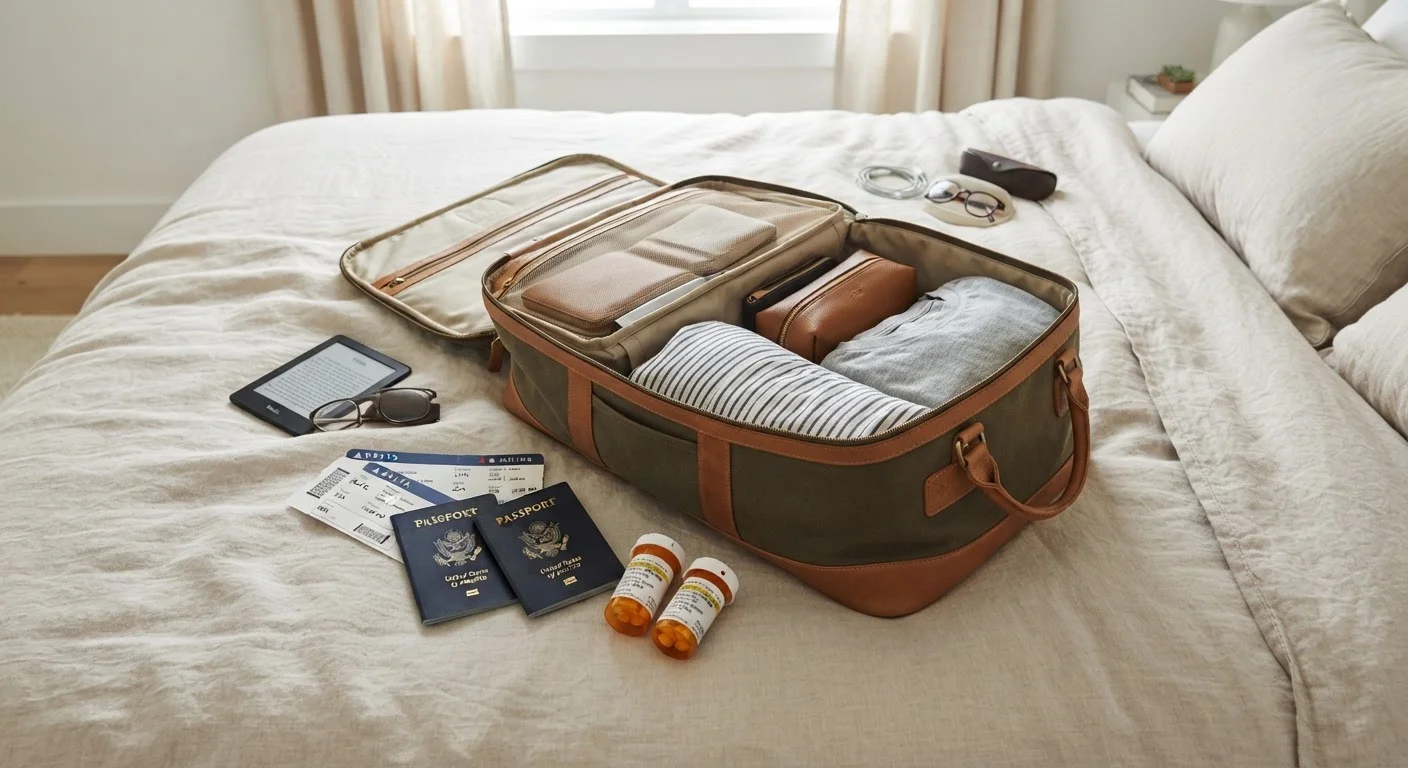
Keep all medications in their original pharmacy-dispensed containers with the label intact and legible. Labels should match your passport name exactly. Place all medications in your carry-on luggage - checked baggage can be delayed, lost, or exposed to temperature extremes in cargo holds.
Organize your documentation - physician's letter, copies of prescriptions, and any import permits - in an easily accessible folder. Customs officials may request these at any point of entry, and having them readily available speeds up the process considerably.
Create a time-zone dosing schedule with your provider's input
For once-daily or time-sensitive medications, crossing multiple time zones requires deliberate scheduling. Work with your provider to determine whether you should shift your dosing time gradually before departure, continue on home-time dosing, or transition to local time upon arrival.
Write the adjusted schedule down clearly - use both local destination time and home time to avoid confusion during the first few days of travel. A labeled pill organizer can help reduce errors when jet lag affects your sense of routine. Review the schedule again before any significant time-zone transition during your trip.
Do Not Adjust Dosing Without Medical Guidance
Shifting medication timing to match a new time zone may seem straightforward, but for some drugs - including insulin, blood thinners, and seizure medications - even small timing changes can have clinical consequences. Always consult your prescribing provider before altering any dosing schedule, no matter how minor the adjustment appears.
Staying on Track During and After Your Trip
Even with careful preparation, things can go wrong. If you lose medication while abroad, contact your travel insurance provider (if you have a policy that covers medical emergencies), locate the nearest reputable hospital or clinic, and reach out to the nearest U.S. embassy or consulate for a list of local medical resources. Attempting to purchase prescription medication abroad without a local prescription is not advisable and may be illegal depending on the destination.
Pack a Medication Summary Card
Create a wallet-sized card listing each medication's generic name, dosage, prescribing physician, and your known allergies. This is especially useful if you need medical attention in a country where your brand name may not be recognized - generic names are far more universally understood by healthcare providers worldwide.
Upon returning home, resume your normal dosing schedule as directed by your provider - do not try to make up missed doses or adjust quantities on your own. If the trip involved significant time-zone shifts or disrupted your routine substantially, a brief follow-up call with your provider can help you get back on track safely.
For a fuller picture of how health preparation fits into international travel, explore our article on health and safety considerations for first-time international travelers. If your itinerary includes preventive medications or vaccines, our overview of vaccinations versus travel medications explains the difference and why both matter.