

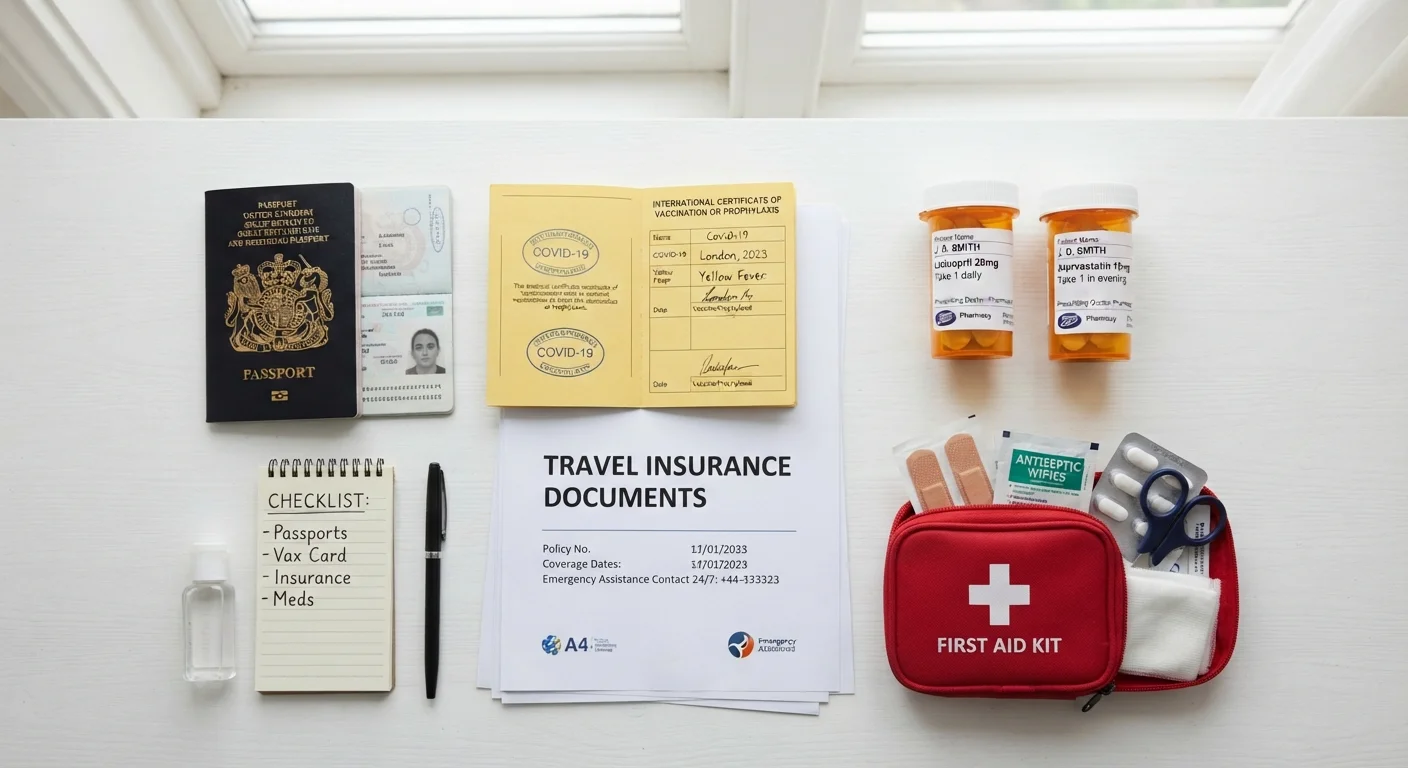
Key Takeaways
- Start health and safety prep at least 4-6 weeks before departure to allow time for vaccinations and document gathering.
- Always verify entry requirements, vaccination rules, and travel advisories through official government sources.
- Travel health insurance that covers emergency evacuation is a critical safeguard for international trips.
- Carry copies of all prescriptions and a written medical summary in case of a health emergency abroad.
- Share your itinerary and emergency contacts with someone you trust at home before you leave.
Summary
22 items · 45-90 minutes
Why a Pre-Trip Health and Safety Check Matters
Planning an international trip involves far more than booking flights and hotels. Your health and physical safety deserve the same structured attention you'd give your itinerary. Skipping this prep can mean scrambling for a doctor in an unfamiliar country, getting turned away at a border for a missing vaccination record, or realizing mid-trip that your insurance won't cover an emergency abroad.
This checklist is designed to help you cover every meaningful health and safety base before you board - from vaccinations and medications to emergency documentation and on-the-ground precautions. It's general guidance, not a substitute for personalized medical or travel advice. For decisions specific to your health conditions or destinations, consult a licensed healthcare provider and check official government travel advisories.
For a broader look at how health prep fits into the full planning picture, see The Anatomy of a Well-Planned Trip. If you want to pair this with a comprehensive pre-departure walkthrough, Pre-Trip Checklist: What to Confirm Before You Leave Home covers documents, reservations, and home security as well.
Medical and Vaccination Prep
Prescriptions and Medications
Travel Insurance and Emergency Coverage
Documents and Emergency Contacts
Safety and Situational Awareness
How to Use This Checklist
Work through each group in order, ideally starting four to six weeks before your departure date. Some items - like scheduling a travel medicine appointment or ordering a refill of a prescription - take time to complete, so early action matters.
Don't Wait Until the Week Before You Leave
Some vaccinations require multiple doses administered weeks apart, and certain medications need time to reach effectiveness. If you're also applying for a visa that requires proof of vaccination, processing can add further lead time. Starting this checklist at least four to six weeks before departure gives you the most flexibility.
Mark each item as complete only after you've verified it, not just thought about it. Keep physical or digital copies of all key documents in two separate locations - for example, your carry-on bag and a secure cloud folder accessible from your phone.
If you're traveling with a group or family, designate one person to consolidate everyone's health documentation and emergency contacts. For first-time international travelers, the article Health and Safety Considerations Every First-Time International Traveler Should Understand provides a useful companion overview to this checklist.
CDC Travelers' Health Website (wwwnc.cdc.gov/travel)
Look up destination-specific vaccination recommendations, disease risks, and health advisories.
U.S. State Department STEP Program
Register your international travel so the nearest U.S. embassy can contact you in an emergency.
Travel Medicine Clinic
Get personalized vaccination recommendations and prescriptions for preventive medications based on your destination and health history.
Travel Health Insurance Policy
Provides coverage for emergency medical care and, where applicable, medical evacuation abroad.
Secure Cloud Storage (e.g., password-protected folder)
Store digital copies of your passport, prescriptions, insurance policy, and vaccination records, accessible from your phone.
Offline Map and Translation App
Navigate and communicate in an emergency even without an internet connection or local SIM card.
Special Considerations Worth Noting
A few areas deserve extra attention beyond the standard checklist items:
Long-Haul Flights and Circulation
Flights over six to eight hours carry a generally recognized association with reduced circulation, which can be a concern for some travelers. Understanding general risk factors and recommended precautions is worthwhile before a long journey. See Deep Vein Thrombosis and Long-Haul Flights: What Travelers Should Know for a plain-language overview of what doctors typically advise.
Medications Across Time Zones
If you take prescription medications on a schedule, crossing multiple time zones introduces real complexity. Dosing intervals, storage requirements, and legal status of medications can all vary. Review Managing Prescription Medications Across Time Zones and Borders well before your departure date.
Verify Entry Requirements Directly With Official Sources
Vaccination and entry requirements can change with little notice, and unofficial sources are frequently out of date. Always confirm current requirements through the official embassy or consulate website of your destination country and cross-reference with the U.S. State Department's country information pages before you travel. Do not rely solely on airline or booking platform summaries.
This article is for general informational purposes only and does not constitute medical, legal, or financial advice. Always consult qualified professionals and official government sources for guidance specific to your health, destination, and circumstances.