

Key Takeaways
- Traveler's diarrhea affects an estimated 30-70% of international travelers, yet most cases are preventable.
- Tap water safety varies dramatically by destination - ice and fresh produce washed in tap water carry the same risk.
- Hand hygiene is one of the most effective defenses against foodborne illness while traveling.
- Cooked food isn't automatically safe - temperature, handling, and serving conditions all matter.
- Consulting a travel medicine specialist before departure is one of the most underused protective steps.
Why Food and Water Safety Is Harder Abroad Than It Looks
Most travelers know, in a general sense, that they should "be careful" about what they eat and drink overseas. But vague awareness rarely translates to effective behavior in practice - especially when you're hungry, excited, and surrounded by unfamiliar options. The result is that foodborne illness remains one of the most common travel health problems, cutting trips short and leaving travelers miserable for days.
The good news is that the most common mistakes are entirely avoidable once you know what they are. This guide walks through the missteps travelers repeatedly make, why they happen, and what to do instead. For a broader look at staying healthy on international trips, see our first-time international traveler health guide.
High-Risk Destinations Require Extra Caution
Food and water risk levels vary significantly by region. Destinations in parts of South Asia, sub-Saharan Africa, Central America, and elsewhere carry substantially higher risk than Western Europe or Australia. Before any international trip, check your destination's specific risk level through the CDC's traveler's health website or a travel medicine clinic - general caution is not a substitute for destination-specific guidance.
The Most Common Mistakes - and How to Avoid Them
These are the errors that travel medicine professionals and experienced travelers see most often. Each one is straightforward to address once you understand the underlying risk.
Assuming tap water is safe because the hotel or restaurant uses it.
Why it happens: Travelers extend trust to established-looking businesses, reasoning that a hotel with good reviews wouldn't serve unsafe water. But water safety is determined by local infrastructure, not establishment quality.
Forgetting that ice, fresh produce, and sauces carry the same risks as tap water.
Why it happens: Travelers focus on the glass of water in front of them and overlook how water enters other parts of a meal - through ice cubes, salad washed at the source, or cold sauces.
Equating 'cooked' with 'safe' regardless of how food was handled or served.
Why it happens: Heat does kill pathogens, so travelers assume anything hot off the grill or out of a pot is fine. But food that is cooked and then left at room temperature, reheated multiple times, or handled with unwashed hands can still cause illness.
Skipping a pre-travel consultation with a travel medicine specialist.
Why it happens: Many travelers don't know travel medicine clinics exist, assume their regular doctor covers it, or decide it isn't worth the time or cost for a short trip.
Neglecting hand hygiene between touching surfaces and eating.
Why it happens: It's easy to eat on the go - grabbing street food, snacking from a bag - without thinking about what your hands have touched on public transit, at markets, or on shared menus.
Dismissing mild symptoms and continuing to eat and drink normally.
Why it happens: Travelers don't want to waste limited vacation time being cautious, and early symptoms - loose stools, mild nausea - can feel like they'll resolve quickly on their own.
30-70%
Travelers affected by traveler's diarrhea
The CDC estimates that traveler's diarrhea affects between 30 and 70 percent of international travelers, depending on destination and behavior.
80%
Cases linked to contaminated food or water
The vast majority of traveler's diarrhea cases are attributed to consuming contaminated food or water, according to travel medicine research.
Practical Habits That Make a Real Difference
Beyond avoiding specific mistakes, a handful of consistent habits dramatically lower your risk throughout a trip. Wash hands before eating - with soap and water when available, or alcohol-based hand sanitizer when not. Carry a small supply of oral rehydration salts, since staying hydrated is the most important self-care step if mild illness does occur. Know before you arrive whether your destination's tap water is considered safe; the U.S. Centers for Disease Control and Prevention (CDC) and your destination country's public health authority are the most reliable sources, not hotel staff or travel blogs.
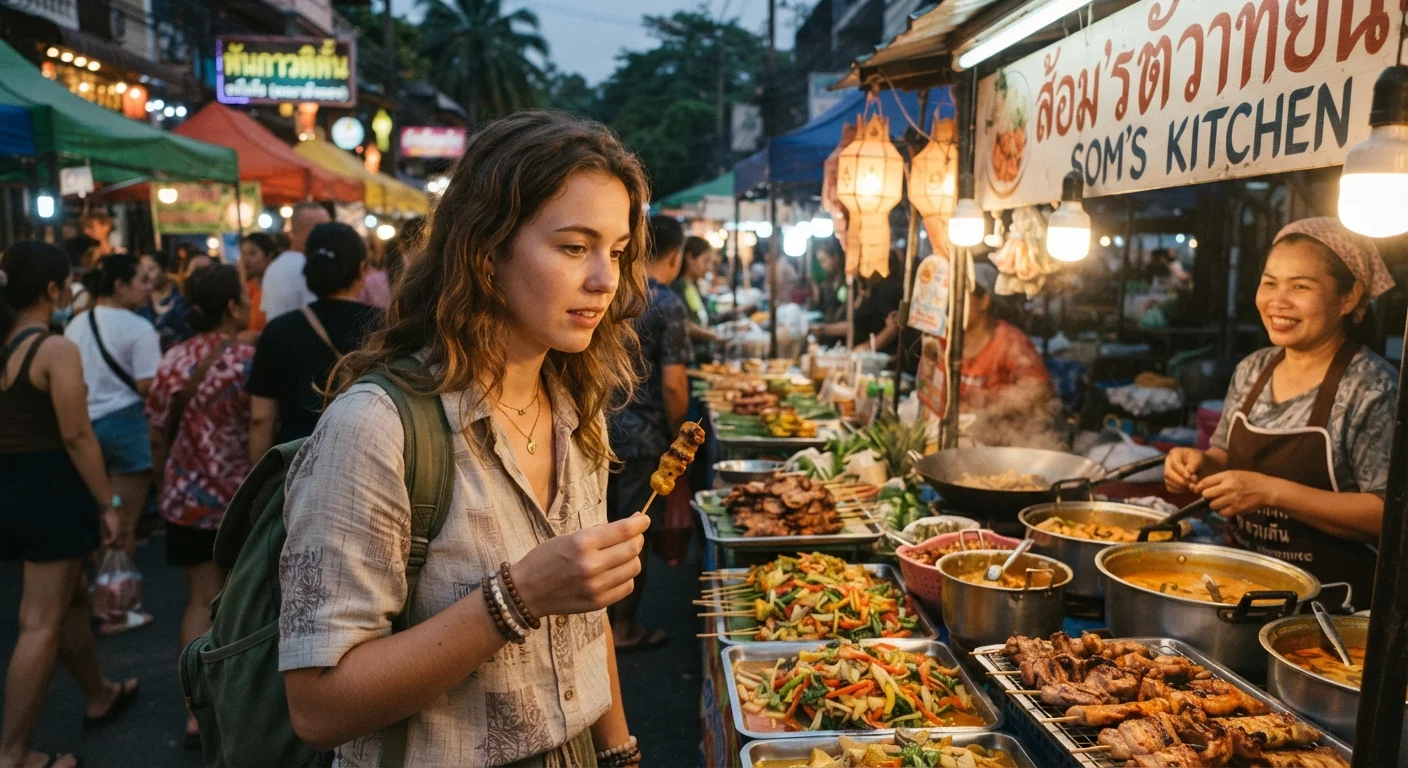
It's also worth noting that eating adventurously and eating safely are not mutually exclusive. Many of the world's best street foods are served piping hot and prepared fresh, making them safer than a cold buffet that's been sitting out. Budget-conscious travelers often find that local markets and street stalls are both safer and more affordable than tourist-area restaurants - when chosen thoughtfully.
Don't Rely Solely on Bottled Water Brands
Counterfeit or refilled water bottles are a documented problem in some high-risk destinations. Always check that the seal is intact before opening, and look for bottles with tamper-evident caps. When in doubt, use water purification tablets or a certified filtration device as a backup.
Finally, if you have a pre-existing health condition, take immunosuppressant medications, or are pregnant, food and water risks abroad carry a higher personal stakes. Consult a qualified healthcare provider before travel - not just for vaccines, but to discuss your specific risk profile and contingency plans. For related misconceptions that can compound these risks, see common travel health myths and what the evidence actually says.
This article is for general informational purposes only and does not constitute medical advice. Always consult a qualified healthcare professional or travel medicine specialist for guidance tailored to your health and destination.