

Key Takeaways
- Eating where locals eat is almost always cheaper than dining near major tourist attractions.
- Supermarkets and local markets abroad can dramatically cut daily food spending without sacrificing quality.
- Lunch is typically the best time to access sit-down restaurant meals at a fraction of dinner prices.
- Skipping breakfast at your hotel often saves money, even when breakfast is 'included' in the rate.
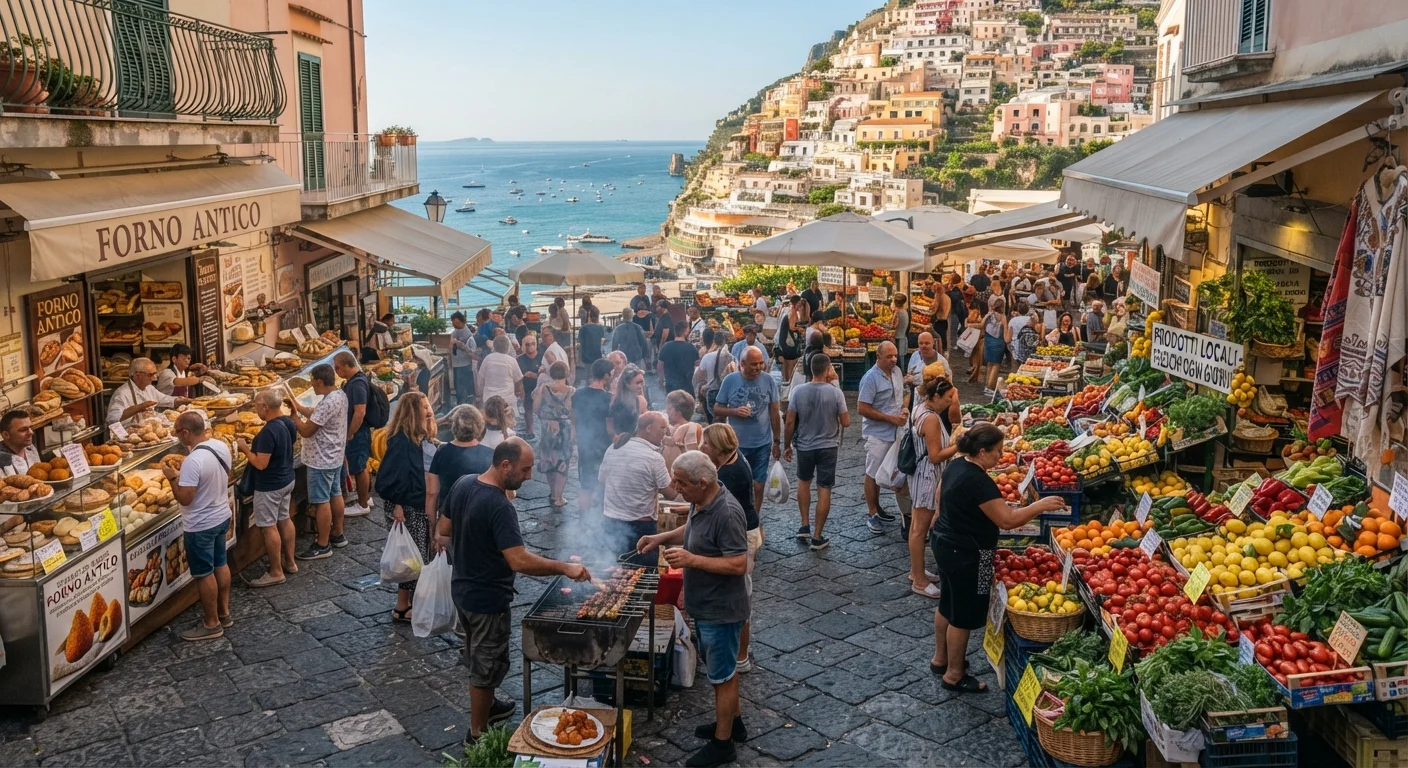
- Street food from reputable vendors is frequently safe, affordable, and more authentic than tourist menus.
The Tourist Restaurant Trap
One of the most consistent patterns among budget travelers is eating at the wrong places for the wrong reasons. Restaurants clustered around major landmarks, centrally translated menus, and photos of every dish plastered on sandwich boards outside are reliable signals that you're paying a significant markup - sometimes two to three times what locals pay a few blocks away.
This isn't about avoiding comfort. It's about understanding where prices are inflated by foot traffic and captive audiences rather than food quality. A simple pasta dish or bowl of soup can cost dramatically less just one or two streets removed from a famous square or monument.
The fix is straightforward: walk. Before sitting down anywhere near a tourist site, spend ten minutes exploring side streets. Look for restaurants where the menu is posted only in the local language, where the clientele is mostly local, and where a daily special is chalked on a board rather than printed on a laminated photo menu. See our field-tested budget travel strategies for more on eating like a local without the guesswork.
Myth
Street food is a budget option only for adventurous or risk-tolerant travelers.
Fact
Street food from high-turnover, reputable vendors is widely eaten by locals and is often as safe as restaurant food when chosen carefully.
Fear of street food pushes many travelers toward more expensive sit-down restaurants unnecessarily. While food safety abroad is a genuine consideration - and one worth researching for your specific destination - well-chosen street food is a cornerstone of everyday eating in many countries. High customer turnover means food is freshly prepared, and local popularity is itself a quality signal. The key is observing vendor hygiene practices and choosing options cooked to order at visible heat. Always check destination-specific guidance from official travel health sources rather than relying on general assumptions.
Myth
Supermarkets abroad are only useful for snacks - real savings come from negotiating at restaurants.
Fact
Supermarkets and local markets are among the most effective food budget tools available to travelers, often cutting daily food costs significantly.
In most destinations, buying breakfast and lunch components from a supermarket or covered market - bread, local cheese, cured meats, fruit, dairy - costs a fraction of equivalent café or restaurant meals. Negotiating at restaurants is rarely a practical strategy and can be culturally inappropriate in many places. Shifting even one meal per day to self-assembled market food can free up meaningful budget for experiences that matter more to you.
Myth
Eating near tourist attractions is unavoidable when you're sightseeing all day.
Fact
A small amount of planning - packing market snacks or identifying nearby local eateries in advance - eliminates the need to eat at overpriced tourist-area spots.
The 'we were tired and hungry with no other option' scenario is real, but it's almost always preventable. Spending ten minutes the evening before looking at a map and noting one or two non-tourist restaurants within walking distance of your planned sightseeing route gives you a fallback. Carrying portable snacks from a morning market visit bridges the gap between breakfast and lunch and reduces the urgency that leads to expensive, low-quality convenience eating.
Myth
Hotel breakfast is free, so skipping it wastes money you've already spent.
Fact
Hotel breakfast is almost never truly free - its cost is embedded in the room rate, and the per-person value is often poor compared with nearby local options.
This is one of the most persistent food-cost myths in travel. When hotels advertise 'breakfast included,' that amenity is priced into the room. In practice, the actual breakfast offered - particularly at mid-range properties - is often a mediocre buffet. Factoring in what you'd pay for a coffee and pastry at a neighborhood bakery, or yogurt and fruit from a nearby shop, typically reveals that the hotel breakfast represents poor value per dollar spent. Skipping it and eating locally often saves money while delivering a more authentic start to the day.
Where Budget Travelers Actually Lose Money on Food
Most food budget mistakes aren't dramatic - they accumulate quietly across small daily decisions. Hotel breakfasts are one of the most overlooked costs. Even when breakfast is marketed as 'included,' that cost is baked into the room rate. Travelers who skip it and grab coffee and a pastry from a nearby bakery or café often spend far less per morning and eat more authentically.
Bottled water is another silent budget drain in warm climates. Buying individual bottles multiple times a day adds up significantly over a week-long trip. A reusable bottle with a built-in filter, combined with research on local tap water safety, can eliminate or greatly reduce this expense - though always verify local conditions through official travel health resources before assuming tap water is safe.
2-3x
Price premium at tourist-adjacent restaurants
Travel industry research and traveler surveys consistently find that restaurants near major tourist sites charge substantially more than equivalently rated spots just a short walk away.
~30%
Of travel budgets typically spent on food
Food and drink represent a significant share of total travel spending for most leisure travelers, making it one of the highest-impact categories to optimize.
Convenience store snacks and fast-food chains are tempting shortcuts, but in many countries they aren't actually cheaper than local alternatives. A fresh meal from a market stall or a small family-run lunch spot often costs less than a branded fast-food combo and is considerably more satisfying. For a fuller picture of where travel costs quietly accumulate, see how hidden charges erode travel budgets.
Don't Assume Familiar Brands Mean Savings
International chain restaurants and fast-food brands are often priced at or above local restaurant levels in many destinations, particularly in Europe and parts of Asia. Familiarity can create a false sense of value. Always compare the actual price, not just the brand recognition, before choosing where to eat.
Smarter Habits That Actually Work
The biggest food savings tend to come from a handful of consistent habits rather than heroic one-time decisions. Shopping at local supermarkets for breakfast and snack items - fruit, cheese, bread, yogurt - reduces the number of meals you need to buy in restaurants without making the trip feel spartan. Many travelers find that one market meal plus one sit-down meal per day keeps costs manageable while still leaving room to enjoy local dining experiences.
Timing matters, too. In many countries, lunch is the main meal of the day, and restaurants offer a fixed-price lunch menu - sometimes called a menu del día, prix fixe, or daily set menu - that includes multiple courses at a price well below what dinner would cost. Seeking out these midday deals is one of the most reliable ways to eat well without overspending.
Finally, treat street food as an asset, not a risk to be avoided. In many destinations, it represents the authentic culinary culture of a place and is typically priced for local workers, not tourists. Look for stalls with high turnover, food cooked to order, and a visible queue of locals. For more context on food safety abroad, review common food and water safety mistakes travelers make.
Building realistic food estimates into your overall plan from the start is just as important as the choices you make on the ground. A travel budget grounded in real costs will always outperform one built on optimistic guesses.