

Key Takeaways
- A general contractor oversees the full project, while subcontractors handle specific trades like plumbing or electrical.
- As a homeowner, your primary contract and communication are typically with the GC, not individual subs.
- GCs are responsible for scheduling, permit management, and quality control across all trades on site.
- Subcontractors are licensed specialists - their credentials matter and should be verified through your GC.
- On simpler single-trade jobs, hiring a subcontractor directly can be a practical and cost-effective approach.
Option A
General Contractor (GC)
The project manager who coordinates the entire renovation.
Best for: Homeowners running complex, multi-trade projects who need a single point of accountability.
Option B
Subcontractor
The licensed specialist who performs a specific trade or scope of work.
Best for: Projects requiring specialized expertise in a single area, such as electrical, plumbing, or tile work.
If you're tackling a full kitchen or bathroom renovation involving multiple trades
General Contractor
A GC coordinates sequencing, manages subcontractors, and handles permitting - reducing complexity and your daily involvement significantly.
If you need a single specialized task completed, like rewiring a room or replacing a water heater
Subcontractor
Hiring a licensed tradesperson directly for a defined, single-trade job is often more straightforward and avoids GC markup on a limited scope.
If you want to act as your own general contractor and manage tradespeople yourself
Subcontractor
Owner-builders can hire subs directly, but this requires time, scheduling discipline, and a solid understanding of trade sequencing.
If this is your first major renovation and you're unfamiliar with the construction process
General Contractor
A GC brings project management experience that protects first-time renovators from costly sequencing mistakes and contractor disputes.
The Core Difference: Management vs. Execution
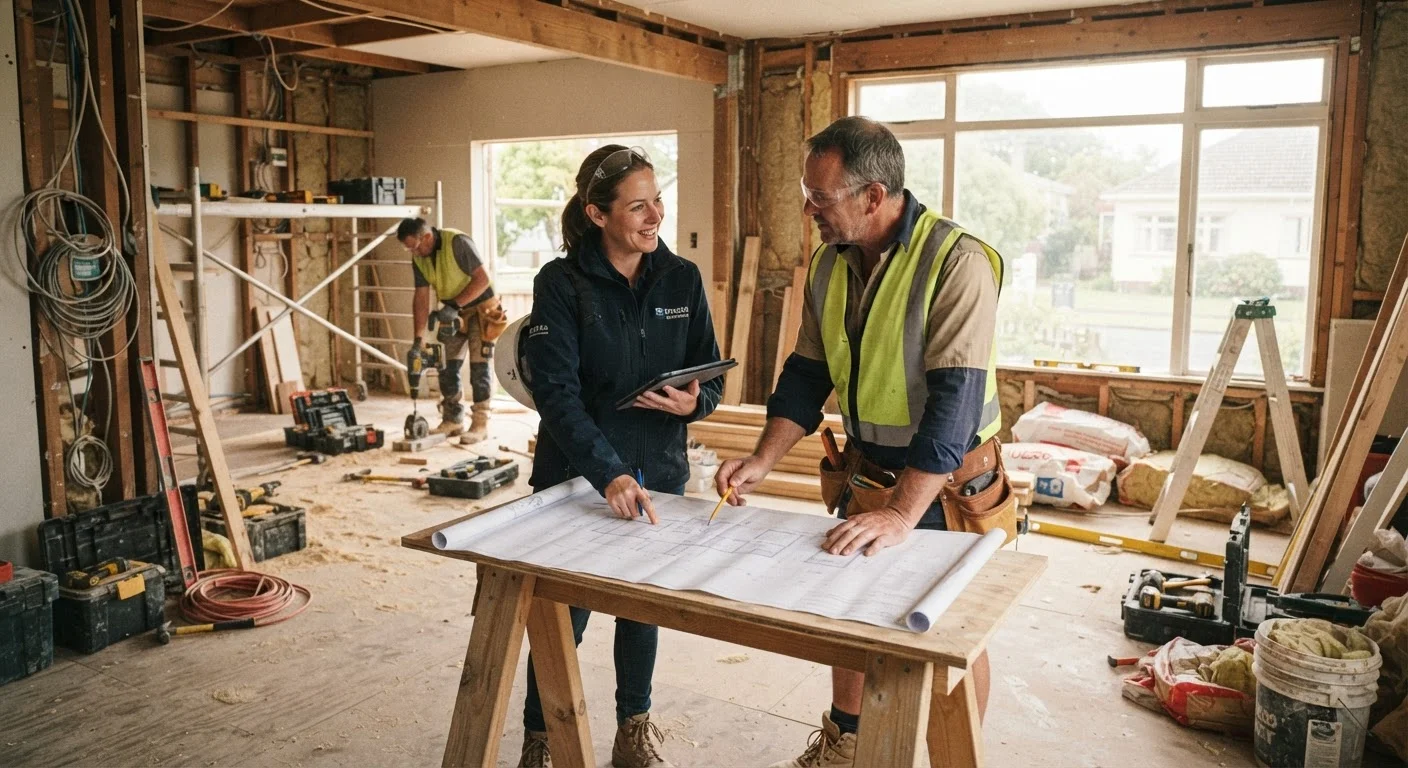
When a renovation involves more than one trade - say, a bathroom remodel that requires demolition, plumbing, electrical, tile work, and painting - someone has to coordinate all of it. That's the general contractor's job. The subcontractors are the licensed specialists who show up and perform each piece of that work.
Think of a GC as a construction project manager. They hold the primary contract with you, the homeowner. They hire and pay the subcontractors, schedule each trade in the right order, oversee quality, manage permits, and serve as your single point of contact throughout the job. If the plumber runs behind and delays the tile setter, it's the GC's problem to solve - not yours.
Subcontractors, by contrast, are specialists. A licensed electrician, a plumber, an HVAC technician, a drywaller - these are all subcontractors who typically work under a GC's direction on larger projects. They bring deep expertise in their trade, but they're not responsible for what happens outside their scope. Understanding this division matters enormously when things go wrong, because it determines who's accountable.
For a deeper look at how these trades interact in practice, see how trade sequencing works in a bathroom remodel.
| Criterion | General Contractor | Subcontractor |
|---|---|---|
| Primary role | Project management & coordination | Specialized trade execution |
| Who they contract with | Directly with the homeowner | Usually with the GC (or homeowner on single-trade jobs) |
| Permit responsibility | Typically pulls and manages permits | May pull trade-specific permits |
| Scope of work | Entire project across all trades | One defined trade or task |
| Cost structure | Fee or markup on top of labor/materials | Charged per trade scope |
| Accountability to homeowner | Full project accountability | Accountable for their trade only |
| Best project fit | Multi-trade, complex renovations | Single-trade or tightly scoped jobs |
What a General Contractor Actually Handles
A GC's value isn't in swinging a hammer - though some do hands-on work. Their core value is coordination and accountability. Specifically, a general contractor typically:
- Pulls and manages building permits on your behalf
- Vets, hires, and supervises all subcontractors
- Creates and enforces the project schedule
- Manages the budget and processes payments to subs
- Conducts site inspections and ensures code compliance
- Serves as your primary contact for questions and problems
This management layer costs money - GCs generally charge either a percentage of total project cost or a fixed fee on top of labor and materials. That markup exists because managing a multi-trade project is genuinely complex work. When you hire a GC, you're paying for someone else to carry the coordination burden.
Before signing any contract, make sure you understand exactly what's included in that scope. Our guide on reading a contractor's quote explains what line items, allowances, and exclusions actually mean.
~10-20%
Typical GC markup on subcontractor costs
General contractors commonly charge a management fee or markup ranging from roughly 10 to 20 percent of total project costs, though this varies by market and project complexity.
3+ trades
Average number of trades in a full bathroom remodel
A standard bathroom renovation typically involves at least plumbing, electrical, and tile work - often also requiring drywall, painting, and carpentry coordination.
When You Might Hire a Subcontractor Directly
Not every project needs a general contractor. If the work is limited to a single trade and clearly defined in scope, hiring a licensed subcontractor directly is a legitimate and often more cost-efficient approach. Common examples include:
- Hiring a licensed electrician to add circuits or upgrade a panel
- Bringing in a plumber to replace fixtures or reroute a drain line
- Contracting a painter for interior rooms after other work is complete
Some homeowners choose to act as their own general contractor - hiring subs directly, managing the schedule, and coordinating trades themselves. This can reduce costs, but it demands significant time and a working knowledge of how different trades depend on one another. Getting the order wrong (for example, finishing drywall before rough electrical is inspected) can mean expensive rework.
If you're weighing whether to manage the project yourself or hand it off, our framework for deciding when to call a pro can help you assess the risks honestly.
Mechanic's Liens: A Risk Worth Knowing
In many states, subcontractors who haven't been paid by a general contractor can file a mechanic's lien against your property - even if you've already paid the GC in full. To protect yourself, ask your GC to provide lien waivers from each subcontractor as payments are made. Requirements and rules vary by state, so consult a local attorney or your state contractor licensing board if you have concerns.
Protecting Yourself Regardless of Who You Hire
Whether you're working with a GC or hiring a sub directly, the same protective steps apply. Always verify that anyone working on your home holds a current state license for their trade and carries both general liability insurance and workers' compensation coverage. Ask for certificates of insurance before work begins - not after.
Get everything in writing: scope of work, payment schedule, timeline, and what happens if changes arise. A signed contract protects both parties. If you're hiring a GC, confirm how they handle subcontractor payments - in some states, if a GC fails to pay subs, those workers may be able to file a mechanic's lien against your property even if you've already paid the GC in full.
For a complete pre-hire checklist, see what to verify before signing a contractor agreement.
This article provides general educational information about construction roles and home renovation management. It is not legal or financial advice. Requirements for licensing, permits, and contracts vary by state and locality - always verify local regulations and consult a qualified professional when needed.