
Building a Balanced Plate: Proportions, Food Groups, and Practical Shortcuts

Key Takeaways
- Half your plate filled with vegetables and fruit is a widely supported starting point for balanced eating.
- You don't need to count calories-visual portioning tools like the plate method make proportions intuitive.
- Whole grains, lean proteins, and healthy fats each play distinct roles that no single food group can replace.
- Small, consistent changes to plate composition matter more than occasional perfect meals.
- Practical shortcuts like batch cooking and frozen produce lower the barrier to eating well on busy days.
What you will need
Why Proportions Matter More Than Perfection
Most of us already know the broad strokes of eating well-more vegetables, less processed food-yet translating that knowledge into an actual meal can feel surprisingly difficult. The gap between knowing and doing is usually a proportions problem, not a willpower problem.
Nutrition science consistently points to dietary patterns as the strongest predictor of long-term health outcomes, rather than the presence or absence of any single food. That makes the overall composition of your plate-how much space each food group occupies-one of the most practical levers available to you. If you're just getting started, the foundational concepts of healthy eating are a helpful place to build from.
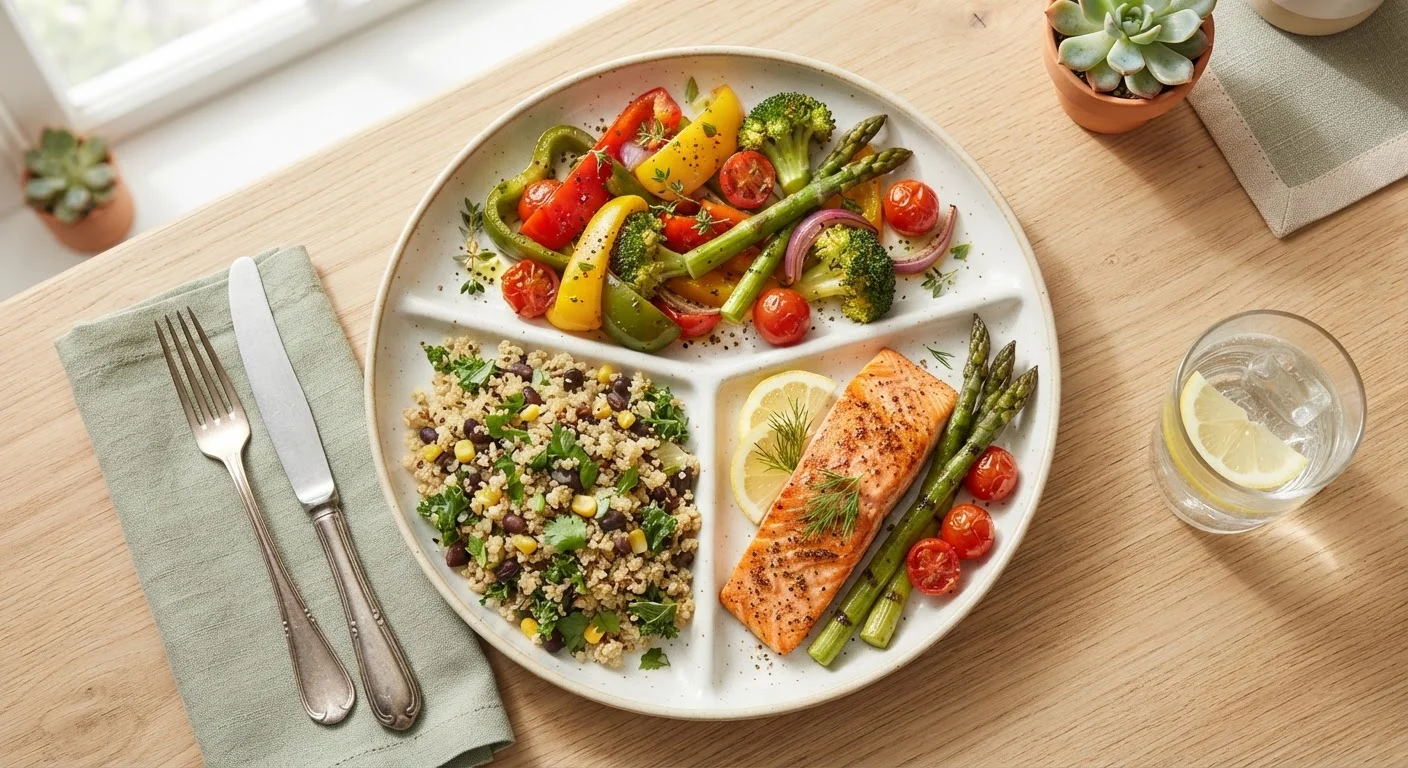
The plate method, popularized by frameworks like the USDA's MyPlate, translates research into a visual shorthand most people can apply without measuring anything: roughly half the plate for vegetables and fruit, one quarter for whole grains, and one quarter for protein. Healthy fats-olive oil, avocado, nuts-are used as additions rather than occupying a dedicated section. This isn't a rigid prescription; it's a repeatable default that nudges meals toward variety and nutrient density.
The Plate Method Is a Default, Not a Rule
Think of the plate framework as a helpful default rather than a strict requirement. Soups, stews, stir-fries, and grain bowls can all follow the same proportional logic-just distributed differently in the bowl. The goal is a repeatable pattern, not an identical plate every time.
Understanding Each Food Group's Role
Vegetables and fruit supply fiber, vitamins, minerals, and phytonutrients-compounds associated with reduced inflammation and chronic disease risk. Variety within this group matters: dark leafy greens, orange and red produce, legumes, and cruciferous vegetables each bring different micronutrients to the table.
Whole grains (oats, brown rice, quinoa, whole wheat) provide sustained energy through complex carbohydrates and contribute meaningful fiber and B vitamins. Refined grains aren't forbidden, but they lack much of the fiber and nutrients found in less-processed counterparts. You can explore common misconceptions-including the persistent myth that carbohydrates are inherently harmful-in our evidence-based corrections to nutrition myths.
Protein supports muscle maintenance, immune function, and satiety. Both plant and animal sources can meet protein needs; the trade-offs between them are worth understanding if you're making intentional choices. Our comparison of plant and animal protein sources covers amino acid profiles and practical considerations in depth.
Healthy fats are essential for absorbing fat-soluble vitamins (A, D, E, and K) and supporting brain health. Small amounts of unsaturated fats-from nuts, seeds, oily fish, or olive oil-make a meaningful nutritional contribution without dominating plate real estate.
One Food Group Cannot Do Everything
Nutritional needs are met across the full spectrum of food groups, not from any single category alone. Approaches that eliminate entire groups-all carbohydrates, all fats-often create gaps in micronutrient intake that require careful management. If you're considering a significantly restrictive eating pattern, discussing it with a registered dietitian can help you identify and address potential shortfalls.
Step-by-Step: Building Your Balanced Plate
The steps below apply to home cooking and restaurant meals alike. Adjust for your own dietary needs and any guidance from a healthcare provider or registered dietitian.
Start with vegetables and fill half the plate
Serve non-starchy vegetables-leafy greens, broccoli, peppers, tomatoes, zucchini-first and let them occupy roughly 50% of your plate. Starting here anchors the meal in nutrient density before other foods crowd the space.
Add a whole grain to one quarter of the plate
Use a quarter of your plate for a cooked whole grain or starchy vegetable-brown rice, quinoa, whole wheat pasta, sweet potato, or similar. This portion supplies lasting energy and contributes to your daily fiber intake.
Place a protein source in the remaining quarter
Fill the last quarter with a protein source: legumes, tofu, fish, poultry, eggs, or lean meat. Aim for preparations that don't add excessive saturated fat-baked, grilled, poached, or lightly sautéed options work well.
Incorporate a small amount of healthy fat
Drizzle a modest amount of olive oil over vegetables, add a small handful of nuts or seeds, or include half an avocado as a side. These additions help your body absorb fat-soluble vitamins from the vegetables on your plate.
Choose water or an unsweetened drink as your beverage
Beverages are easy to overlook when thinking about balance, but sugary drinks add significant calories without meaningful nutrients. Water, sparkling water, unsweetened tea, or coffee keep hydration on track without disrupting the nutritional pattern you've built on the plate.
Audit and adjust over time, not meal to meal
No single meal needs to be perfect. Step back weekly and ask whether most of your meals this week broadly followed the half-vegetables, quarter-grain, quarter-protein structure. Consistency over days and weeks is what drives meaningful dietary improvement.
Practical Shortcuts for Busy Days
Knowing the framework is one thing; executing it on a Tuesday evening after work is another. A few strategies can dramatically reduce the effort involved:
- Batch cook grains and proteins once a week. A pot of cooked grains and a prepared protein kept in the fridge let you assemble a balanced plate in minutes.
- Keep frozen vegetables as a staple. Frozen produce is harvested and frozen at peak ripeness, retaining most of its nutritional value-it's a practical, lower-cost alternative to fresh.
- Use the plate method at restaurants. Mentally divide what arrives: if vegetables are scarce, order a side salad or steamed vegetable to restore the proportion.
- Pre-portion snacks. Applying plate-method logic to snacks-pairing a fiber source with a protein-extends the same balance beyond main meals.
If you're curious about how food labels can support your choices without becoming overwhelming, our guide to reading a Nutrition Facts label offers a clear, jargon-free walkthrough. And if you're wondering whether detailed food tracking might suit your style, consider the honest look at the trade-offs of food logging before committing to an app.
Once balanced plating becomes habitual, the natural next step is reinforcing that pattern across a full week. Our week of smarter eating habits translates these principles into a practical daily rhythm.
This article is for general informational and educational purposes only and does not constitute medical or nutritional advice. Individual dietary needs vary. Please consult a qualified healthcare professional or registered dietitian before making significant changes to your diet, particularly if you have an existing health condition.