

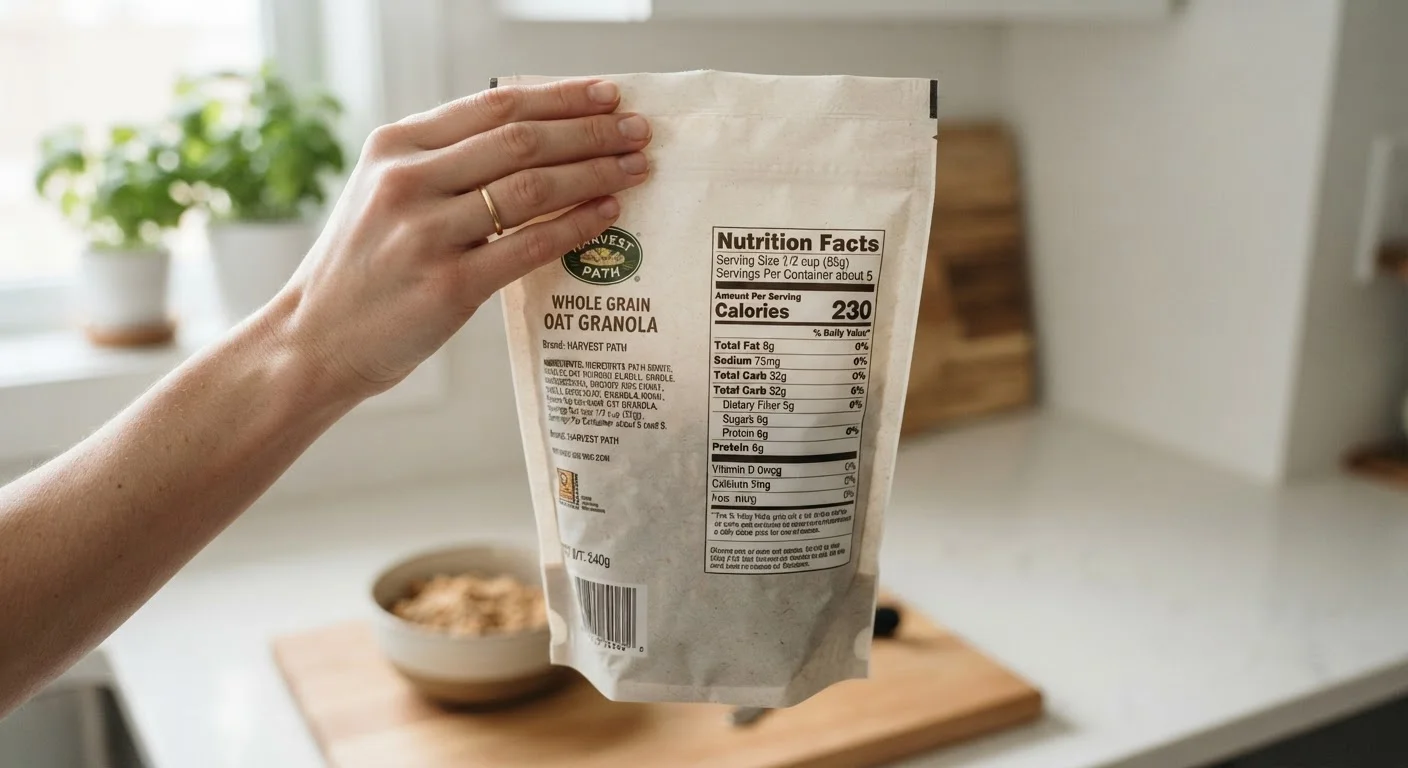
Key Takeaways
- Serving size is the foundation of the entire label - always check it first.
- Percent Daily Value (%DV) tells you whether a nutrient amount is high or low relative to daily needs.
- Aim for more fiber, vitamins, and minerals; aim for less saturated fat, sodium, and added sugars.
- Daily Values are based on a 2,000-calorie reference diet and may not match your individual needs.
- Reading labels consistently builds nutritional intuition without requiring calorie obsession.
What you will need
Why the Nutrition Facts Label Exists - and What It Actually Tells You
The Nutrition Facts panel is a standardized tool required by the U.S. Food and Drug Administration (FDA) on most packaged foods. Its purpose is straightforward: give consumers consistent, comparable information so they can make informed choices. The current format was updated in 2020 and includes a few important changes - most notably, added sugars now appear as their own line, separate from total sugars.
The label doesn't tell you whether a food is "good" or "bad." It simply reports what's inside. Context matters: a single food's numbers only become meaningful when you consider how it fits into your overall eating pattern. If you're just getting started thinking about nutrition, the foundational concepts covered here can help you build the right frame before diving into label details.
How to Read the Label: A Step-by-Step Walkthrough
Follow these steps each time you pick up a packaged product. Within a few weeks, the process becomes second nature.
Start with serving size and servings per container
Every number on the label - calories, fat, sodium, everything - applies to one serving, not the whole package. Manufacturers define what counts as a serving (e.g., 2 cookies, 1 cup), and these amounts are now required to reflect amounts people typically eat in one sitting. Check the servings per container: if a bag has 3 servings and you eat the whole bag, multiply every number by 3.
Note the calorie count
Calories appear in large, bold type directly below the serving size. This number reflects the energy in one serving. Calories are one data point among many - they don't tell you about nutrient quality, but they do matter for energy balance. Use them as a reference, not a verdict.
Scan the nutrients to limit
Look at saturated fat, sodium, and added sugars. These are the three nutrients most dietary guidelines recommend limiting. Check the gram amounts and the %DV beside each. A %DV above 20% for any of these in a single serving is worth noting, especially if this food is a regular part of your diet.
Check the nutrients to get enough of
Look for dietary fiber, vitamin D, calcium, iron, and potassium. A %DV of 10-20% or more for these is a good sign. Foods that contribute meaningfully to these nutrients help fill common gaps in typical American diets.
Use %DV as your comparison tool
Percent Daily Value is based on a 2,000-calorie daily diet - a general reference, not a personal prescription. Your actual needs may differ based on age, sex, activity level, and health status. Despite this limitation, %DV is still the fastest way to compare two similar products side by side. Pick up two brands of canned soup and compare their sodium %DVs: the difference is often striking.
Build the Habit Gradually
You don't need to analyze every label to benefit from this skill. Start with one product category you buy regularly - breakfast cereal, yogurt, or bread - and compare two or three options. Familiarity with that one category builds confidence that transfers to others. For more on building consistent habits, see our week of smarter eating habits.
The Nutrients Worth Paying Attention To
Not every line on the label demands equal attention. A practical approach is to focus on two groups:
- Nutrients to limit: Saturated fat, sodium, and added sugars. Consistently high intake of these is associated with increased risk of cardiovascular and metabolic health issues, according to mainstream dietary guidelines.
- Nutrients to prioritize: Dietary fiber, vitamin D, calcium, iron, and potassium - nutrients many Americans tend to under-consume. A %DV of 20% or more is generally considered high for these.
The %DV guide is simple: 5% or less is low, 20% or more is high. That quick mental rule applies to both groups above. For a deeper look at why specific vitamins and minerals matter, see our plain-language micronutrient reference.
One thing many readers overlook: the ingredient list, located just below or beside the panel, lists ingredients in descending order by weight. If added sugar - listed under many names like corn syrup, dextrose, or cane juice - appears in the first three ingredients, that food is likely high in it regardless of what the front of the package claims.
Front-of-Package Claims Can Be Misleading
Terms like "natural," "multigrain," or "reduced fat" are marketing language and are not regulated the same way the Nutrition Facts panel is. A "reduced fat" product may compensate with added sugar to maintain flavor. Always flip to the back and read the actual label rather than relying on front-of-package claims.
Once you understand what you're looking for on a label, putting that knowledge to work at mealtimes becomes much easier. Building a balanced plate is a natural next step, and if you're curious whether your overall diet might be falling short somewhere, our article on signs of nutritional gaps is worth a read.
This article is for general informational and educational purposes only and is not a substitute for personalized medical or dietary advice. Please consult a qualified healthcare professional or registered dietitian for guidance specific to your health needs.