

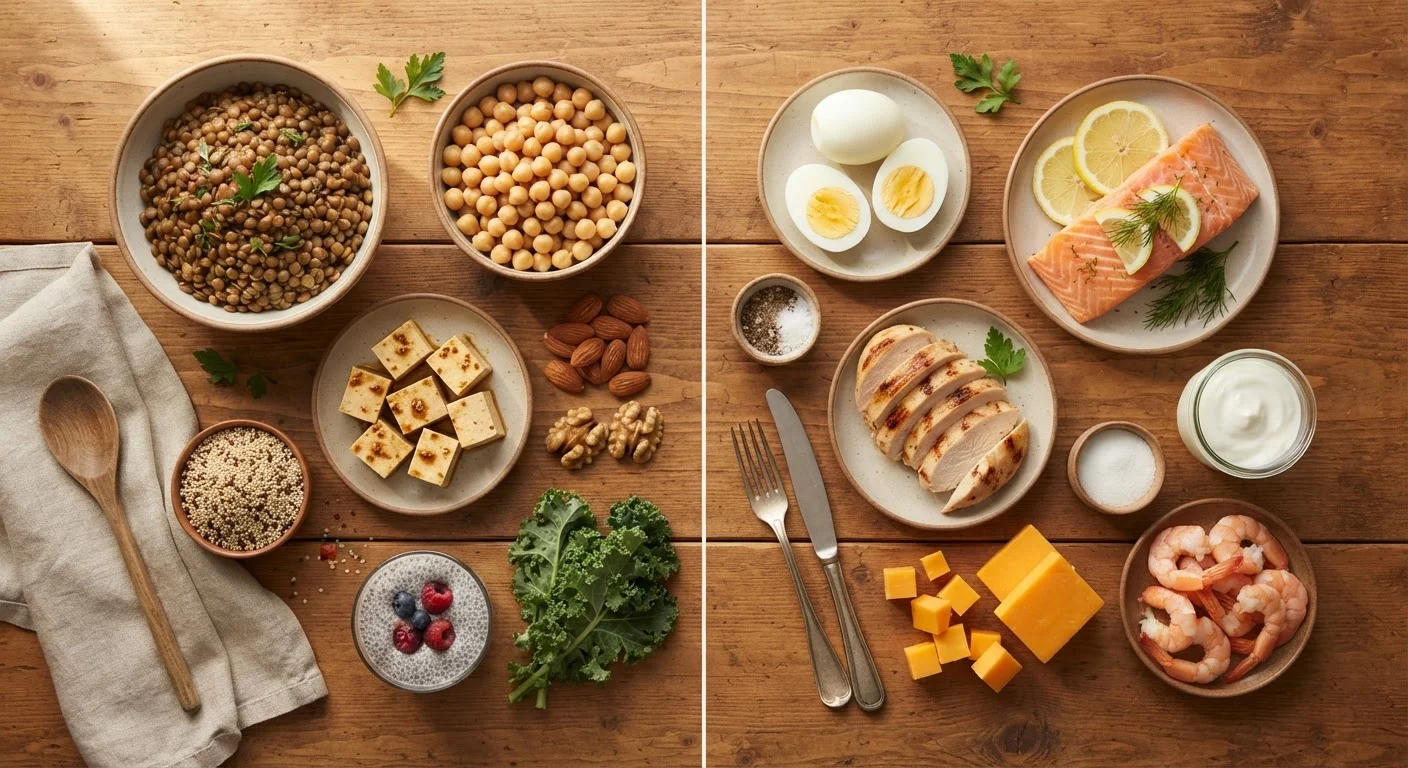
Key Takeaways
- Animal proteins are generally 'complete,' containing all essential amino acids in sufficient amounts.
- Plant proteins can meet all protein needs when eaten across a varied diet throughout the day.
- Bioavailability differs: animal proteins are typically absorbed more efficiently than most plant sources.
- Nutrients like B12, iron, and omega-3s require extra attention on a fully plant-based diet.
- Combining both protein types is a practical middle-ground many nutrition experts consider balanced.
Our Verdict
Neither protein source is universally superior - each comes with meaningful nutritional strengths and trade-offs. Animal proteins offer completeness and high bioavailability, while plant proteins bring fiber, phytonutrients, and environmental advantages. Most people benefit from understanding both rather than committing dogmatically to one camp.
| Best for | Recommended |
|---|---|
| Those seeking maximum protein efficiency with minimal meal planning | Animal protein sources |
| Those prioritizing fiber, phytonutrients, and a lower environmental footprint | Plant protein sources |
| Most everyday Americans wanting nutritional balance without restriction | A varied mix of both protein types |
What Makes a Protein 'Complete'?
Proteins are built from 20 amino acids, nine of which are considered essential - meaning your body can't manufacture them and must obtain them from food. A protein source that contains all nine in adequate amounts is called a complete protein.
Animal proteins - eggs, poultry, fish, beef, dairy - are almost universally complete. Most plant proteins, by contrast, are incomplete, meaning they're low in one or more essential amino acids. Soy and quinoa are notable exceptions, providing all nine. This difference matters, but it's less alarming than it sounds: eating a variety of plant foods across the day - legumes paired with whole grains, for example - allows your body to assemble a complete amino acid profile over time.
If you're just starting to think carefully about protein quality, our introductory nutrition guide offers a solid foundation before diving deeper.
| Plant Protein | Animal Protein | |
|---|---|---|
| Amino acid completeness | Often incomplete (soy & quinoa are exceptions) | Complete in nearly all sources |
| Bioavailability / digestibility | Generally lower; improved by cooking & soaking | Generally high across most sources |
| Fiber content | High in legumes, seeds, grains | None |
| Vitamin B12 | Absent; requires supplementation | Naturally present |
| Saturated fat | Low in most sources | Varies; higher in red & processed meat |
| Environmental footprint | Generally lower greenhouse gas emissions | Generally higher, varies by animal type |
| Omega-3 fatty acids (EPA/DHA) | Low; ALA available but poorly converted | High in fatty fish; moderate in poultry |
Bioavailability: How Much Protein Actually Reaches Your Cells?
Even if two foods contain the same amount of protein by weight, your body may absorb them very differently. Bioavailability refers to the proportion of a nutrient that your digestive system actually absorbs and uses.
Nutritionists use a measure called the PDCAAS (or the newer DIAAS) to rate protein quality. Animal proteins - whey, eggs, and meat - consistently score near the top. Many plant proteins score lower, partly because plant cell walls and compounds like phytates and tannins can reduce digestibility. Cooking, soaking, fermenting, and sprouting can meaningfully improve how well plant protein is absorbed.
This doesn't mean plant protein is inadequate - it means that people relying primarily on plant sources may benefit from eating somewhat more total protein to account for the difference. A registered dietitian can help you figure out what that looks like in practice for your individual needs.
Simple Ways to Boost Plant Protein Absorption
Soaking dried beans overnight reduces phytate content significantly. Fermenting soy - as in tempeh or miso - also improves digestibility. Lightly cooking vegetables like spinach increases the availability of the protein and minerals they contain. These small prep changes can make a meaningful nutritional difference over time.
Key Micronutrients That Follow the Protein
Protein never comes in isolation - it arrives bundled with other nutrients that significantly affect your health picture.
- Vitamin B12: Found almost exclusively in animal foods. A fully plant-based diet requires supplementation or fortified foods; deficiency can affect nerve function and red blood cell production.
- Iron: Animal sources provide heme iron, which is absorbed more readily. Plant foods offer non-heme iron, which is less efficiently absorbed but can be enhanced by pairing with vitamin C-rich foods.
- Zinc: More bioavailable from meat than from legumes or grains, where phytates can inhibit absorption.
- Omega-3 fatty acids: Fatty fish provides EPA and DHA directly. Plant sources like flaxseed offer ALA, which the body converts to EPA/DHA inefficiently.
- Fiber and phytonutrients: This is where plant proteins shine - legumes, seeds, and whole grains deliver fiber and plant compounds linked to long-term health benefits that animal proteins simply don't provide.
If you suspect gaps in your diet, our companion article on signs of nutrient deficiencies can help you recognize warning signs worth discussing with a healthcare provider.
Building a Practical, Balanced Protein Strategy
For most people, the healthiest approach isn't an either/or choice - it's a thoughtful mix. Research consistently suggests that diets emphasizing plant proteins while including moderate amounts of lean animal proteins are associated with positive long-term health outcomes. This isn't a mandate to go fully vegetarian; it's permission to treat protein sources as a spectrum.
Practical starting points:
- Swap one or two meat-centered meals per week for legume- or tofu-based alternatives.
- Use whole grains alongside beans or lentils to round out amino acid profiles.
- Include eggs or low-fat dairy if you're reducing meat - they provide complete protein with a relatively light environmental footprint.
- If following a plant-only diet, discuss B12 supplementation with your healthcare provider.
For guidance on how protein fits into your meals as a whole, see our article on building a balanced plate without restrictive rules.
This article is for general informational purposes only and does not constitute medical or nutritional advice. Please consult a qualified healthcare professional or registered dietitian before making significant changes to your diet, especially if you have an underlying health condition.