

| Number of common dashboard warning symbols | Approximately 50-70 across most modern vehicles (SAE International standardization guidelines) |
| Red light action | Stop driving as soon as safely possible |
| Amber/yellow light action | Schedule service soon; monitor closely |
| Check engine light: steady vs. flashing | Steady = service needed; flashing = stop promptly |
| TPMS trigger threshold | Typically 25% below recommended tire pressure (U.S. TPMS regulation (FMVSS 138)) |
| Best reference for your vehicle's symbols | Your owner's manual (glove compartment or manufacturer app) |
Why Dashboard Lights Exist and How to Read Them
Modern vehicles are equipped with an OBD system - a built-in network of sensors that continuously monitors engine performance, emissions, safety systems, and more. When something falls outside acceptable parameters, the system triggers a warning light on your instrument cluster. Ignoring these signals can turn a minor issue into a costly repair, or worse, a safety hazard.
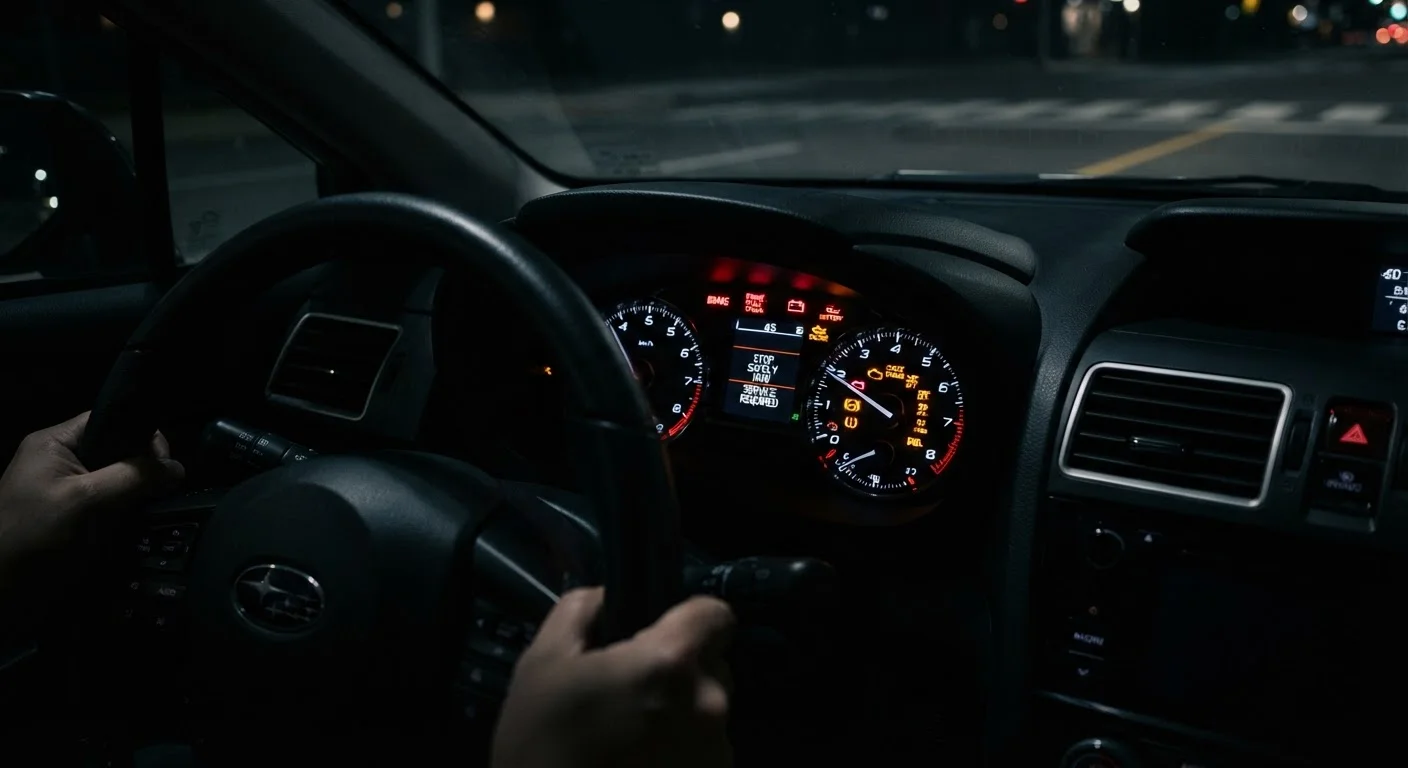
Warning lights generally fall into three color categories:
- Red: Requires immediate attention. Stop driving safely as soon as possible.
- Amber/Yellow: Investigate soon. The vehicle may still be drivable, but don't delay diagnosis.
- Green/Blue: Informational only - a system is active, not a problem.
Your owner's manual is the definitive reference for your specific make and model. That said, many symbols are standardized across the industry, making this guide a reliable starting point.
| Number of common dashboard warning symbols | Approximately 50-70 across most modern vehicles (SAE International standardization guidelines) |
| Red light action | Stop driving as soon as safely possible |
| Amber/yellow light action | Schedule service soon; monitor closely |
| Check engine light: steady vs. flashing | Steady = service needed; flashing = stop promptly |
| TPMS trigger threshold | Typically 25% below recommended tire pressure (U.S. TPMS regulation (FMVSS 138)) |
| Best reference for your vehicle's symbols | Your owner's manual (glove compartment or manufacturer app) |
The Most Common Warning Lights Decoded
Here's a breakdown of the warning lights drivers encounter most often:
Check Engine (Malfunction Indicator Lamp)
This amber engine-shaped icon is among the most misunderstood lights on any dashboard. A steady light typically means a sensor has logged a fault code - often emissions-related, such as a loose gas cap or a failing oxygen sensor. A flashing check engine light signals a more serious problem like an engine misfire and warrants pulling over and calling a mechanic promptly. Either way, a technician can read the stored fault code with a scan tool to identify the exact cause.
Oil Pressure Warning
This red oil-can symbol means your engine's oil pressure has dropped critically low - not necessarily that you're low on oil, but that pressure has fallen. Stop the vehicle as soon as it is safe; running an engine with no oil pressure can cause catastrophic internal damage within minutes. Check the oil level, and if it's adequate, have the vehicle towed. See our guide to fluids under the hood for how to check oil correctly.
Battery / Charging System
A red battery symbol indicates the charging system isn't maintaining voltage. This could be a failing alternator, a weak battery, or a broken drive belt. You may have limited driving time before the engine stalls. Minimize electrical use (A/C, radio) and head to a service center.
Tire Pressure Monitoring System (TPMS)
This amber icon resembling a cross-section of a tire with an exclamation mark means one or more tires are significantly under- or over-inflated. Check all four tires (and your spare if applicable) with a gauge and inflate to the pressure listed on the driver's door jamb sticker - not the number on the tire sidewall.
Engine Temperature Warning
A red thermometer in liquid signals the engine is overheating. Pull over, turn off the engine, and allow it to cool before checking coolant levels. Never open the radiator cap on a hot engine.
Brake System Warning
If this red exclamation point in a circle appears and your parking brake is fully released, have your brake system inspected immediately. It can indicate low brake fluid, a hydraulic fault, or worn pads depending on the vehicle. This is a stop-driving situation.
OBD (On-Board Diagnostics)
A standardized vehicle self-diagnostic system that monitors engine and emissions performance. Technicians plug a scan tool into the OBD port to retrieve stored fault codes when a warning light appears.
Fault Code (DTC)
A Diagnostic Trouble Code stored by the OBD system when a sensor reading falls outside normal range. Each code corresponds to a specific system or component and helps mechanics pinpoint the source of a problem.
TPMS
Tire Pressure Monitoring System - a sensor network that alerts you when one or more tires deviate significantly from the recommended inflation pressure.
Alternator
A generator driven by the engine that recharges the battery and powers the vehicle's electrical systems while the engine is running. A failing alternator causes the battery warning light to illuminate.
SRS (Supplemental Restraint System)
The technical name for your vehicle's airbag system. An SRS warning light means the system has detected a fault that could prevent airbags from deploying as intended during a collision.
Malfunction Indicator Lamp (MIL)
The official term for the check engine light. It signals that the engine management system has logged a fault code worth investigating, ranging from minor emissions issues to more serious engine faults.
Secondary Lights Worth Knowing
Several additional lights appear less often but carry real importance:
- Traction Control / Stability Control (flashing): The system is actively working. If it stays on steady, the system may be disabled or faulty.
- Airbag / SRS Warning: An amber figure with a circle (the airbag) means the supplemental restraint system has a fault. Your airbags may not deploy correctly in a crash - have it diagnosed promptly.
- Power Steering Warning: Common in vehicles with electric power steering. Steering will feel heavy; schedule service soon.
- Transmission Temperature: The transmission is running too hot. Stop and allow it to cool, especially if you've been towing or driving in stop-and-go traffic.
Keeping up with scheduled maintenance can prevent many of these lights from appearing in the first place. Our guide to reading your maintenance schedule explains how to stay ahead of service intervals.
If a warning light appears after buying a used vehicle, a vehicle history report can reveal whether recurring issues were previously documented - see our guide to reading a vehicle history report for help interpreting that data.
This article provides general automotive information for educational purposes. Always consult a qualified mechanic for diagnosis and repair of vehicle warning indicators. Do not attempt repairs beyond your skill level, especially those involving brakes, airbags, or fuel systems.