

| Engine Oil Check Method | Dipstick, with engine off and cool |
| Coolant Check Safety Rule | Only open reservoir when engine is completely cold |
| Brake Fluid Color (Healthy) | Clear to pale yellow |
| Transmission Fluid Color (Healthy) | Red or pink; dark/burnt signals degradation |
| Power Steering Note | Many newer vehicles use electric steering - no fluid needed |
| Washer Fluid Tip | Use purpose-made fluid; plain water can freeze and harbor bacteria |
Why Vehicle Fluids Matter
Your vehicle relies on a network of fluids to lubricate moving parts, regulate temperature, transfer force, and protect critical systems. When any one of them runs low or degrades, the damage can escalate quickly - often in ways that aren't cheap to fix. The good news: checking most fluids takes under ten minutes and requires nothing more than a clean rag and your owner's manual.
This guide walks through each major fluid system, explains what it does, and describes what low or dirty fluid typically signals. For a broader look at how these checks fit into your vehicle's overall upkeep, see our comprehensive maintenance resource covering a vehicle's full lifespan.
| Engine Oil Check Method | Dipstick, with engine off and cool |
| Coolant Check Safety Rule | Only open reservoir when engine is completely cold |
| Brake Fluid Color (Healthy) | Clear to pale yellow |
| Transmission Fluid Color (Healthy) | Red or pink; dark/burnt signals degradation |
| Power Steering Note | Many newer vehicles use electric steering - no fluid needed |
| Washer Fluid Tip | Use purpose-made fluid; plain water can freeze and harbor bacteria |
The Six Fluids Every Driver Should Know
Engine Oil
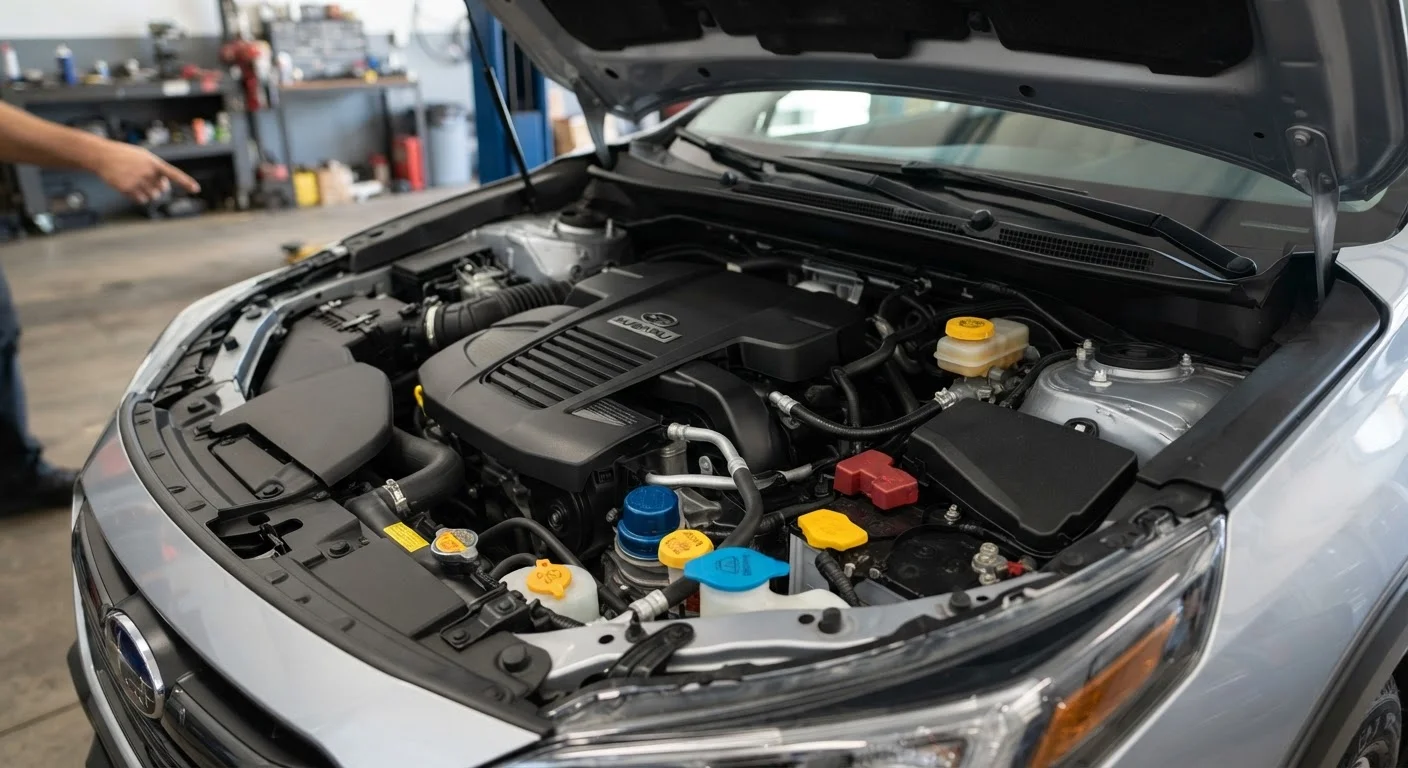
Engine oil lubricates hundreds of moving metal parts and carries heat away from the engine. Check it with the dipstick when the engine is cold or has been off for a few minutes. The oil should sit between the two marks on the dipstick and appear amber to dark brown. Black, gritty oil or a level well below the minimum mark both warrant attention. Most modern engines don't need an oil change at 3,000 miles - learn what actually determines the right interval.
Coolant (Antifreeze)
Coolant circulates through the engine and radiator, preventing overheating in summer and freezing in winter. The reservoir is usually a translucent plastic tank marked with MIN and MAX lines. Only open the radiator cap when the engine is completely cold - pressurized hot coolant can cause serious burns. Low coolant may point to a leak; discolored or rusty coolant suggests it's time for a flush.
Brake Fluid
Brake fluid transmits the force from your pedal to the calipers that grip the rotors. It lives in a small reservoir near the firewall, typically labeled with a brake symbol. The level should fall between MIN and MAX. A low reading often means worn brake pads rather than a leak - but both need prompt attention. Brake fluid also absorbs moisture over time, which lowers its boiling point and reduces stopping performance. Understand how your entire braking system works to put this in context.
Transmission Fluid
Transmission fluid lubricates the gears that transfer engine power to your wheels. Some vehicles have a dipstick for this; others require a dealer or mechanic to check it. Healthy fluid is typically red or pink and faintly sweet-smelling. Dark, burnt-smelling fluid is a sign of degradation. Slipping gears or delayed engagement are common symptoms of low or worn transmission fluid.
Power Steering Fluid
In vehicles with hydraulic power steering, this fluid makes turning the wheel feel effortless. The reservoir usually has a cap marked with a steering wheel icon. Low fluid often causes a whining noise when turning. Note: many newer vehicles use electric power steering and have no fluid to check.
Windshield Washer Fluid
The only fluid here that won't damage your engine if it runs out - but driving with an empty reservoir in winter or on dusty roads severely limits visibility. Use a purpose-made washer fluid rather than plain water, which can freeze and harbor bacteria.
Dipstick
A long metal rod inserted into the engine oil reservoir, used to measure the current oil level. Markings at its tip indicate minimum and maximum safe levels.
Coolant (Antifreeze)
A liquid mixture - typically ethylene glycol and water - that circulates through the engine and radiator to manage operating temperature and prevent freezing or boiling.
Brake Fluid
A hydraulic fluid that transmits force from the brake pedal through lines to the calipers. It is hygroscopic, meaning it absorbs moisture over time, which can degrade performance.
Transmission Fluid
A specialized lubricant that keeps the gears and components inside your transmission - automatic or manual - operating smoothly and at the correct temperature.
Hydraulic Power Steering
A steering assist system that uses pressurized fluid to reduce the effort needed to turn the wheel. Older and larger vehicles commonly use this system.
Firewall
The metal barrier between the engine bay and the passenger cabin. Several fluid reservoirs, including brake fluid, are typically mounted near or on the firewall.
Warning Signs You Shouldn't Ignore
Fluids communicate a lot about vehicle health. A puddle under your parked car, a burning smell after driving, or a dashboard warning light are all reasons to investigate before your next trip. The warning lights guide can help you decode exactly what your dashboard is telling you.
Color is also informative: green or orange liquid near the front of the car usually indicates coolant. Dark brown or black near the engine suggests oil. Clear or light yellow fluid near a wheel could be brake fluid - a situation that warrants immediate professional inspection, as brake failure is a safety risk.
If you notice any fluid loss that you can't account for, or if a level drops repeatedly after topping off, have a qualified mechanic inspect the vehicle. Topping up is a stopgap, not a fix. For guidance on spotting other early warning signs, see catching small problems before they become expensive repairs.
Fluid checks are also a natural part of seasonal readiness. Our seasonal vehicle prep checklist explains what to inspect as conditions change throughout the year.
This article provides general vehicle information and education. Always consult your owner's manual and a qualified mechanic for guidance specific to your vehicle's make, model, and condition.