

Key Takeaways
- Brake pads, rotors, and calipers each play a distinct and essential role in stopping your vehicle safely.
- Brake pads are consumable wear items that typically need replacement every 25,000-70,000 miles depending on driving habits.
- Rotors can warp or wear thin over time, affecting braking feel and requiring inspection or replacement.
- Squealing, grinding, vibration, or a soft brake pedal are all warning signs that should prompt a professional inspection.
- Brake fluid is the hydraulic link between your foot and the braking components - keeping it clean matters.
Disc Brake System
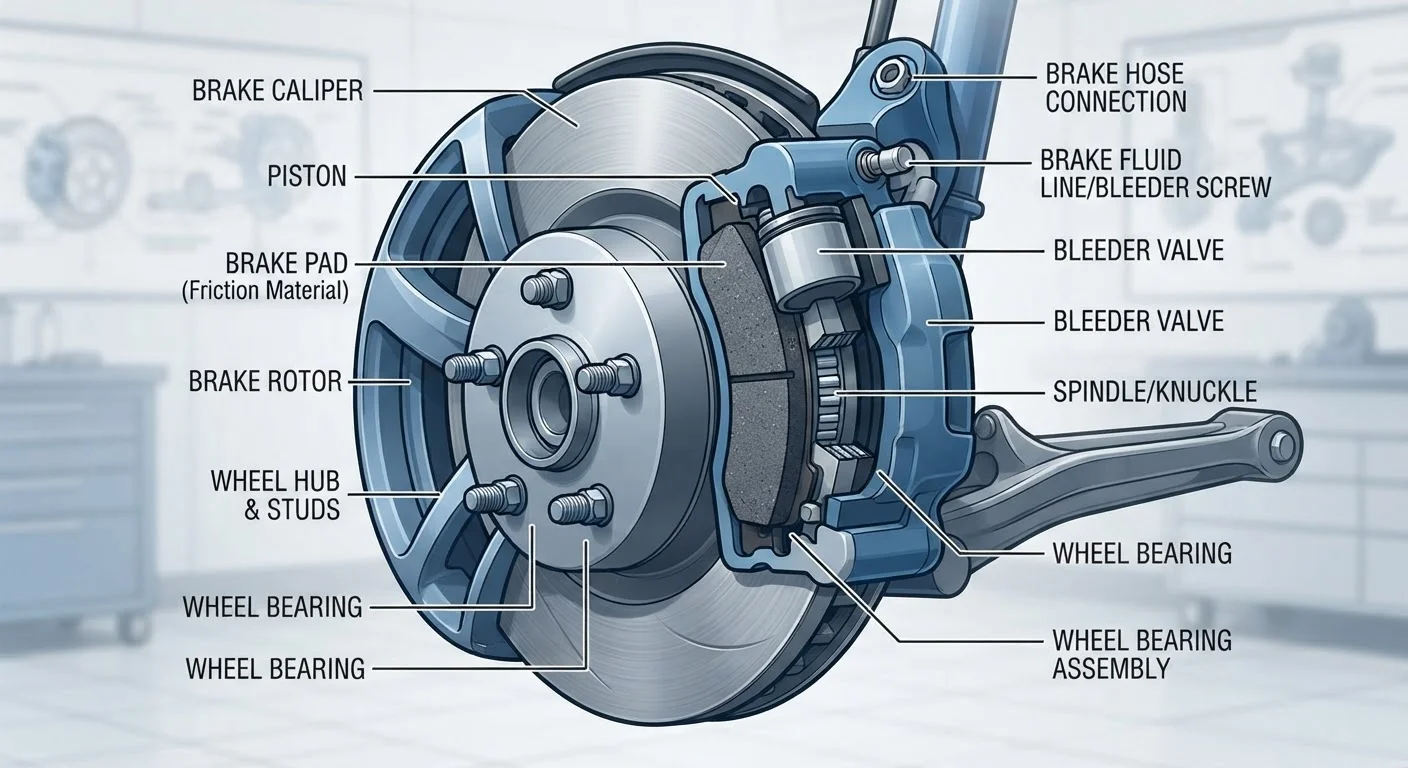
A disc brake system is the most common type of vehicle braking system, found on most modern cars. It works by pressing friction material (brake pads) against a spinning metal disc (rotor) to slow or stop the wheel. A hydraulically powered clamp called a caliper holds the pads and applies the squeezing force when you press the brake pedal.
Disc brakes outperform older drum brake designs in heat dissipation and wet-weather response, which is why they are now standard on front axles and increasingly on rear axles across most passenger vehicles.
The Three Core Components and What They Do
Every time you press the brake pedal, three components work in concert to bring your vehicle to a stop: the brake pads, the rotors (also called discs), and the calipers. Understanding each one makes it far easier to recognize symptoms and communicate with a mechanic when something feels off.
Brake Pads
Brake pads are flat blocks of friction material mounted inside the caliper. When the caliper clamps down, the pads press firmly against both sides of the spinning rotor. That friction converts your vehicle's kinetic energy into heat, slowing the wheel. Pads are deliberately designed to wear down over time - they're the sacrificial element of the system, protecting the more expensive rotor.
Rotors
Rotors are the large metal discs attached to the wheel hub that spin with the wheel. Their flat faces provide the surface the pads grip. Rotors are typically vented - meaning they have internal channels that allow heat to escape - because sustained braking generates intense temperatures. Over time, rotors can wear thin, develop grooves from metal-on-metal contact, or warp from heat stress.
Calipers
The caliper is the hydraulic clamp that holds the brake pads and applies pressure when you brake. Most passenger vehicles use floating calipers, which have one or two pistons on one side and slide inward to apply equal pressure on both sides of the rotor. High-performance vehicles often use fixed calipers with pistons on both sides for more consistent clamping force.
25,000-70,000 mi
Typical brake pad replacement interval
Industry guidance from automotive maintenance organizations reflects a wide range depending on driving conditions, vehicle weight, and pad material.
~20%
Of crashes linked to brake-related factors
A large-scale crash causation study by the National Highway Traffic Safety Administration found brake problems to be among the leading vehicle-related crash factors.
2 years
Recommended brake fluid change interval
Many vehicle manufacturers and brake system engineers suggest replacing brake fluid every two years because it absorbs moisture over time, which lowers its boiling point.
How the System Comes Together: From Pedal to Stop
The braking system is hydraulic, meaning it uses fluid pressure to transmit force. When you depress the brake pedal, a component called the master cylinder converts that mechanical input into hydraulic pressure. That pressure travels through brake lines - small metal and rubber tubes - to each wheel's caliper.
Inside the caliper, the pressure pushes against one or more pistons, which force the brake pads outward against the rotor face. The friction that results slows the rotor and, by extension, the wheel. Release the pedal, and hydraulic pressure drops, allowing the caliper pistons to retract slightly and letting the rotor spin freely again.
Brake fluid is the medium that carries this pressure. It must withstand high temperatures and maintain consistent viscosity. Contaminated or moisture-laden fluid can reduce braking performance and accelerate corrosion inside the system. For a broader look at the fluids your vehicle depends on, see our guide to fluids under the hood.
Check Your Brake Fluid Regularly
Brake fluid lives in a small reservoir under the hood, usually near the firewall on the driver's side. The fluid should appear clear to light amber - dark or murky fluid is a sign it has absorbed moisture and should be replaced. Keeping brake fluid clean supports consistent pedal feel and protects internal brake components from corrosion.
Warning Signs Your Brakes Need Professional Attention
Braking problems rarely appear without warning. Learning to interpret these signals early can prevent minor wear from becoming a major safety issue - and a much larger repair bill.
- Squealing or squeaking: Often the first sign of worn brake pads. Built-in wear indicators emit this sound intentionally to alert drivers.
- Grinding: A harsh metallic grinding noise typically means the pad material has worn away entirely and metal is contacting the rotor. This requires immediate attention.
- Pulsating pedal or steering wheel vibration: A common indicator of warped rotors. The warped surface causes intermittent contact during braking rather than smooth, consistent friction.
- Vehicle pulling to one side: May indicate a stuck or seized caliper, uneven pad wear, or a brake line issue.
- Soft or spongy pedal: Usually a sign of air in the brake lines or low brake fluid - both require prompt diagnosis.
- Burning smell after driving: Overheated brakes can produce an acrid chemical odor. If this happens, allow brakes to cool before continuing and have them inspected.
These symptoms are among the early warning signs drivers most often overlook. See how to catch small problems before they become expensive repairs for a broader look at proactive vehicle care.
Fitting Brakes Into Your Overall Maintenance Picture
Brakes don't exist in isolation - they interact with tires, suspension, and fluid systems in ways that affect overall vehicle safety. A tire with uneven wear can stress braking components unevenly. Low brake fluid affects pedal feel. Worn suspension components can make it harder for brakes to do their job effectively.
Brake pad lifespan varies widely: city drivers who brake frequently in stop-and-go traffic will wear pads faster than highway commuters. Towing or carrying heavy loads also accelerates wear. Most manufacturers recommend inspection at every tire rotation, and replacement intervals commonly cited in the industry range from roughly 25,000 to 70,000 miles - though your actual experience may differ based on driving style and conditions.
For a full picture of how brakes fit into the broader scope of keeping a vehicle roadworthy, our comprehensive maintenance resource covers routine services across a vehicle's entire lifespan.
When in doubt, consult a licensed mechanic. The braking system is too central to vehicle safety to defer or guess on.