

Key Takeaways
- Changing your HVAC filter every 1-3 months is the single most impactful routine maintenance task.
- Blocked or closed vents force your system to work harder, reducing efficiency and shortening equipment life.
- Professional duct cleaning is rarely needed annually - most homes benefit from it every 3-5 years.
- A dirty filter is the leading cause of HVAC inefficiency and premature system failure.
- Simple visual checks of vents and registers each season catch most problems before they escalate.
Why HVAC Maintenance Doesn't Have to Be Complicated
Most homeowners assume HVAC upkeep requires a technician every few months or expensive equipment. In reality, a consistent, low-effort routine handles the majority of what your system needs. The core tasks - changing filters, clearing vents, and knowing when to call for duct service - take less time than you'd expect and pay dividends in lower energy bills, better air quality, and a longer system lifespan.
Think of your HVAC system the way you'd think of any other major home system. As part of a broader approach to home upkeep, it fits neatly into a season-by-season maintenance routine that prevents small issues from becoming costly repairs.
Filter Basics: What to Replace, When, and Why
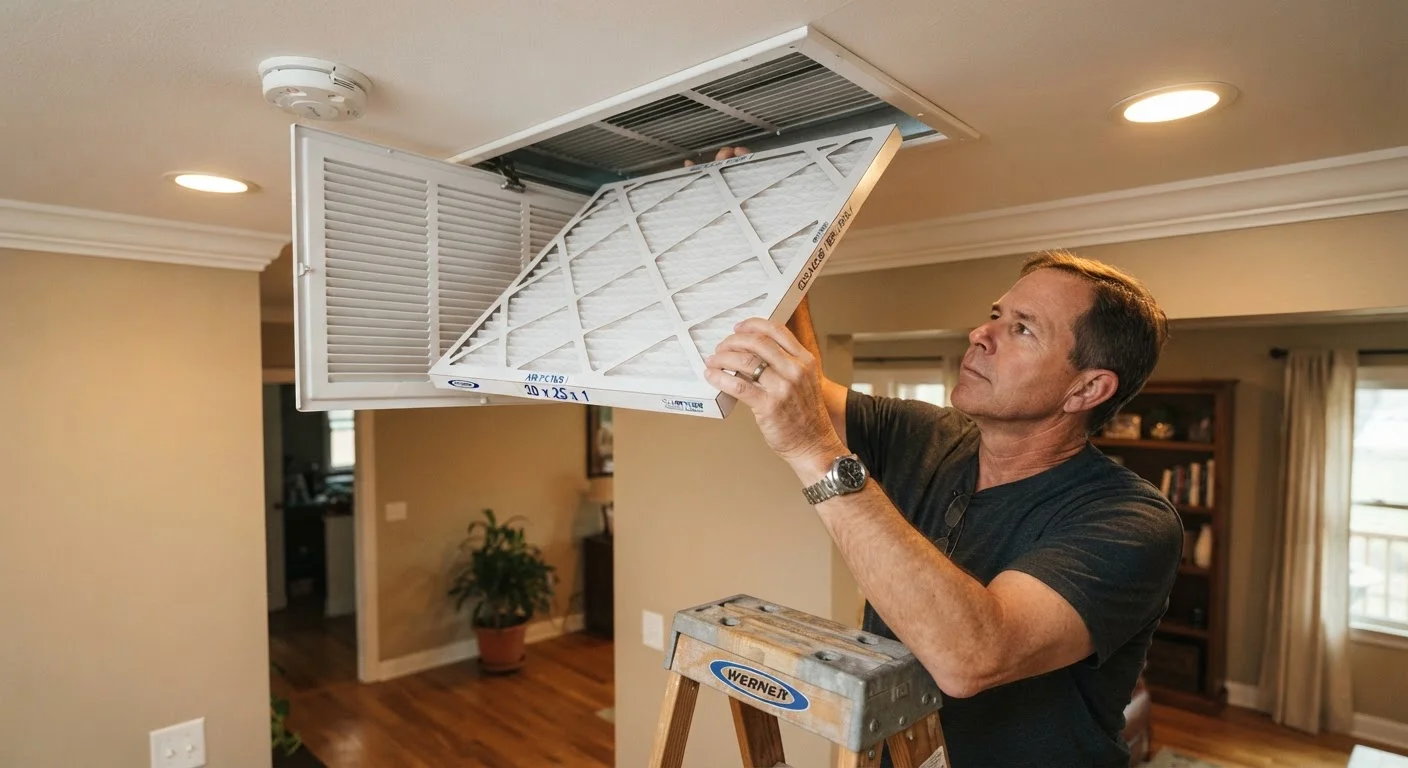
The filter is your HVAC system's first line of defense. It traps dust, pet dander, pollen, and other airborne particles before they coat your equipment's internal components. When a filter becomes clogged, airflow is restricted - the blower motor works harder, efficiency drops, and in extreme cases the heat exchanger can overheat.
Replace your HVAC filter on a consistent schedule tied to a real calendar reminder.
An overdue filter restricts airflow, forces the blower motor to work harder, and can cause the system to overheat or freeze. Regular replacement is the highest-return maintenance action available to any homeowner.
Match your filter's MERV rating to your household's actual needs - avoid going too high.
Very high MERV ratings (above 13) can restrict airflow in residential systems not designed for them, creating the same pressure problems as a clogged filter. Choose the highest rating your system can support comfortably.
Keep all supply and return vents open and free of obstructions year-round.
Closed or blocked vents increase duct pressure, reduce system efficiency, and can cause uneven temperatures throughout the home. Balanced airflow is essential for any forced-air system to perform as designed.
Schedule professional duct cleaning based on condition, not a fixed annual calendar.
Unnecessary duct cleaning costs money and provides no documented health benefit when ducts are not contaminated. Spending that budget on filter quality or a professional system tune-up yields better results.
Inspect the area around your air handler for moisture after every season change.
Condensate drain lines can clog, causing water to back up around the air handler. Catching this early prevents water damage to flooring, drywall, and the unit itself.
Most standard 1-inch fiberglass filters need replacement every 30 days. Higher-efficiency pleated filters (MERV 8-11) typically last 60-90 days in a typical household. Homes with pets or allergy sufferers should lean toward the shorter end of any recommended interval. Always check the filter packaging for the manufacturer's guidance.
How to check without guessing: Hold the filter up to a light source. If you can't see light passing through, it's time for a new one regardless of how long it's been in place.
Vents and Registers: Keep Them Open and Unobstructed
A common myth suggests that closing vents in unused rooms saves energy. In a forced-air system, closing registers actually increases static pressure throughout the duct network, which can strain the blower motor and cause the system to run longer to reach the thermostat setpoint. Learn more about how your system type affects these dynamics in our guide on forced-air vs. radiant heat maintenance.
Walk through your home each season and confirm that supply and return vents are not blocked by furniture, rugs, or drapes. Use a vacuum brush attachment to clean dust buildup off register grilles - this takes minutes and immediately improves airflow. Return vents (typically larger and without adjustable louvers) are especially important to keep clear, since they pull air back to the system for reconditioning.
Duct Cleaning: Separating Fact From Hype
Duct cleaning has a reputation for being oversold. The U.S. Environmental Protection Agency notes that duct cleaning has not been shown to prevent health problems in the absence of specific contamination concerns - such as visible mold growth, pest infestation, or excessive debris buildup that's confirmed visually or with inspection.
When Duct Cleaning Is Worth It
The EPA advises considering duct cleaning when there is confirmed mold growth inside ducts or on system components, a verifiable pest or rodent infestation in the ductwork, or ducts so clogged with dust and debris that particles are visibly discharged into the room. Absent these conditions, routine duct cleaning is largely a judgment call based on your home's history and air quality concerns. If you're unsure, a duct inspection by a qualified professional can help you decide without committing to a full cleaning.
For most households, professional duct cleaning every three to five years is a reasonable interval. Signs you may want to schedule it sooner include visible dust blowing from registers when the system starts, a musty odor from vents, or a recent renovation that generated significant drywall dust or debris inside the home.
When you do hire a duct cleaning service, ask whether they follow the standards set by the National Air Duct Cleaners Association (NADCA). A thorough job covers the entire system - supply and return ducts, registers, grilles, coils, and the air handler - not just the accessible duct openings.
If you're building good habits from the start, this fits naturally into the first-time homeowner's maintenance roadmap alongside other essential system checks.
Building a Routine That Sticks
The best HVAC maintenance plan is one you'll actually follow. Tie filter changes to a recurring calendar reminder - the first of every month works well for homes with pets or high usage. Keep a small stock of the correct filter size on hand so replacement never requires a separate errand.
Each season, do a five-minute walk-through: check vents for obstructions, listen for any unusual sounds when the system cycles on, and inspect the area around your air handler for moisture or debris. This kind of light observation catches the early signs of problems - a rattling vent, a damp spot near the drain pan - before they escalate.
For the full picture of keeping your home's systems running reliably, see our complete home maintenance overview, which covers HVAC alongside plumbing, roofing, and electrical upkeep.