

Key Takeaways
- Small, ignored repairs almost always cost significantly more to fix once damage spreads to adjacent systems.
- Water intrusion is the most common and destructive consequence of deferred maintenance in American homes.
- A routine seasonal maintenance schedule can prevent the majority of major home repair expenses.
- Deferred maintenance can reduce your home's resale value and complicate the sale process.
- Most high-cost repairs are traceable to an earlier, much cheaper warning sign that went unaddressed.
Deferred Maintenance
Deferred maintenance refers to upkeep tasks or repairs that a homeowner knowingly delays or skips, often to avoid an immediate expense or inconvenience. Unlike proactive care, deferred maintenance allows minor issues to worsen over time - and the longer the delay, the more expensive the eventual fix tends to be. It applies to everything from a dripping faucet to a neglected roof.
In real estate and property management, deferred maintenance is formally assessed during appraisals and inspections, often reducing a property's market value proportional to the estimated cost of outstanding repairs.
Why Delayed Repairs Don't Stay Small
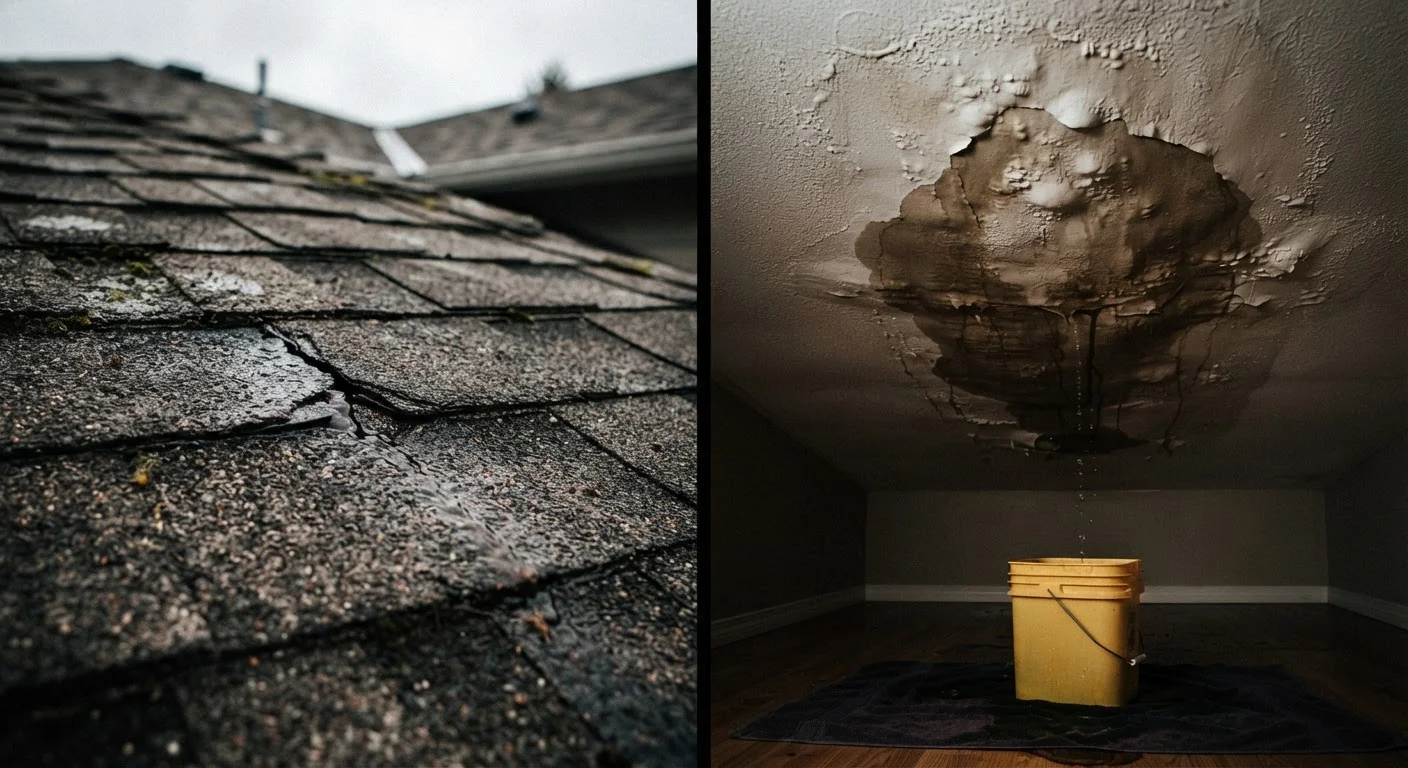
Every home is a system of interconnected parts - and when one component begins to fail, the stress transfers to those around it. A small roof shingle that curls and lifts might seem like a cosmetic flaw. But water that infiltrates through that gap over one rainy season can saturate the sheathing beneath, migrate into wall framing, and create the warm, damp conditions that mold needs to take hold. What started as a $200 shingle repair can escalate to a $4,000 or higher remediation project.
This is the core problem with deferred maintenance: the original issue rarely stays contained. Instead, it opens a pathway for secondary damage, and the window for a cheap fix closes quickly. Most homeowners who face large, unexpected repair bills can point to an earlier signal - a stain, a drip, a soft spot underfoot - that didn't seem urgent at the time.
Act on the First Visible Sign
Water stains, hairline cracks, soft spots in flooring, and musty odors are rarely isolated symptoms - they point to an ongoing process that's already underway. Investigating at the first sign, rather than waiting to see if it worsens, is almost always the cheaper choice. Even a professional inspection at that stage costs far less than remediation after damage spreads.
The Most Costly Categories of Neglect
Not all deferred maintenance carries equal risk. Some areas of a home are more sensitive to neglect and more expensive to restore once damage has set in.
- Roofing and gutters: Clogged gutters force water to pool against fascia boards and foundation walls. Combined with damaged flashing or aging shingles, this is the single most common source of major water damage in American homes.
- HVAC systems: Skipping annual servicing shortens system lifespan and allows small inefficiencies - a dirty coil, a worn belt - to cascade into compressor failure. Replacing a full HVAC system costs far more than years of tune-ups.
- Foundation and grading: Soil that slopes toward the home rather than away from it directs water against the foundation. Left unaddressed, this leads to cracking, bowing walls, and basement moisture infiltration.
- Plumbing and seals: Slow drips under sinks and around toilet bases gradually rot subfloor materials. By the time the floor feels soft, the damage typically extends further than visible inspection reveals.
See our guide to attic and crawl space upkeep for a closer look at the hidden areas most homeowners miss during routine checks.
1%-3%
Recommended annual home maintenance budget (of home value)
A commonly cited rule of thumb among property managers and housing experts suggests setting aside 1-3% of a home's value annually for ongoing maintenance and repairs.
~10x
Cost multiplier when small repairs become large ones
Industry estimates from home inspection professionals frequently note that the cost to address damage after it has spread to adjacent systems is often 10 times or more than early intervention would have required.
35%
Of home sales delayed or renegotiated due to deferred maintenance
Real estate professionals widely report that inspection findings related to deferred maintenance are among the most common reasons home sales stall or result in buyer-requested price reductions.
How Neglect Compounds Financially Over Time
Deferred maintenance doesn't just cost more to repair - it costs more in multiple ways simultaneously. Energy bills climb when insulation degrades, seals fail around windows and doors, or HVAC systems work harder to compensate for leaks. Over time, these inefficiencies add hundreds of dollars annually to operating costs, before any repair bill arrives.
There's also the resale dimension. Buyers and their inspectors are trained to identify deferred maintenance. A home with visible signs of neglect - peeling paint, mineral staining around fixtures, soft spots in floors - signals risk, and buyers adjust their offers accordingly or walk away. The compounding nature of small costs applies just as readily to ignored repairs as it does to overlooked spending habits.
Permits and Professional Work Matter
Some repair work - especially anything touching structural elements, electrical systems, gas lines, or load-bearing components - requires permits and licensed contractors in most U.S. jurisdictions. Unpermitted repairs can complicate home sales and may not meet safety codes. Always verify local requirements with your municipality before undertaking significant repairs.
Building a simple maintenance fund - setting aside a percentage of your home's value each year specifically for upkeep - can reduce the financial shock of repair cycles and discourage the temptation to defer necessary work.
Building a Habit That Prevents the Problem
The most effective antidote to deferred maintenance is a predictable, seasonal inspection routine. Rather than reacting to visible problems, proactive homeowners schedule regular walkthroughs that check roofing, gutters, HVAC filters, caulking, sump pumps, water heaters, and crawl spaces on a set calendar. This approach shifts maintenance from crisis response to normal household rhythm.
Our season-by-season home maintenance guide breaks this down into manageable quarterly tasks so nothing falls through the cracks. The principle mirrors what vehicle owners already know: the early warning signs most people overlook are often the cheapest moment to act.
Small, consistent effort consistently outperforms large, reactive spending. A few hours and modest materials invested each season reliably costs less - often dramatically less - than the repair bills that follow years of inaction.