

Key Takeaways
- Small recurring expenses are easy to dismiss individually but significant in aggregate.
- Daily habits compounded across months and years can represent thousands of dollars annually.
- Awareness - not deprivation - is the first step toward better spending decisions.
- Redirecting even modest amounts toward savings can have a measurable long-term effect.
- A periodic spending audit helps surface costs that have become invisible through routine.
The Latte Factor
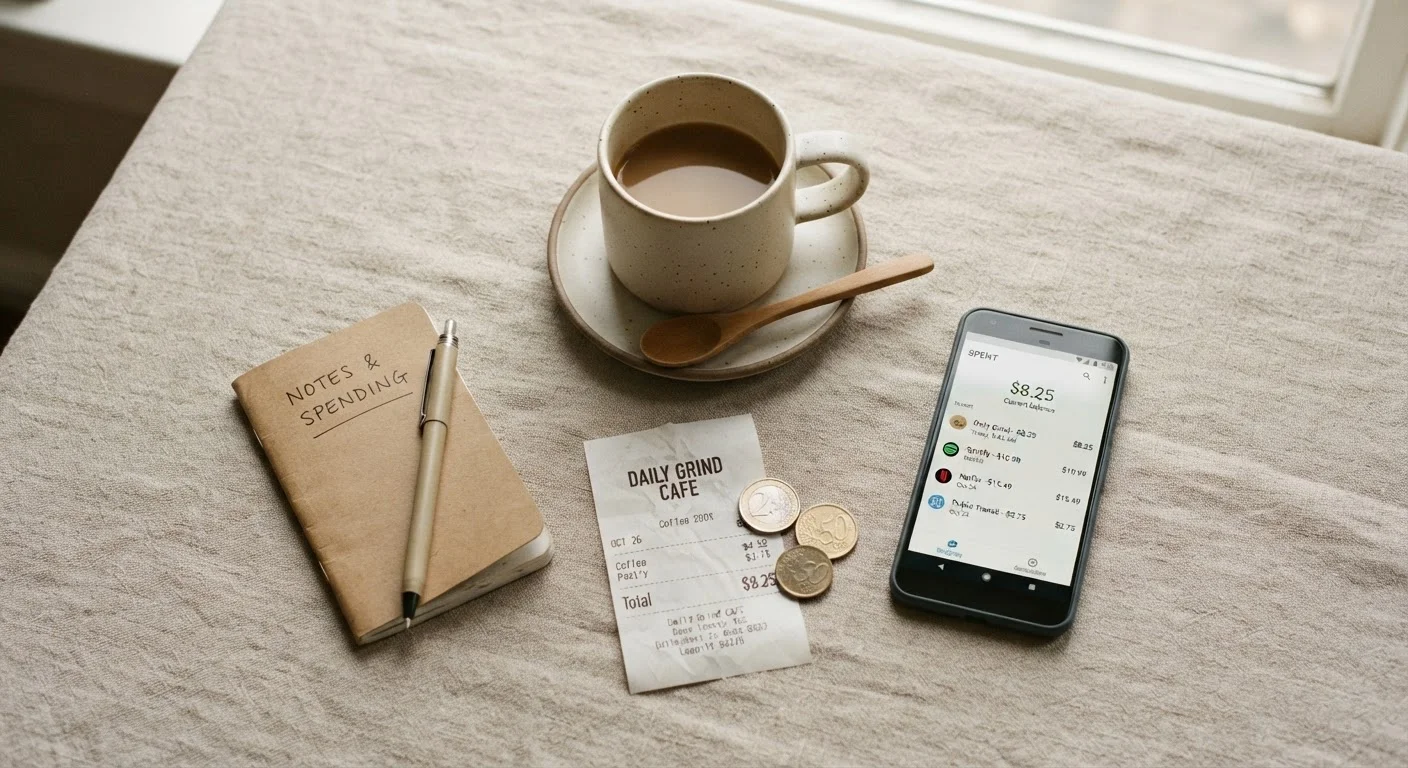
The "latte factor" is a shorthand concept for the idea that small, recurring everyday purchases - coffee, subscriptions, convenience snacks, impulse downloads - can accumulate into significant sums over time. It's not about the coffee itself, but about the broader habit of spending on minor items without tracking them. When these costs go unexamined, they quietly erode the margin between what you earn and what you save.
In behavioral economics, this pattern is sometimes linked to "present bias" - the tendency to overvalue immediate, small pleasures relative to long-term financial goals. It's also related to the concept of opportunity cost: every dollar spent is a dollar not available for saving or investing.
Why Small Costs Are So Easy to Overlook
Individual small purchases rarely feel significant in the moment. A $4 app upgrade, a $6 coffee, a $12 streaming add-on - none of these registers as a financial decision requiring serious thought. That's precisely what makes them collectively powerful. Human brains tend to evaluate purchases in isolation, not as part of a running annual total.
This cognitive blind spot is compounded by the prevalence of automatic billing. Many subscription services charge monthly or annually, which means costs arrive without any active purchasing decision. A service signed up for during a free trial and forgotten can quietly charge for years. According to research on consumer subscription habits, a meaningful portion of people regularly underestimate both the number of services they pay for and their combined monthly cost.
The result is a gap between the budget people think they're following and the one they're actually living. This isn't a character flaw - it's a structural problem with how modern spending works. Solving it begins with visibility. A good starting point is a spending audit, which provides a category-by-category view of where money is actually going each month.
Subscriptions Are Designed to Stay Out of Sight
Many subscription services deliberately make cancellation multi-step and inconvenient, while renewals are fully automatic. This asymmetry - easy to join, harder to leave - means that inertia does the work of retention for the provider. Scheduling a quarterly review of all recurring charges is one of the simplest ways to counteract this design.
The Math Behind Accumulation
The numbers are straightforward when laid out explicitly. Consider a few common spending patterns:
- A $5 weekday coffee purchase, five days per week: roughly $1,300 per year.
- Three streaming or app subscriptions at an average of $12 each per month: $432 per year.
- A $10 weekly lunch upgrade or convenience food purchase: $520 per year.
Combined, these three habits - none of which feels significant day-to-day - total more than $2,200 annually. That figure doesn't account for additional impulse purchases, delivery fees, or other recurring micro-costs that most household budgets absorb without scrutiny.
The longer-term dimension is where the opportunity becomes most visible. If even a portion of that $2,200 were redirected to a savings or investment account, the compounding effect over time can be substantial. For a deeper look at how compounding works, see how compound interest builds long-term wealth. This is general illustration, not a projection - individual results depend on rates, timing, and many personal factors.
$2,200+
Estimated annual cost of a few common small habits
Combining a daily coffee, three monthly subscriptions, and a weekly convenience purchase illustrates how quickly minor costs accumulate across a year.
~$276
Annual cost of two forgotten subscriptions at $11.50 avg.
Unused subscriptions are among the most common sources of invisible spending, often persisting for months or years after active use has stopped.
3-5x
How much people underestimate their subscription count
Consumer research consistently finds that individuals undercount the number of paid digital services they maintain and their combined monthly cost.
Habits That Make Small Spending Invisible
Several common behaviors make routine small costs harder to see and easier to ignore:
- Cashless and contactless payment
- Digital payments remove the physical friction of handing over money, which research in consumer psychology suggests reduces the perceived "pain" of spending. Transactions feel less real, making it easier to spend without reflection.
- Bundling and autopay
- Services billed automatically become background costs - seen on statements but rarely evaluated. A subscription bought at one price may have increased since signup without the subscriber noticing.
- Social spending norms
- Many small daily costs are embedded in social routines - buying a round, joining a lunch group, splitting a delivery order. Opting out can feel awkward, which means the spending pattern is reinforced by social dynamics, not just personal preference.
Recognizing these mechanisms is useful because the solution isn't willpower in the moment - it's designing better systems. Habits that separate consistent savers from occasional ones explores how structure, not self-discipline alone, drives lasting financial change.
What to Do With What You Find
Once small expenses are visible, the goal isn't to eliminate them wholesale - it's to make intentional choices about which ones stay. A useful frame: for each recurring cost, ask whether you would sign up for it today at the current annual price if presented with the total upfront. Many subscriptions and habits pass this test; many others don't.
For spending that doesn't survive this scrutiny, consider redirecting that amount to a savings goal - even if it's modest. Consistency matters more than size when it comes to building savings momentum. For those looking at the bigger picture of how budgeting connects to longer-term wealth-building, the complete guide to budgeting and saving offers a structured overview.
Small variable expenses and large fixed costs work differently, and both deserve attention. If fixed monthly bills are a bigger concern, reducing fixed monthly expenses covers practical approaches that don't require major lifestyle changes.
Use the Annual Price Test Before Renewing
Before keeping any recurring subscription or habit, calculate what it costs per year and ask whether you'd choose it at that price if presented with the total today. This reframe often surfaces costs that feel reasonable monthly but are harder to justify annually. It takes less than five minutes per subscription and can clarify dozens of small decisions at once.
This article is for general informational and educational purposes only and does not constitute personalized financial advice. For guidance tailored to your individual situation, consider consulting a qualified financial professional.