

Key Takeaways
- Caulk is for stationary gaps; weatherstripping is for moving parts like door and window edges.
- Using caulk on a door frame's moving edges will crack and fail quickly - weatherstripping is the right tool there.
- Both products together create a complete air and moisture barrier around doors and windows.
- Silicone caulk lasts longest outdoors; foam or V-strip weatherstripping suits most interior door gaps.
- Inspect both caulk and weatherstripping annually, especially before heating and cooling seasons.
Option A
Caulk
The permanent, flexible sealant for stationary gaps.
Best for: Best for sealing fixed, non-moving joints between surfaces - like where window frames meet siding or where baseboards meet walls.
Option B
Weatherstripping
The compressible seal built for surfaces that move.
Best for: Best for sealing the moving gaps around doors and operable windows that open and close regularly.
If you're sealing around a fixed window frame or where trim meets siding
Caulk
Stationary joints need a permanent, waterproof bond. Caulk adheres to both surfaces and fills irregular gaps without compressing or tearing.
If you need to stop drafts around an exterior door
Weatherstripping
Door edges flex and compress every time the door opens and closes. Weatherstripping is designed to handle that motion without cracking or losing its seal.
If you're doing a full window tune-up on a double-hung window
Both
Use caulk to seal the exterior frame where it meets the wall, and weatherstripping on the sash channels where the panes slide - each product goes where it belongs.
If you're addressing moisture intrusion around a bathtub or kitchen sink
Caulk
These are fully stationary joints that need waterproof adhesion. Silicone or siliconized latex caulk is the appropriate material for wet interior areas.
What Each Product Is Actually Designed to Do
Caulk is a pliable sealant that bonds to two adjacent stationary surfaces, filling the gap between them. Once cured, it forms a semi-rigid yet slightly flexible seal that resists air and water infiltration. Common formulas include silicone, latex, and siliconized latex - each suited to different conditions and surfaces.
Weatherstripping, by contrast, is a compressible material applied along the edges of doors and operable windows. When the door closes, the weatherstripping compresses to fill the gap; when it opens, it springs back. Materials range from adhesive-backed foam tape and felt to V-strip (also called tension seal) and door sweeps.
The core difference is motion tolerance. Caulk is not built to survive repeated compression and release - it will crack. Weatherstripping is specifically engineered for that cycle.
| Criterion | Caulk | Weatherstripping |
|---|---|---|
| Best application | Stationary gaps and joints | Moving edges of doors and windows |
| Motion tolerance | None - will crack if flexed repeatedly | Designed for repeated compression and release |
| Common materials | Silicone, latex, siliconized latex | Foam tape, V-strip, felt, door sweeps |
| Typical lifespan | 5-10 years (silicone); 2-5 years (latex) | 1-5 years depending on material and use |
| Water resistance | High (especially silicone) | Moderate - not a waterproofing solution |
| DIY difficulty | Low - caulk gun and basic prep required | Low - most types are peel-and-stick or screwed |
| Paintable | Latex yes; silicone typically no | Generally not painted |
Where Each One Belongs in Your Home
Use caulk on:
- The perimeter where window frames meet exterior siding or interior drywall
- Joints where door trim meets the wall (not the door stop or hinge side)
- Baseboards, crown molding, and where flooring meets walls
- Around pipes, electrical conduits, and fixtures where they penetrate walls or floors
- Bathtub surrounds, sink edges, and shower stalls
Use weatherstripping on:
- The top and sides of exterior door frames (the door stop where the door actually contacts the frame)
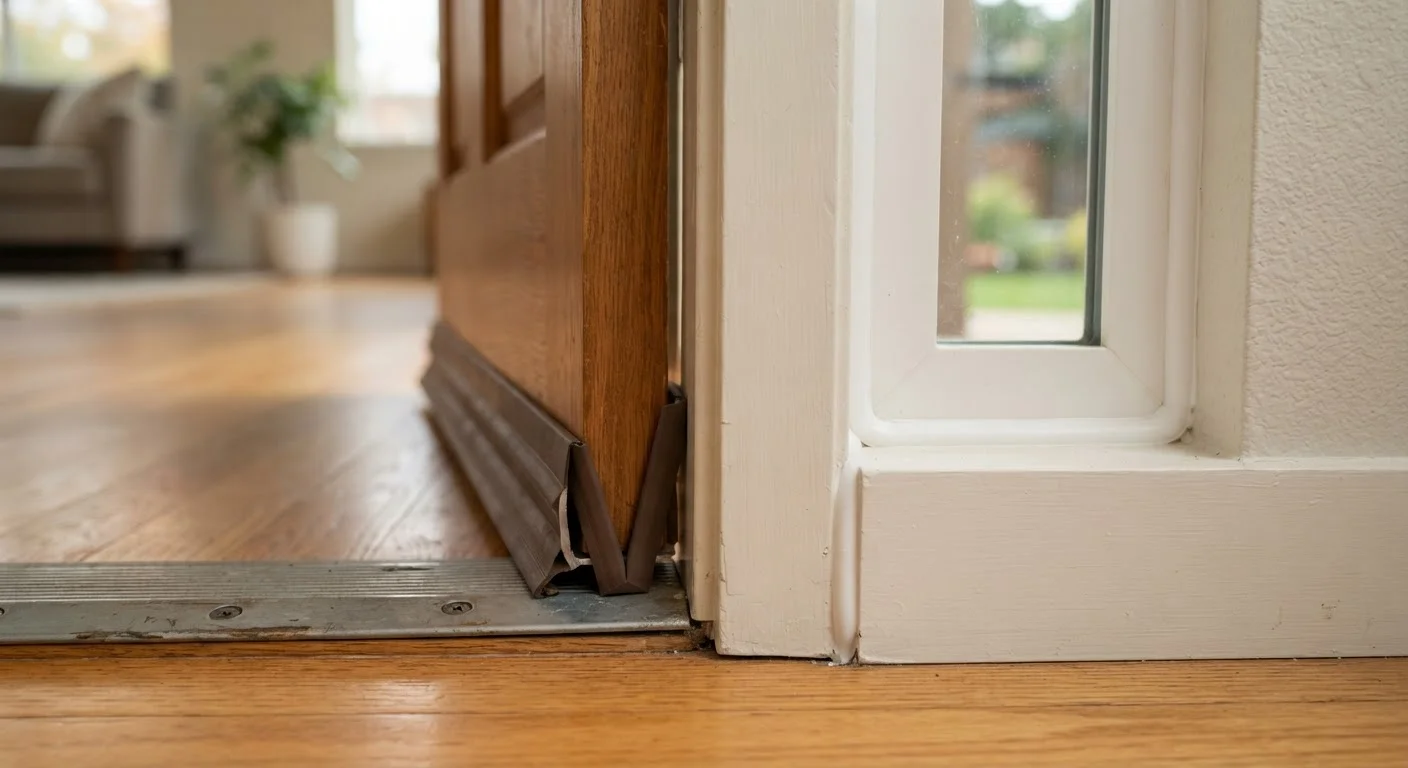
- The bottom of doors - typically a door sweep or threshold seal
- The sash channels of sliding or double-hung windows
- Attic access hatches and pull-down stairs - spaces covered in detail in our guide to attic and crawl space upkeep
A common mistake is caulking the hinge side or latch side of a door frame - that gap must flex every time the door opens. Weatherstripping handles that; caulk will peel and crack within weeks.
25-30%
Home heating/cooling energy lost through air leaks
The U.S. Department of Energy estimates that air leaks around windows, doors, and other openings account for roughly 25-30% of a home's heating and cooling energy use.
$0.50-$5
Approximate cost per linear foot of weatherstripping
Material costs vary widely by type - foam tape is the least expensive option, while reinforced door sweeps and vinyl bulb seals sit at the higher end.
Choosing the Right Type and Applying It Correctly
Caulk selection: Silicone caulk offers the best outdoor durability and water resistance but can't be painted. Paintable latex or siliconized latex works well for interior trim and is easier to clean up. For gaps wider than about 3/8 inch, back-fill with foam backer rod before caulking to avoid wasting product and ensure a sound seal.
Before applying, clean the surface thoroughly - caulk won't bond to dust, old caulk residue, or moisture. Cut the tube tip at a 45-degree angle, apply in a steady bead, and smooth with a wet finger or caulk tool within a few minutes. Allow full cure time before exposing to water.
Weatherstripping selection: Adhesive foam tape is inexpensive and easy to install but wears out faster - suitable for low-traffic windows. V-strip (tension seal) installs in the channel of the door stop and handles higher use. Door sweeps attach to the bottom edge of the door and should be adjusted so they contact the threshold without dragging heavily. For a broader look at building envelope performance, see our overview of insulation types and placement.
Test weatherstripping by closing the door on a strip of paper - it should hold with light resistance. If it slides out easily, the seal isn't making adequate contact.
Permits and Safety: When to Call a Pro
Most caulking and weatherstripping is straightforward DIY maintenance. However, if you discover significant structural gaps, rot around door or window frames, or evidence of water damage behind trim, stop and consult a licensed contractor. Repairing underlying damage before sealing is critical - trapping moisture behind a fresh caulk bead can accelerate rot and mold growth. Always verify local building codes if you're undertaking larger air-sealing projects as part of a renovation.
Maintenance and When to Replace
Both materials degrade over time. Caulk can shrink, crack, or pull away from one surface - a visual inspection once a year, ideally before winter, will catch most failures early. Old caulk should be fully removed with a utility knife or caulk remover tool before reapplying; layering new caulk over old rarely produces a lasting seal.
Weatherstripping wears through compression fatigue and UV exposure. Check for visible gaps when the door is closed, and look for foam that's lost its spring or felt that's matted flat. Replacement strips are straightforward to install and widely available in standard widths - measure the door stop channel before purchasing.
A well-maintained combination of caulk and weatherstripping around every door and window is one of the most cost-effective steps a homeowner can take toward reducing drafts and managing moisture - no major renovation required.