
Macronutrients Explained: What Carbs, Protein, and Fat Actually Do in Your Body

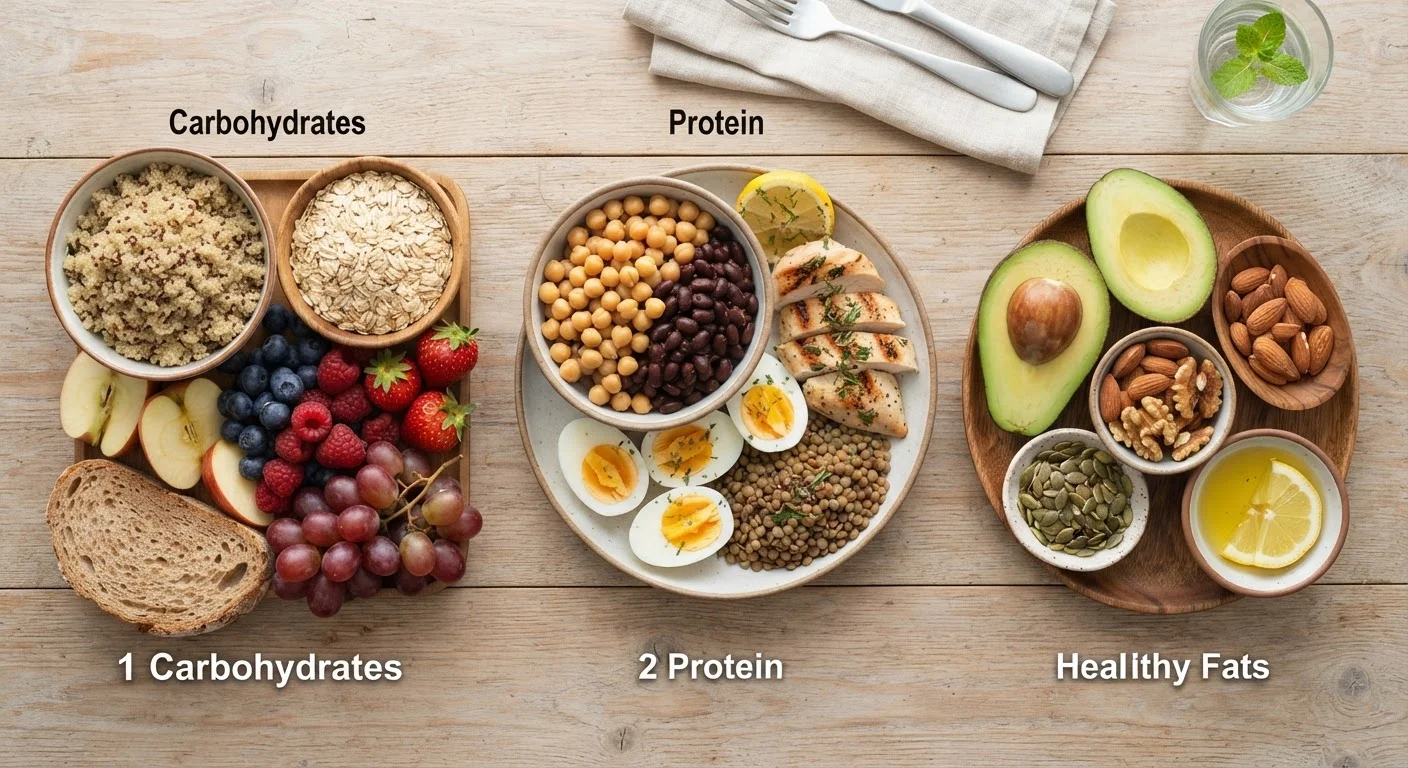
Key Takeaways
- Carbohydrates are your body's preferred and most efficient source of immediate energy.
- Protein is essential for building and repairing tissues, including muscle, skin, and organs.
- Dietary fat supports hormone production, brain function, and absorption of fat-soluble vitamins.
- No single macronutrient is inherently harmful - balance and food quality matter most.
- Individual macronutrient needs vary based on age, activity level, and health status.
Macronutrients
Macronutrients are the three main categories of nutrients your body needs in relatively large amounts to produce energy and support essential functions: carbohydrates, protein, and fat. Unlike vitamins and minerals - which are needed in smaller quantities - macronutrients are the building blocks that power everything from movement to cell repair. Each one plays a distinct role, and a balanced diet generally includes all three.
Macronutrients are measured in grams and provide calories: carbohydrates and protein each yield approximately 4 calories per gram, while fat yields approximately 9 calories per gram.
Why Macronutrients Matter
Walk through any grocery store and you'll see products claiming to be high-protein, low-carb, or packed with healthy fats. The marketing is loud - but the underlying science is actually pretty straightforward. Your body needs three main types of fuel to keep every system running: carbohydrates, protein, and fat. Together, these are called macronutrients (or "macros").
Understanding what each one does helps you see food as more than just calories. It also makes it easier to spot nutrition myths that can steer you in unhelpful directions. For a deeper look at how diet facts are presented on packaging, reading a Nutrition Facts label can help you connect what you learn here to real products on store shelves.
45-65%
Recommended share of calories from carbohydrates
According to the Dietary Guidelines for Americans, carbohydrates should make up 45-65% of total daily calorie intake for most adults.
10-35%
Recommended share of calories from protein
The Dietary Guidelines for Americans recommend that protein account for 10-35% of total daily calories, with needs varying by age and activity level.
20-35%
Recommended share of calories from fat
Fat is recommended to make up 20-35% of total daily calorie intake, per the Dietary Guidelines for Americans, with an emphasis on unsaturated sources.
Carbohydrates: Your Body's Primary Fuel
Carbohydrates are broken down into glucose, which cells use for energy. Your brain is particularly glucose-dependent - it can't store much fuel on its own, so a steady carbohydrate supply keeps thinking, mood, and concentration stable throughout the day.
Carbs come in two broad forms. Simple carbohydrates (found in fruit, milk, and added sugars) are digested quickly. Complex carbohydrates (found in whole grains, legumes, and starchy vegetables) digest more slowly, providing a more gradual energy release and often delivering fiber along the way. Dietary fiber - a type of carbohydrate your body can't fully digest - supports digestive health, helps you feel full, and is linked to heart health benefits in research.
The idea that carbs are universally harmful is one of the most persistent nutrition myths around. Evidence-based corrections to common nutrition misconceptions shed light on why the quality and context of carbohydrate choices matters more than simply eating fewer of them.
Protein: The Building Block Your Body Can't Skip
Protein is made up of smaller units called amino acids. Your body uses them to build and repair tissues - from muscle fibers after exercise to skin cells and enzymes that drive chemical reactions throughout your body. Some amino acids are considered "essential," meaning your body can't manufacture them and must get them from food.
Good protein sources include meat, poultry, fish, eggs, dairy, legumes, tofu, tempeh, and certain whole grains. Animal-based sources typically provide all essential amino acids in one package; plant-based sources can too when the diet is varied enough.
Spread Protein Throughout Your Day
Research suggests that consuming protein across multiple meals - rather than in one large serving - helps the body use it more efficiently for tissue repair and maintenance. Aim to include a quality protein source at breakfast, lunch, and dinner rather than saving most of it for dinner. Eggs, Greek yogurt, legumes, and fish are all versatile options.
Protein also plays a role in satiety - it tends to be the most filling macronutrient, which is one reason higher-protein meals can help with appetite regulation. If you're physically active, protein needs increase modestly to support muscle maintenance and recovery, which connects closely to how strength training affects your body.
Fat: Essential, Not the Enemy
Dietary fat has a complicated reputation, but it's genuinely essential. Fat supports the absorption of vitamins A, D, E, and K - all of which are fat-soluble, meaning they need fat present to be absorbed from food into your bloodstream. Fat also cushions organs, supports cell membrane integrity, and is a key raw material for making hormones, including those that regulate reproduction and stress response.
There are several types of dietary fat. Unsaturated fats (found in olive oil, avocados, nuts, and fatty fish) are broadly associated with cardiovascular health benefits in research. Saturated fats (found in red meat and full-fat dairy) are best consumed in moderation according to most major health guidelines. Trans fats found in partially hydrogenated oils are widely regarded as harmful and have been largely removed from the U.S. food supply following regulatory action.
For a fuller picture of how fat and other macros interact with the vitamins your body needs, micronutrients explained is a helpful companion read.
This article is for general informational and educational purposes only and is not a substitute for professional medical or dietary advice. For guidance tailored to your individual health needs, please consult a qualified healthcare provider or registered dietitian.