

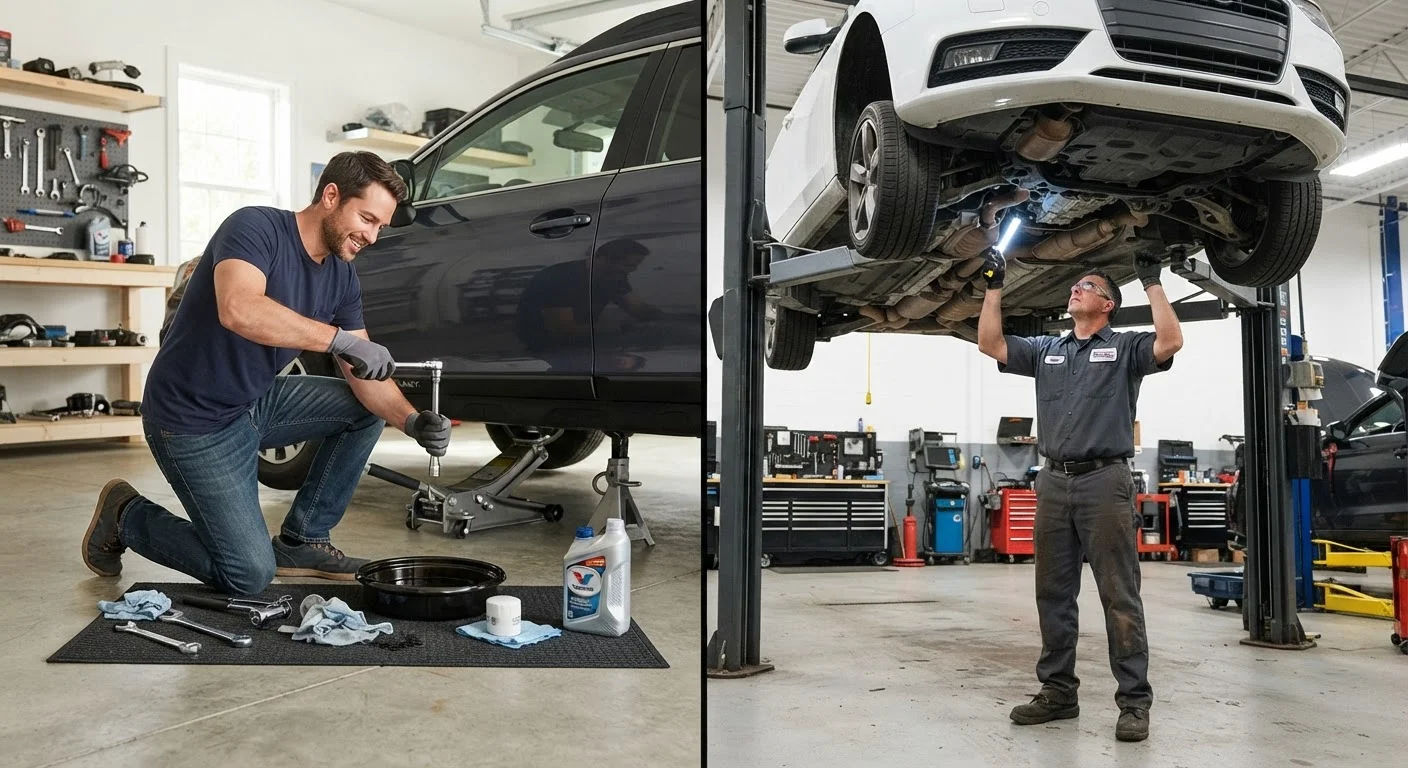
Key Takeaways
- Simple tasks like oil changes, air filter swaps, and wiper blade replacements are manageable for most drivers with basic tools.
- Brake system work, suspension repairs, and anything involving airbags or advanced electronics should go to a qualified mechanic.
- DIY maintenance can reduce costs but carries real risk if attempted without the right knowledge, tools, or safety precautions.
- Your owner's manual is the most reliable guide to what your specific vehicle needs and when.
- A hybrid approach - doing simple tasks yourself while outsourcing complex work - is what most experienced home mechanics actually practice.
Our Verdict
DIY maintenance makes genuine sense for routine, low-risk tasks that don't require specialized equipment or safety certifications. However, brake repairs, structural work, and anything tied to advanced driver-assistance systems are best left to trained technicians. The smartest approach for most drivers is a hybrid strategy: handle the straightforward stuff yourself and build a trusted relationship with a qualified shop for the rest.
| Best for | Recommended |
|---|---|
| Drivers comfortable with basic tools and routine upkeep | DIY maintenance for low-complexity tasks |
| Complex repairs involving safety-critical systems | Professional shop |
| Most everyday drivers balancing cost and safety | Hybrid approach - DIY for routine tasks, shop for complex work |
What Makes a Task 'DIY-Appropriate'
Not all car maintenance is created equal. The difference between a task you can safely tackle in your driveway and one that requires a lift, specialized diagnostic equipment, or professional certification often comes down to three factors: safety consequence, tool complexity, and the need for calibration.
Low-consequence, high-accessibility tasks are the sweet spot for home mechanics. These are jobs where a mistake is easily caught, doesn't endanger lives, and doesn't require expensive tooling to complete correctly. Think of replacing a cabin air filter - the part costs a fraction of what a shop charges for labor, the job takes minutes, and getting it wrong just means the filter doesn't seat properly (something you'd notice immediately).
By contrast, tasks with direct safety consequences - like replacing brake pads and rotors, or repairing suspension components - involve tolerances and torque specifications that matter enormously. A brake caliper bolted to the wrong spec can seize or fail. These aren't tasks where "close enough" is acceptable.
See our maintenance schedule guide for a clear breakdown of what each service interval actually involves - it's the logical starting point before deciding what to attempt yourself.
Tasks Well-Suited to DIY
Several routine maintenance jobs are genuinely within reach for drivers with minimal mechanical experience and a basic tool kit:
- Engine air filter replacement: Typically involves opening a plastic housing and swapping a filter element. No special tools required. Consult your owner's manual for the correct part specification.
- Wiper blade replacement: Most wiper arms use simple attachment clips. Replacement blades include instructions and take under five minutes per side.
- Oil and oil filter changes: Requires an oil drain pan, a filter wrench, and the correct oil grade and quantity for your engine. The task is accessible but does involve working under the vehicle - always use proper jack stands, never rely solely on a scissor jack.
- Cabin air filter replacement: Usually accessible behind the glove box. No tools needed in most vehicles.
- Battery terminal cleaning: Corroded terminals can be cleaned with a wire brush and a diluted baking soda solution. Wear gloves and eye protection; battery acid is caustic.
- Tire pressure checks and inflation: A quality gauge and a portable inflator are inexpensive and give you meaningful control over fuel economy and tire longevity.
Always Check Your Owner's Manual First
Your vehicle's owner's manual specifies the correct oil grade, filter type, torque specs, and service intervals for your exact model. Generic online guides can be a useful starting point, but your manual is the authoritative source. Many manuals are also available as free PDFs from manufacturer websites if your physical copy is missing.
Even for straightforward tasks, always verify the specific procedure for your vehicle's year, make, and model. Procedures vary significantly - what applies to one engine layout may not translate to another.
When the Shop Is the Right Call
Some maintenance and repair categories should go to a qualified technician, full stop. This isn't about skill ego - it's about the realistic consequences of getting it wrong.
Don't Underestimate Safety-Critical Systems
Brake, suspension, steering, and airbag systems directly affect your ability to control the vehicle and protect occupants in a crash. Errors in these areas don't always announce themselves immediately - a misinstalled component may perform adequately under normal conditions but fail precisely when emergency response is needed. If you have any doubt about your ability to complete the repair correctly, a shop visit is the right decision.
- Brake system work: Replacing pads is manageable for experienced DIYers, but bleeding brake lines, replacing calipers, or servicing ABS (anti-lock braking system) components introduces hydraulic and electronic complexity that demands proper equipment and expertise.
- Suspension and steering components: Ball joints, tie rods, and struts require precise torque settings and often alignment afterward. Improper installation affects how the vehicle handles in an emergency.
- Timing belt or timing chain service: Catastrophic engine failure can result from incorrect installation. This is one of the most consequential - and most frequently cited - DIY mistakes.
- Airbag and supplemental restraint system (SRS) components: Working on or near airbag systems without proper training can trigger accidental deployment, which is extremely dangerous.
- Advanced driver-assistance systems (ADAS) calibration: Cameras, radar sensors, and lane-keeping systems must be recalibrated after certain repairs. This requires manufacturer-specific equipment.
Catching issues early is one of the best arguments for building a relationship with a trusted shop - a trained technician can spot developing problems during routine service that a home mechanic would miss.
Comparing the Two Approaches
Understanding the trade-offs helps you make a deliberate decision rather than defaulting to habit.
| DIY Maintenance | Professional Shop | |
|---|---|---|
| Upfront cost | Lower (parts only) | Higher (parts + labor) |
| Time investment | Variable; depends on experience | Typically faster with proper equipment |
| Tool requirements | Basic tools for simple tasks | Specialized tools available on-site |
| Safety-critical repairs | High risk if inexperienced | Trained technicians, liability-backed |
| Diagnostic capability | Limited without scan tools | Full OBD-II and manufacturer diagnostics |
| Warranty considerations | May affect dealer warranty if done incorrectly | Work typically includes a service warranty |
| Best for | Routine, low-risk tasks | Complex, safety-critical, or electrical work |
The financial case for DIY is real on low-complexity tasks, but narrows or disappears on jobs requiring specialized tools you'd use only once. Renting equipment through auto parts store programs can help, but factor that into the true cost comparison.
For a broader perspective on how maintenance needs evolve across a vehicle's lifespan, see this comprehensive roadworthy guide.
Building a Sustainable Maintenance Strategy
The most effective approach for most drivers isn't a binary choice - it's intentional division of labor. Handle routine, accessible tasks yourself to build familiarity with your vehicle and reduce unnecessary shop visits. Reserve the shop for safety-critical work, diagnostic assessments, and anything that requires equipment you don't own and wouldn't use regularly.
Keep a simple log of what you've done and when. Not only does this help you stay on schedule, it gives any shop you visit a clear picture of your vehicle's history - which often results in faster, more accurate service.
Whatever you tackle, work safely. Use proper jack stands, disconnect the battery when working near electrical components, and never rush a job because of time pressure. A half-completed brake job is more dangerous than one never started.
This article provides general information for educational purposes. Always follow the safety instructions in your vehicle's owner's manual and consult a qualified mechanic for any repair or maintenance task you are unsure about.