

Key Takeaways
- Always run a vehicle history report and arrange an independent pre-purchase inspection before committing.
- Negotiate the out-of-door price, not just the monthly payment, to avoid hidden cost padding.
- Read every line of the financing contract, including the APR, loan term, and any add-on products.
- Verify that all verbal promises from the dealer are written into the contract before you sign.
- Confirm your insurance coverage is active on the new vehicle before you drive it off the lot.
Summary
24 items · 45-90 minutes
Why a Pre-Purchase Checklist Matters
Buying a car ranks among the largest financial commitments most Americans make, yet the dealership environment is specifically designed to move the process quickly. Time pressure, unfamiliar paperwork, and a flood of add-on offers can push buyers into decisions they later regret. A structured checklist slows that process down in your favor.
This guide covers four critical phases: verifying the vehicle itself, confirming the price is fair, understanding every financing term, and reviewing the final paperwork before a single signature is placed. For a broader view of how all these steps fit together, see our step-by-step car buying walkthrough.
Work through this checklist methodically. There is no obligation to sign on the same day you negotiate - any pressure suggesting otherwise is a sales tactic, not a deadline.
Vehicle History Report Service
Pull a full history report using the VIN to uncover accidents, title problems, and odometer issues.
Independent Licensed Mechanic
Conduct a thorough pre-purchase inspection to identify mechanical or structural problems the seller may not disclose.
Auto Loan Pre-Approval from a Bank or Credit Union
Establishes a financing baseline so you can compare dealer-offered rates against an independent offer.
Automotive Pricing Research Tool
Provides fair market value estimates for specific vehicles by year, make, model, trim, and mileage.
Calculator or Loan Amortization Spreadsheet
Helps you calculate the true total repayment amount across the full loan term.
Vehicle Condition: What to Verify Before You Commit
The physical and mechanical condition of the vehicle is the foundation of any sound purchase. No amount of favorable financing overcomes a car with serious undisclosed problems.
Start with a vehicle history report using the 17-character VIN (Vehicle Identification Number), which is typically visible on the dashboard near the windshield or on the driver's door jamb. This report can flag prior accidents, title branding, reported mileage inconsistencies, and the number of previous owners - but note that it only reflects events that were formally reported, so it is not a guarantee of a clean vehicle.
The more important step is scheduling a pre-purchase inspection with an independent mechanic. Our detailed guide to what a pre-purchase inspection covers and how to arrange one explains exactly what a professional will assess and what it typically costs. Do not skip this step for any used vehicle, regardless of age or mileage.
Do Not Skip the Independent Inspection
A certified pre-owned label or a dealer inspection report is not a substitute for an independent mechanic's assessment. An independent pre-purchase inspection - conducted by a professional you hire yourself - is one of the most effective ways to avoid purchasing a vehicle with undisclosed mechanical or structural problems. Budget for this cost as a standard part of any used-vehicle purchase.
During your own visual check, look for signs of prior body repair: uneven gaps between panels, slight color variation between adjacent body sections, or overspray on rubber trim pieces. These can indicate an accident repair that may not appear on the history report.
Vehicle History & Condition
Pricing & Negotiation
Financing Terms
Paperwork & Final Steps
Financing and Paperwork: Read Before You Sign
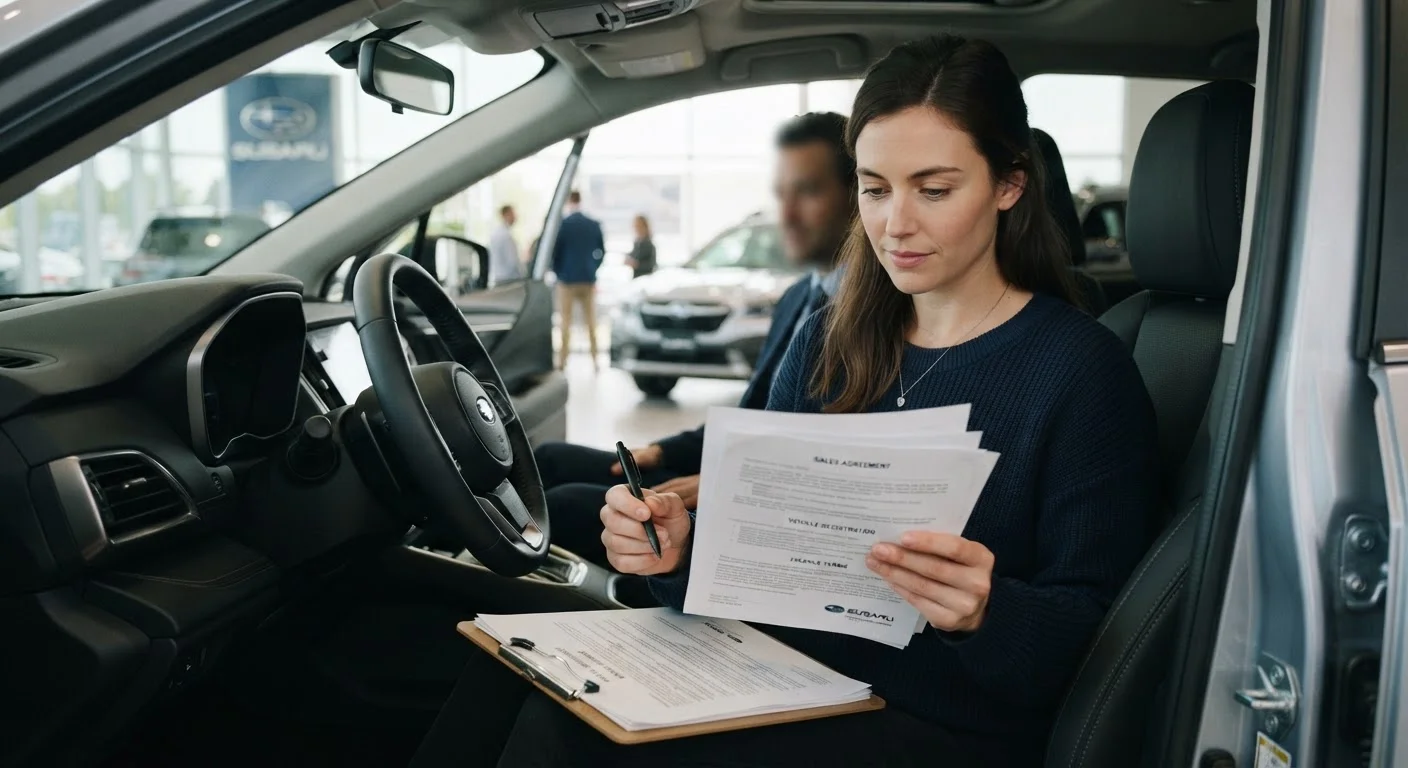
The finance office is where many buyers lose money they negotiated away at the sales desk. Add-on products - extended warranties, gap insurance, paint sealant, tire protection plans - are often presented as a package rather than individual line items, making it easy to agree to costs you did not intend to accept.
Before you arrive at a dealership, obtain a pre-approval from your bank or credit union. This gives you a concrete APR (Annual Percentage Rate - the yearly cost of borrowing expressed as a percentage) to compare against whatever financing the dealer offers. Dealers sometimes mark up the interest rate above what a lender actually requires, and the difference becomes additional profit. Your pre-approval is leverage.
Never Focus Solely on Monthly Payments
Dealers can make almost any price seem affordable by extending the loan term. A lower monthly payment spread over 72 or 84 months may mean paying thousands more in total interest. Always calculate the full out-the-door cost and total loan repayment before agreeing to any terms.
Verbal Promises Are Not Binding
If a salesperson agrees to include a repair, accessory, or price adjustment, it means nothing unless it appears in writing in the final contract. Before signing, read the buyer's order line by line and do not proceed if any agreed item is missing.
When reviewing the buyer's order, confirm that the out-the-door price matches every figure you negotiated. Scrutinize the documentation fee (a dealer charge for processing paperwork, which varies widely by state and dealer), any dealer-installed accessories you did not request, and the registration and tax amounts. If a number looks unfamiliar, ask for a plain-language explanation before proceeding.
Confirm your auto insurance is updated before you drive the vehicle away. Most policies allow you to add a new vehicle the same day, but coverage must be active - you are generally responsible for any incident that occurs from the moment you take possession. Once everything is signed, request copies of all documents on the spot.
Managing a car well after purchase starts with understanding the vehicle's maintenance needs. Our car maintenance resource hub is a useful reference for keeping your vehicle in good condition over the long term.