

Key Takeaways
- Document the scene thoroughly before leaving - photos, contact info, and the police report number are essential.
- Notify your insurer promptly; most policies require timely reporting as a condition of coverage.
- An adjuster investigates the claim and determines fault based on evidence, statements, and state laws.
- You generally have the right to choose your own repair shop, regardless of insurer preferences.
- Settlement offers can be negotiated - you are not required to accept the first figure presented.
- Understanding your coverage before an accident gives you a significant advantage when filing a claim.
What you will need
Before You File: What to Do at the Scene
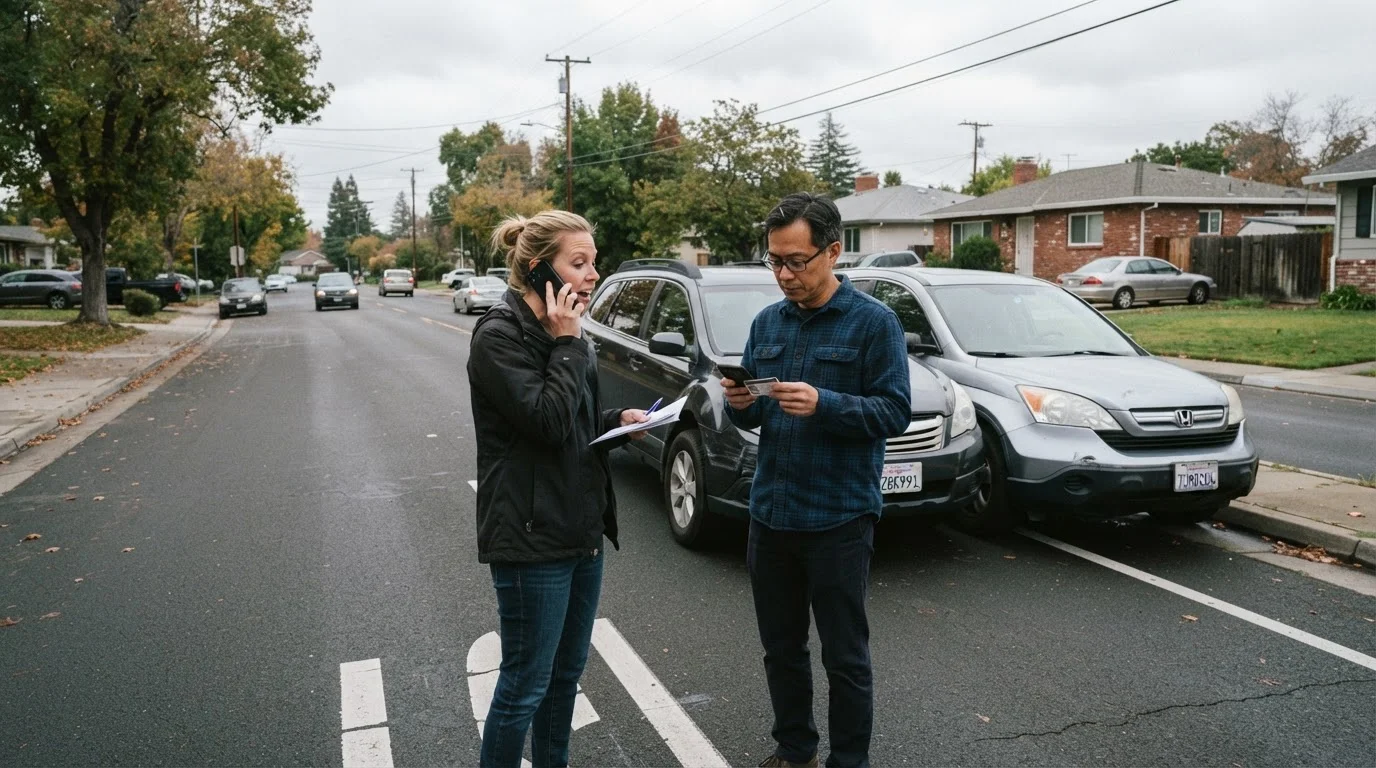
The actions you take in the minutes after a collision directly shape how smoothly the insurance process unfolds. Assuming everyone is safe and out of immediate danger, focus on gathering information systematically.
What you will need
Use your phone to photograph all vehicles involved from multiple angles, capture license plates, document road conditions and signage, and photograph any visible injuries. Exchange the following with every other driver involved:
- Full legal name and contact number
- Insurance company name and policy number
- Driver's license number and issuing state
- Vehicle make, model, year, and license plate
If law enforcement responds, request the officer's name and badge number and ask how to obtain the official report. Even in minor collisions, a police report provides an objective, third-party record that can be critical if fault is disputed later.
Don't Admit Fault at the Scene
Even a casual apology can be interpreted as an admission of liability and may affect how fault is assigned during the claims process. Stick to factual statements when speaking with other drivers, witnesses, and law enforcement. Fault determination is the job of the adjuster and, if necessary, the courts - not the scene of the accident.
Notifying Your Insurer and Opening a Claim
Contact your insurance company as soon as reasonably possible after the accident. Most policies contain a prompt-reporting requirement - waiting too long can create complications, even if you weren't at fault. When you call, you'll typically speak with a claims representative who will open a claim file and assign it a claim number. Keep this number handy; you'll reference it in every subsequent communication.
During this initial call, provide the facts of what happened without speculating about fault or exaggerating injuries. Stick to observable, verifiable details. If the other driver was at fault and you plan to file against their liability coverage (a third-party claim), you will still likely need to notify your own insurer, who can guide you through the process. For a deeper look at how different coverage types affect which insurer pays, see our guide on liability, collision, and comprehensive coverage.
The Investigation: How Adjusters Evaluate Your Claim
Once your claim is open, an insurance adjuster - either employed by the insurer or an independent contractor hired by them - takes over. The adjuster's job is to investigate the circumstances of the accident and determine how much the insurer owes, if anything.
Expect the adjuster to review the police report, examine damage photos, inspect the vehicle in person, interview involved parties and witnesses, and in some cases obtain recorded statements. Fault is determined according to the applicable state's laws; many states use comparative negligence rules, meaning fault can be shared proportionally among multiple parties, which affects how much each insurer pays out.
Know Your Coverage Before You Need It
The claims process is significantly less stressful when you already understand what your policy covers. Review your declarations page and coverage limits annually, not just after an accident. If terms like 'actual cash value' or 'subrogation' are unfamiliar, our guide on auto insurance fundamentals walks through the essentials in plain language.
The adjuster works for the insurer, not for you. You are entitled to ask questions, request explanations in writing, and - if you feel the assessment is unfair - dispute it. If the claim is complex or involves significant injuries, consulting an attorney before giving a recorded statement is a reasonable step many drivers take.
Repairs, Rental Cars, and Settling the Claim
Once liability is established, the focus shifts to making you financially whole. For vehicle damage, the adjuster will determine whether your car is repairable or a total loss (where repair costs exceed the car's actual cash value). If it's repairable, you'll receive one or more repair estimates. While insurers often have preferred repair shops, you generally retain the right to choose your own licensed facility - confirm the specifics with your state's insurance regulations and your own policy language. Our article on reading your auto insurance policy explains where to find those details.
If your policy includes rental reimbursement coverage, you may be entitled to a rental vehicle during the repair period, subject to daily and total limits. If a total loss is declared, the insurer will offer you the actual cash value of the vehicle minus your deductible. This figure is negotiable - you can provide comparable vehicle listings in your market to support a higher valuation.
For bodily injury claims, settlement typically comes after medical treatment is complete or a maximum medical improvement point is reached, so that the full cost of injuries is known. Once you accept a settlement and sign a release, the claim is closed - you generally cannot reopen it later. Take your time to understand what you're agreeing to before signing. If you're unfamiliar with the fundamentals of auto insurance going into this process, our overview at Auto Insurance Explained is a practical starting point.
This article is for general informational purposes only and does not constitute legal or insurance advice. Coverage, claim procedures, and consumer rights vary by state and by policy. Consult your insurer, a licensed insurance agent, or a qualified attorney for guidance specific to your situation.