
Natural Disaster Preparedness for Travelers: Earthquakes, Floods, and Extreme Heat

Key Takeaways
- Research your destination's natural disaster risks before every trip, not just for international travel.
- Register with the U.S. State Department's STEP program so officials can locate and contact you abroad.
- Keep critical documents, emergency contacts, and offline maps accessible without internet access.
- Extreme heat is often underestimated - it kills more people annually than most other natural disasters.
- Know your accommodation's evacuation routes and local emergency numbers on the first day you arrive.
Why Travelers Face Elevated Risk
Natural disasters don't pause for vacation schedules. Travelers are particularly vulnerable because they're unfamiliar with local warning systems, don't know evacuation routes, may not speak the language, and often lack access to real-time local news. A tourist caught in a flash flood in a foreign city faces very different challenges than a local resident who knows the drainage patterns of their neighborhood.
The three hazards covered here - earthquakes, floods, and extreme heat - are among the most commonly encountered by travelers worldwide, yet they rarely appear on pre-trip checklists. Before your next trip, take a few minutes to check destination-specific risks alongside the standard preparation you'd do for documents and reservations. See our pre-trip checklist for a broader look at what to confirm before leaving home.
Download alerts before you need them
Many countries have government-issued emergency alert apps that function similarly to the U.S. Wireless Emergency Alert system. Search for your destination country's official emergency app before departure and enable location permissions. This takes five minutes and gives you access to real-time warnings in the local area, even if you don't follow local news.
Preparedness Steps Every Traveler Should Take
Research your destination's specific hazard profile
Every destination has a risk landscape shaped by geography and climate. Japan sits on the Pacific Ring of Fire; coastal areas of Southeast Asia face monsoon flooding; parts of the American Southwest and Southern Europe experience extreme summer heat. Before booking accommodation, search your destination alongside terms like "earthquake zone," "flood season," or "heat index" to understand what conditions are possible during your travel dates.
The U.S. Geological Survey (USGS) maintains publicly accessible seismic hazard maps. The National Oceanic and Atmospheric Administration (NOAA) provides climate data by region. For international destinations, check the U.S. State Department's travel advisory page and the destination country's national meteorological service. This research takes under 30 minutes and significantly sharpens your situational awareness before you land.
Thirty minutes of pre-trip hazard research can sharpen your situational awareness before you ever leave home.
Enroll in STEP and save emergency contacts offline
The State Department's Smart Traveler Enrollment Program (STEP) is a free service that registers your trip with the nearest U.S. embassy or consulate. In the event of a natural disaster, STEP helps officials locate Americans in the affected area and send emergency alerts directly to your email or phone. Enrollment takes about five minutes at travel.state.gov and applies to both international and some domestic U.S. situations involving federal assistance.
Equally important: save key contacts - your accommodation's front desk, local emergency services (not all countries use 911), the nearest U.S. embassy, and a trusted home contact - to your phone and written on paper. Cell networks frequently fail during disasters, so having a written backup isn't overcautious; it's standard practice among experienced travelers.
STEP enrollment takes five minutes and gives U.S. officials a way to reach you during overseas emergencies.
Prepare for earthquakes: know the immediate response
If you're in earthquake-prone territory, locate the structural columns or interior walls of your accommodation immediately upon arrival - these are typically the strongest points in a building. The widely taught "Drop, Cover, and Hold On" response (dropping to hands and knees, taking cover under a sturdy table or against an interior wall, and holding on until shaking stops) is supported by emergency management agencies including FEMA and the American Red Cross.
After shaking stops, be alert for aftershocks, which can follow within minutes to days. Do not use elevators. If near a coast, move to higher ground immediately without waiting for an official tsunami warning - the shaking itself is your signal. Verify evacuation routes for your accommodation on day one; don't assume posted signs will be visible or accessible during an emergency.
The shaking itself is your tsunami warning - move to higher ground immediately without waiting for an official alert.
Prepare for floods: recognize warning signs early
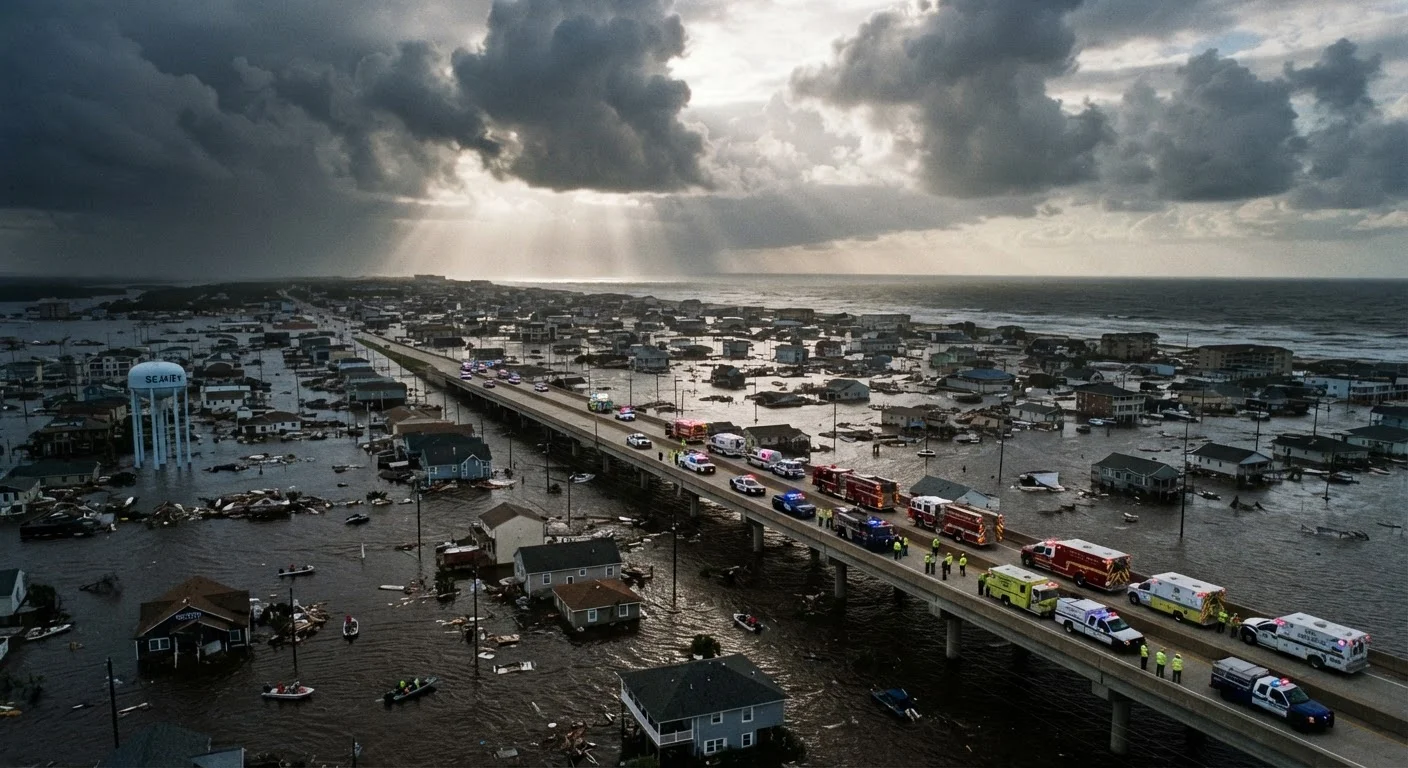
Flash floods are among the deadliest natural hazards for travelers because they develop rapidly and in locations that may appear safe - desert canyons, riverside campsites, urban streets after heavy rain. Warning signs include a sudden change in water color or smell, a roaring sound upstream, and rapid rises in water level even if you can't see rain nearby.
Key rules: never attempt to walk or drive through moving floodwater. Even six inches of fast-moving water can knock a person down; two feet can carry away most vehicles. If flooding is possible, move to higher floors of your accommodation - not the ground floor or basement - and monitor alerts via a battery-powered or hand-crank radio if cell service is unavailable. Download offline maps of your destination before arriving; these work without mobile data and can show elevation contours useful in flood situations.
Six inches of fast-moving floodwater can knock a person down - never attempt to walk or drive through it.
Prepare for extreme heat: the hazard travelers most underestimate
Heat is consistently among the deadliest weather-related hazards, yet travelers frequently underestimate it because it lacks the dramatic visual intensity of a flood or earthquake. Heat illness exists on a spectrum from heat cramps and heat exhaustion to heat stroke, which is a life-threatening emergency requiring immediate medical attention. Warning signs of heat stroke include stopping sweating despite high temperatures, confusion or slurred speech, and skin that is hot and dry or hot and damp.
Practical steps include scheduling outdoor activity during cooler morning hours, identifying air-conditioned public spaces (libraries, shopping centers, museums) as rest points, and carrying more water than you think you need. Travelers on certain medications - including some antihistamines, diuretics, and blood pressure drugs - may have reduced heat tolerance; consult a healthcare provider before traveling to extreme-heat destinations if this applies to you. For a fuller picture of managing health risks abroad, see our guide to health and safety for first-time international travelers.
Heat stroke is a medical emergency - confusion and stopping sweating in high temperatures require immediate care.
Build a minimal go-bag for extended stays or high-risk destinations
For trips longer than a few days, or to destinations with elevated hazard profiles, a basic go-bag stored in accessible luggage can be the difference between a manageable emergency and a serious one. A practical minimum includes: a 24-hour supply of water (or water purification tablets), non-perishable food, a basic first aid kit, copies of travel documents in a waterproof sleeve, a charged portable battery pack, a flashlight or headlamp, and any prescription medications you require.
This isn't about overpacking - it's about having one organized pouch or small bag you can grab quickly. If your accommodation needs to be evacuated, you won't have time to gather items from across your room. Pair this physical preparation with the situational awareness habits covered in our guide to staying safe in unfamiliar cities.
One organized, grab-ready bag with essentials matters far more than extensive gear spread across your room.
Heat risk varies by individual health status
Certain travelers face higher heat-related risk, including older adults, young children, pregnant individuals, and those with chronic conditions such as heart disease or diabetes. If any of these apply to your travel group, consult a qualified healthcare provider before traveling to destinations with extreme heat forecasts. General guidance on managing heat exposure is a starting point, not a substitute for personalized medical advice.
This article provides general safety information for travelers and is not a substitute for guidance from official emergency management agencies, your government's travel advisory services, or qualified healthcare professionals. Always verify current conditions with official sources before and during travel.