

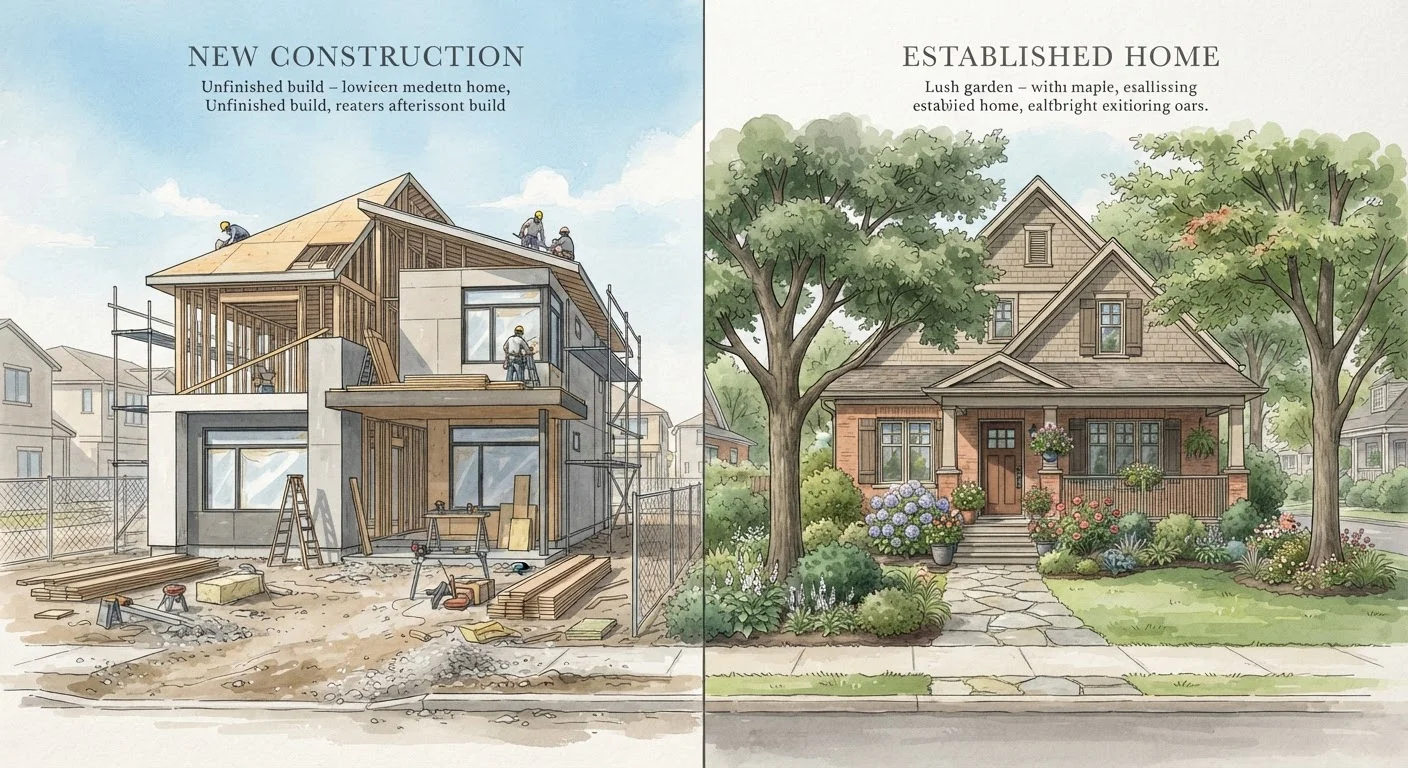
Key Takeaways
- New construction often involves buying from a builder's contract, not a traditional seller negotiation.
- Existing homes typically close faster but may carry hidden repair costs and deferred maintenance.
- Builder incentives on new homes can offset costs but often come with restrictions on customization or financing.
- Both paths require independent representation - a buyer's agent advocating solely for your interests.
- Inspections matter in both cases, but what inspectors look for differs significantly between the two.
Our Verdict
Neither new construction nor existing homes is universally superior - the right choice depends on your timeline, budget, risk tolerance, and priorities. New builds offer modern systems and warranties but demand patience and careful contract scrutiny. Existing homes offer faster timelines and established neighborhoods but may require more upfront due diligence on condition.
| Best for | Recommended |
|---|---|
| Buyers who want modern finishes, warranties, and can accommodate a longer timeline | New Construction |
| Buyers who need to move quickly and prefer a known, established location | Existing Home |
| Buyers with limited tolerance for construction surprises or delays | Existing Home |
| Buyers prioritizing energy efficiency and lower near-term maintenance costs | New Construction |
How the Purchase Agreement Differs
One of the most significant differences between buying new construction and an existing home is the contract itself. With a resale property, you're typically working with a standardized state-approved purchase agreement negotiated between buyer and seller. With a builder, you're signing the builder's contract - a document drafted by their legal team to protect their interests first.
Builder contracts often include clauses that allow construction timelines to shift, lock you into the builder's preferred lender, or limit your ability to back out without losing your deposit. Before signing, it's worth having a real estate attorney review the document - something far less common, though still advisable, in a traditional resale transaction.
Negotiating with a builder also looks different. Builders rarely reduce the base price significantly, especially in active developments, but they may offer upgrades, closing cost assistance, or rate buydowns. Understanding what's genuinely flexible requires knowing how the development is performing. See how market conditions influence that leverage in our overview of buyer's vs. seller's market dynamics.
Timelines and Closing Expectations
Existing home purchases typically close within 30 to 60 days of an accepted offer, assuming financing and inspections proceed without complications. New construction timelines vary widely - a move-in-ready spec home (one already built or nearly complete) can close comparably fast, but a to-be-built home on a custom timeline may take six to eighteen months or longer.
Delays in new construction are common and often contractually permissible. Supply chain disruptions, permitting backlogs, and labor shortages have all extended builder timelines in recent years. If you're locked into a lease ending on a specific date or selling your current home simultaneously, these open-ended timelines introduce real logistical risk.
| New Construction | Existing Home | |
|---|---|---|
| Typical time to close | 6-18 months (build); 30-60 days (spec) | 30-60 days |
| Contract type | Builder's proprietary contract | Standardized state purchase agreement |
| Price negotiability | Limited; incentives more common | Direct negotiation with seller |
| Inspection scope | Pre-drywall + final; new systems | Full condition assessment; aging components |
| Warranty coverage | Builder warranty (typically 1-10 years) | No builder warranty; seller disclosures only |
| Financing complexity | Builder-preferred lender incentives; appraisal challenges | Standard lending process; comparable sales clearer |
| Customization options | Available in pre-construction; limited later | Renovate after purchase; no pre-build input |
For a full walkthrough of what the closing process looks like regardless of home type, see the home purchase process from offer to closing.
Inspections and Due Diligence
Many buyers assume new construction doesn't need an inspection - it does. Builder quality control varies, and issues ranging from improperly installed HVAC systems to grading problems that direct water toward the foundation have been documented in newly built homes. An independent inspection, including a pre-drywall inspection (conducted before walls are closed up), can catch problems that become expensive and difficult to fix later.
For existing homes, the inspection scope is broader. Inspectors will assess the age and condition of the roof, electrical panel, plumbing, HVAC, and foundation. Older homes may contain materials requiring special disclosure, such as lead paint or asbestos. The inspection contingency in a resale deal gives buyers leverage to negotiate repairs or credits - leverage that generally doesn't exist in the same form with builders.
Always Hire Your Own Buyer's Agent
Whether buying new construction or a resale home, always retain a buyer's agent who represents your interests exclusively. The builder's sales representative works for the builder - not for you. An independent agent costs you nothing in most transactions (the seller or builder typically pays the commission) and can identify contract terms worth negotiating before you sign.
First-time buyers navigating either process can benefit from reading what first-time buyers often don't know going in.
Financing Considerations for Each Path
Mortgage financing works similarly for both types of purchases, but the details diverge. For new construction, builders frequently have preferred lenders and may offer incentives - reduced closing costs or temporary rate buydowns - if you use their financing arm. These incentives can be genuinely valuable, but they shouldn't prevent you from comparing loan terms independently. The interest rate and loan terms will follow you for decades; an upgrade package will not.
For existing homes, standard conventional, FHA, and VA loans apply without the added layer of builder-lender relationships. Appraisals on resale properties compare the home to recent nearby sales, while new construction appraisals can be trickier in developing areas with limited comparable sales data. This can occasionally result in an appraisal gap - where the appraised value comes in below the contract price - creating additional negotiation or financing hurdles.
This article provides general educational information about the homebuying process and is not personalized financial, legal, or real estate advice. Consult a licensed real estate professional, attorney, or financial adviser for guidance specific to your situation.