
Zero-Based Budgeting vs. Envelope Budgeting: Two Approaches to Controlling Your Spending

Key Takeaways
- Zero-based budgeting assigns every dollar of income a specific job until the budget balance reaches zero.
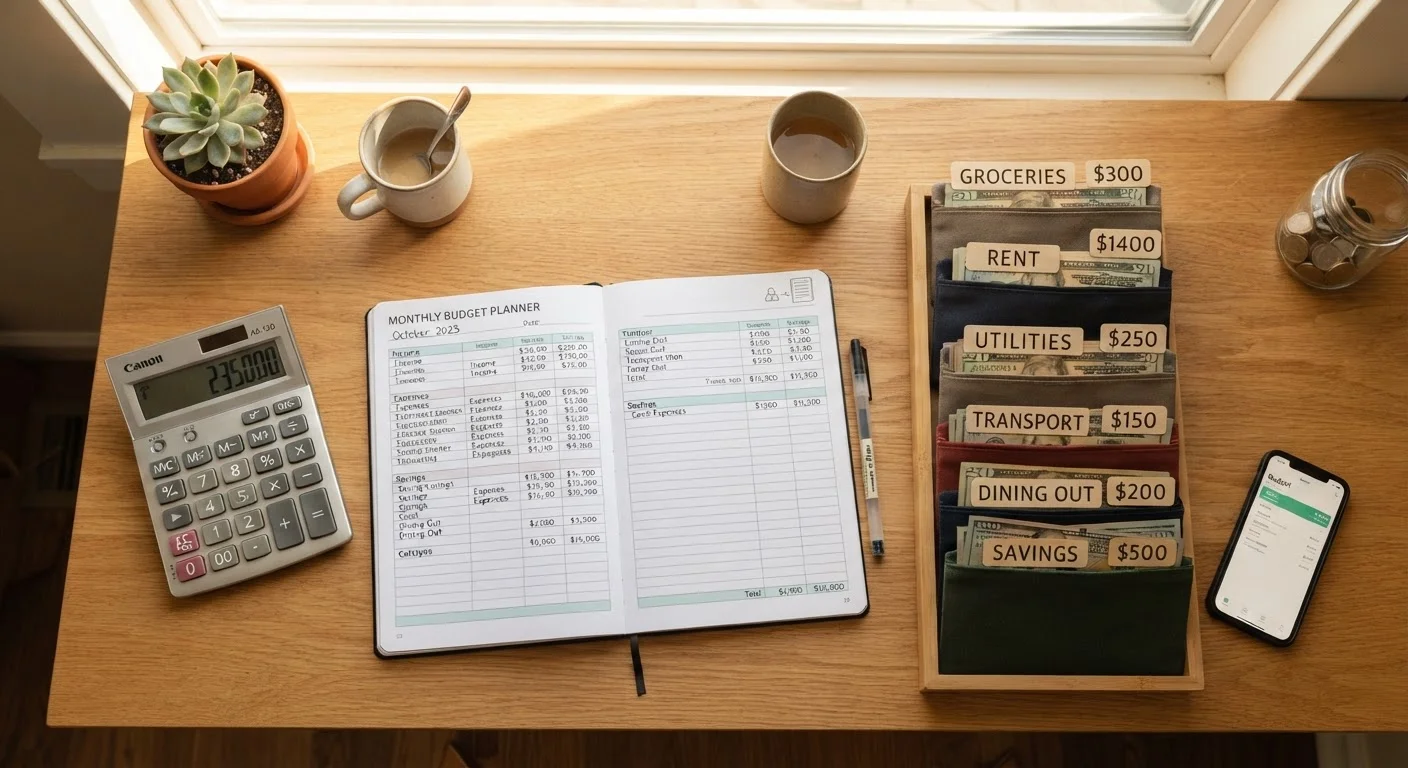
- Envelope budgeting divides physical cash into labeled categories to create a hard spending limit per area.
- Zero-based budgeting works well for digital or mixed-payment lifestyles; envelopes suit cash-preferred spenders.
- Both methods require upfront category planning and consistent monthly maintenance to be effective.
- Neither approach guarantees financial success - the best method is the one you'll actually stick with.
Option A
Zero-Based Budgeting
The meticulous, dollar-by-dollar allocation system.
Best for: People who want complete visibility over every dollar of income - whether paid digitally or in cash.
Option B
Envelope Budgeting
The tactile, cash-driven spending control method.
Best for: Hands-on spenders who benefit from physically separating and limiting cash by category.
If you pay most bills digitally and want full income visibility
Zero-Based Budgeting
Zero-based budgeting works equally well for bank transfers, direct deposits, and credit card payments - making it the natural fit for people who rarely handle physical cash.
If you tend to overspend on discretionary categories like dining and entertainment
Envelope Budgeting
The physical act of handing over cash and watching an envelope empty creates a psychological stop that digital spending often lacks.
If you're setting up your very first structured budget
Zero-Based Budgeting
Its structured framework forces you to list all income and expenses upfront, building useful financial awareness from day one.
If you have irregular income or a variable monthly cash flow
Zero-Based Budgeting
Rebuilding the budget from zero each month naturally accommodates months where income rises or dips, without leaving cash unaccounted for.
If you want a simple, low-tech system with no apps or spreadsheets
Envelope Budgeting
Envelope budgeting requires nothing more than cash and labeled envelopes - no software, subscriptions, or screen time needed.
How Each Method Works
Both systems share the same fundamental goal - making sure spending doesn't quietly outpace income - but they pursue it through very different mechanisms.
Zero-based budgeting (ZBB) starts with your total monthly take-home income and assigns every dollar to a specific category: rent, groceries, savings, debt repayment, entertainment, and so on. The math is simple: income minus all assigned expenses must equal zero. That doesn't mean you spend everything - it means every dollar has a designated purpose, including dollars earmarked for savings or an emergency fund. At the end of each month, you rebuild the budget from scratch using actual income figures for the coming month.
Envelope budgeting works on the same category logic, but the tool is physical cash. At the start of the month, you withdraw your budgeted discretionary spending in cash and distribute it into labeled envelopes - groceries, gas, dining out, personal care, and others you choose. When an envelope is empty, spending in that category stops for the month. Fixed bills like rent or utilities are typically paid separately by check or transfer; envelopes focus on the variable, day-to-day spending where overspending is most common.
If you're new to structured budgeting overall, Building Your First Monthly Budget from Scratch is a useful starting point before choosing between these two approaches.
| Criterion | Zero-Based Budgeting | Envelope Budgeting |
|---|---|---|
| Core mechanism | Assign every dollar to a category | Divide cash into labeled envelopes |
| Payment method compatibility | Cash, debit, credit, digital | Primarily cash-based |
| Setup effort | Moderate - monthly rebuild required | Low - withdraw and sort cash |
| Tracks savings goals | Yes - savings is a budget line | Partially - separate from envelopes |
| Best for irregular income | Yes - rebuilt each month | Less ideal - amounts harder to adjust |
| Works for online purchases | Yes | Not directly |
| Psychological spending brake | Moderate - relies on tracking | Strong - physical cash limit |
| Tech requirement | Spreadsheet or app helpful | No tech needed |
Practical Strengths and Real Limitations
Zero-based budgeting's biggest advantage is total financial visibility. Because you account for every dollar - including savings contributions and irregular expenses like car registration - nothing falls through the cracks. It adapts well to irregular income because you rebuild it fresh each month. The trade-off is time: ZBB requires a consistent monthly sit-down to allocate income, and mid-month adjustments are common when unexpected expenses arise. It also works well regardless of how you pay - cash, debit, or credit card - as long as you track spending accurately.
Envelope budgeting's power lies in its psychological immediacy. Research in behavioral economics consistently shows that paying with cash registers as more "painful" than swiping a card, which tends to reduce impulse spending. The method is also completely transparent - you can see exactly how much is left in any category at a glance. Its limitations are real, though: it's impractical for online purchases, monthly subscriptions, or automatic bill payments, and carrying large amounts of cash has its own risks. Some people adapt the system digitally using budgeting apps that mimic envelope logic, though that sacrifices some of the tactile benefit.
A Note on Digital Envelope Apps
Several budgeting apps replicate the envelope method using virtual categories instead of physical cash. This can make the system more practical for digital spenders, though it does reduce the psychological friction that makes the cash version effective. If you try a digital envelope approach, be honest with yourself about whether the spending brake still works without the tangible cash element.
For a broader look at how these two methods compare with other popular frameworks, Budgeting Methods Compared covers additional options side by side.
Choosing the Right Fit for Your Situation
Neither method is objectively superior - both can produce strong results when followed consistently. The practical question is: which one matches how you actually live and spend?
If your spending is mostly digital, you have a salaried income, or you want a system that also tracks savings and debt payoff progress in detail, zero-based budgeting tends to be the stronger structural framework. If you struggle with discretionary overspending - the kind that happens one small purchase at a time - and you're comfortable using cash for everyday expenses, the envelope method's hard physical limits can be genuinely effective where digital tools have failed.
It's also worth running a spending audit before committing to either system. Understanding where your money currently goes makes it much easier to set realistic category amounts - a step that both methods depend on to function well.
Some households blend the two: using zero-based allocation for the full income picture while pulling cash for two or three high-risk categories (like dining or entertainment) where envelope limits add an extra layer of control. There's no rule against a hybrid approach if it improves follow-through.
This article is for general informational and educational purposes only and does not constitute personalized financial advice. Consult a qualified financial professional for guidance specific to your situation.