

Key Takeaways
- Gutters should be cleaned at least twice a year-after fall leaf drop and after spring pollen season.
- Most gutter failures trace back to a handful of preventable mistakes, not material defects.
- Improper slope and loose hangers are among the most overlooked causes of water damage.
- Downspout placement and extension length matter as much as the gutters themselves.
- Regular visual inspections after heavy rain catch problems before they escalate.
Why Gutters Deserve More Attention Than They Get
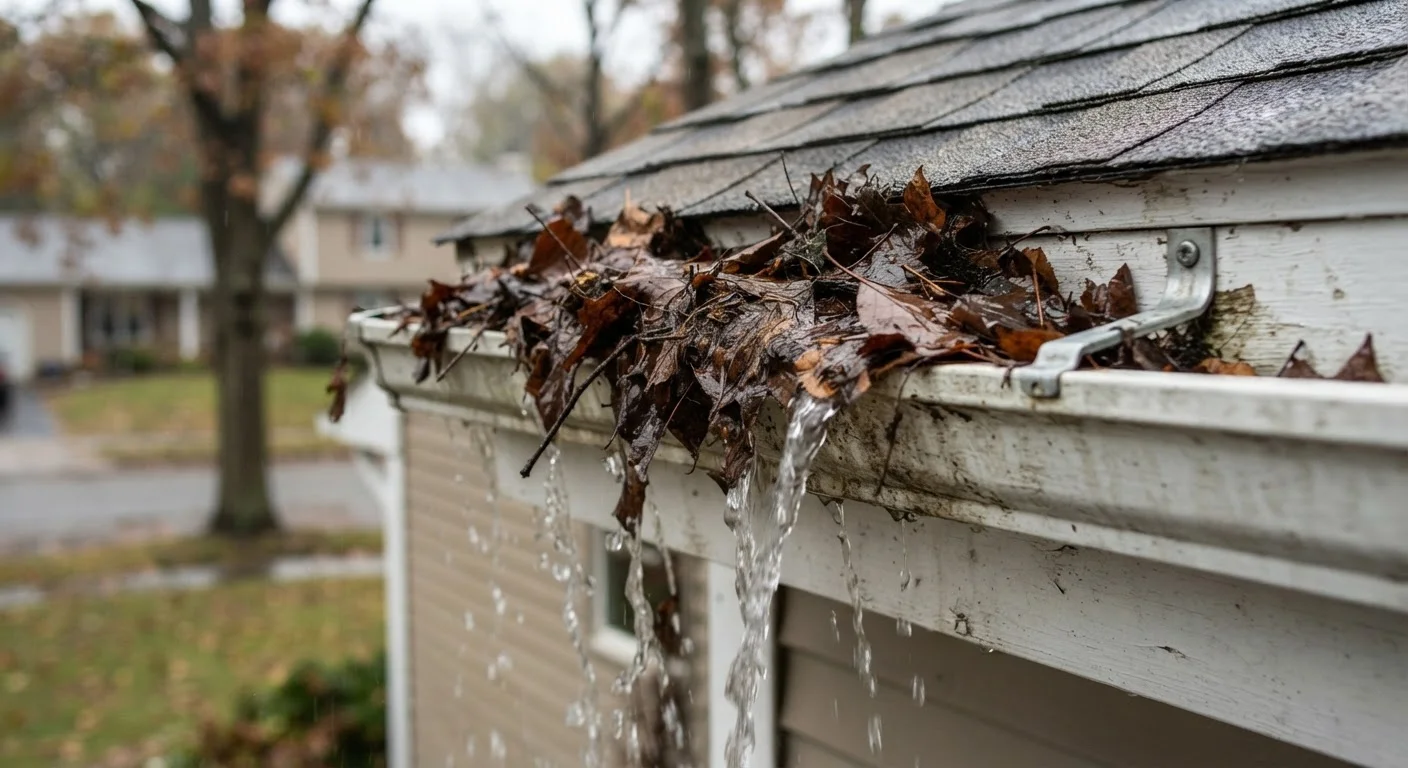
Gutters are easy to ignore. Tucked along the roofline, they do their job quietly-until they don't. When gutters clog, sag, or pull away from the fascia, rainwater has nowhere to go except down the side of your house and into the soil around your foundation. That path leads to basement leaks, siding rot, eroded landscaping, and in cold climates, destructive ice dams.
The good news is that most gutter problems are predictable and preventable. They rarely happen without warning. Understanding the mistakes that cause failure-and how to correct them-puts you in control of one of your home's most important drainage systems. For a broader view of seasonal upkeep tasks, see our season-by-season home maintenance guide.
The Most Common Gutter Mistakes-and How to Avoid Them
The errors below account for the vast majority of gutter-related water damage homeowners experience. Each one is correctable with basic tools and a little know-how.
Cleaning gutters only once a year, typically in spring.
Why it happens: Homeowners associate gutter cleaning with a single annual chore, often scheduling it in spring when they're already tackling yard work.
Neglecting downspout extensions, allowing water to discharge directly against the foundation.
Why it happens: Extensions can look awkward and sometimes get removed by landscapers or during lawn mowing. Many homeowners don't realize how critical they are.
Ignoring gutter slope, allowing water to pool in flat or reverse-pitched sections.
Why it happens: Gutters can shift over time as hangers loosen or fascia boards swell and contract with moisture. The problem isn't visible from the ground.
Using too few hangers, leaving long spans between supports.
Why it happens: During installation, hangers are sometimes spaced too far apart to save time or material. Over years, the gutter begins to sag between supports.
Failing to seal leaking joints and end caps.
Why it happens: Sectional gutters are prone to joint separation as sealant ages and degrades. Leaks at corners and end caps are easy to miss until water stains appear on the fascia.
Letting debris accumulate on the roof above the gutters.
Why it happens: Most maintenance focuses on the gutter channel itself, while leaves and needles piled on the roof just above the edge are overlooked.
Keeping Gutters Clear Year-Round: A Practical Routine
Maintenance doesn't have to be complicated. A simple, consistent routine will keep your system functioning through every season.
- Spring: Clear pollen, seed pods, and any debris left from winter. Check hangers and end caps for loosening caused by freeze-thaw cycles.
- Late fall: Clean after the majority of leaves have dropped-usually November in most U.S. regions. This is your most important cleaning of the year.
- After major storms: Walk the perimeter and look for sagging sections, separated joints, or downspouts that have shifted off their extensions.
- Annually: Run a garden hose through each section to confirm water flows toward downspouts without pooling.
Ladder Safety Is Non-Negotiable
Gutter cleaning is one of the leading causes of home-related fall injuries. Always use a four-legged stepladder on level ground rather than leaning a straight ladder against the gutter itself-gutters are not designed to bear that load. Never work alone, and never lean out past your body's center of gravity. If your roofline is above single-story height or access is limited, hire a professional.
Gutter guards and mesh screens can reduce cleaning frequency but rarely eliminate it entirely. Fine debris like shingle grit and pine needles often bypasses guards and accumulates at downspout openings. Inspect guarded systems at least once a year.
Exterior damage from failed gutters often shows up first on siding and trim. If you notice paint bubbling or wood softening near the roofline, review our guide to exterior paint and siding maintenance alongside your gutter inspection.
When to Call a Professional
Most cleaning and minor adjustments are within reach of a confident DIYer with a stable ladder, work gloves, and a garden hose. However, some situations warrant a licensed contractor:
- Gutters that are pulling away from the fascia board, which may signal rotting wood underneath
- Any repair that requires working near power lines or on a steep roof pitch
- Seamless gutter replacement or re-pitching of long sections requiring specialized tools
- Suspected foundation grading issues that re-direct water toward the house
Addressing gutter problems early keeps repair costs manageable. Left alone, water intrusion can compromise your home's structural integrity in ways that are far more expensive to fix-a principle that applies to home systems broadly, as our complete home maintenance overview explains in detail.
Water in the Wrong Place Causes Structural Damage
Chronically overflowing or misdirected gutters don't just cause cosmetic problems-they can saturate soil against your foundation, contributing to settling, cracking, and basement moisture intrusion. If you notice efflorescence (white mineral deposits) on basement walls, soft spots in wood framing near the roofline, or soil erosion directly below downspouts, have a qualified contractor evaluate the situation promptly. These are signs that water damage may already be underway.