

Key Takeaways
- Water is essential for digesting food and absorbing key nutrients effectively.
- Certain foods - like fruits and vegetables - contribute meaningfully to daily fluid intake.
- Dehydration can mimic hunger, making it harder to read your body's signals accurately.
- High-sodium and high-sugar diets increase your body's water needs.
- Consistent, modest hydration throughout the day supports better overall nutrition.
Hydration and Nutrition
Hydration refers to the amount of water your body maintains, while nutrition covers the foods and nutrients you consume. The two are deeply intertwined: water plays an active role in how your body digests food, absorbs vitamins and minerals, and moves nutrients to cells. Getting one right while neglecting the other can limit the full benefit of both.
Water acts as a solvent in digestion, dissolving water-soluble vitamins (B vitamins, vitamin C) and enabling enzymatic processes that break down macronutrients for absorption in the small intestine.
Why Water Is Part of Your Nutrition Picture
Most nutrition conversations focus on what's on your plate - protein, carbohydrates, fats, fiber. Water often gets treated as an afterthought, something you drink when you're thirsty. But hydration is woven into nearly every step your body takes to turn food into fuel.
Water helps break food down in the digestive tract, carries dissolved nutrients across the gut wall into the bloodstream, and flushes metabolic waste that builds up when the body processes what you eat. Without enough of it, digestion slows, nutrient transport becomes less efficient, and you may feel fatigued or foggy - sometimes before you even notice you're thirsty.
If you're working on building healthier eating habits, thinking about water as part of that foundation - not separate from it - is a practical shift worth making.
~60%
Proportion of adult body weight that is water
According to the U.S. Geological Survey and widely cited physiology references, water makes up roughly 60% of an adult's body weight, underlining its role in every biological function including digestion.
20%
Daily fluid intake supplied by food
The National Academies of Sciences, Engineering, and Medicine estimate that roughly 20% of daily water intake typically comes from food rather than beverages, with produce-rich diets on the higher end.
1-2%
Body water loss that impairs performance
Research consistently finds that a loss of as little as 1-2% of body water can reduce cognitive function and physical performance, suggesting that even mild dehydration has measurable effects.
How Hydration Affects Nutrient Absorption
Different nutrients rely on water in different ways. Water-soluble vitamins - including vitamin C and the B-vitamin family - dissolve in fluid before they can be absorbed and transported. Fat-soluble vitamins (A, D, E, and K) require dietary fat as their carrier, but even they depend on a well-hydrated digestive system to move efficiently.
Minerals like sodium, potassium, and magnesium are electrolytes, meaning they dissolve in water and help regulate fluid balance across cells. A diet rich in these nutrients needs adequate hydration to keep that balance functional. To learn more about how specific vitamins and minerals work, see our overview of micronutrients.
Fiber - found in whole grains, legumes, fruits, and vegetables - also depends on water. Soluble fiber absorbs water to form a gel that slows digestion and helps regulate blood sugar. Without sufficient fluid intake, a high-fiber diet can cause discomfort rather than the digestive benefit it's known for.
“Water is the most neglected nutrient in our diet, yet it is the most vital. The body can survive weeks without food but only days without water - and even mild deficits quietly erode how well everything else works.”
— F. Batmanghelidj, Physician and author on the physiology of water
Food as a Source of Water - and Water as a Shaper of Diet
The relationship flows both ways. Your diet affects how much water you need, and the foods you choose can contribute to how hydrated you are.
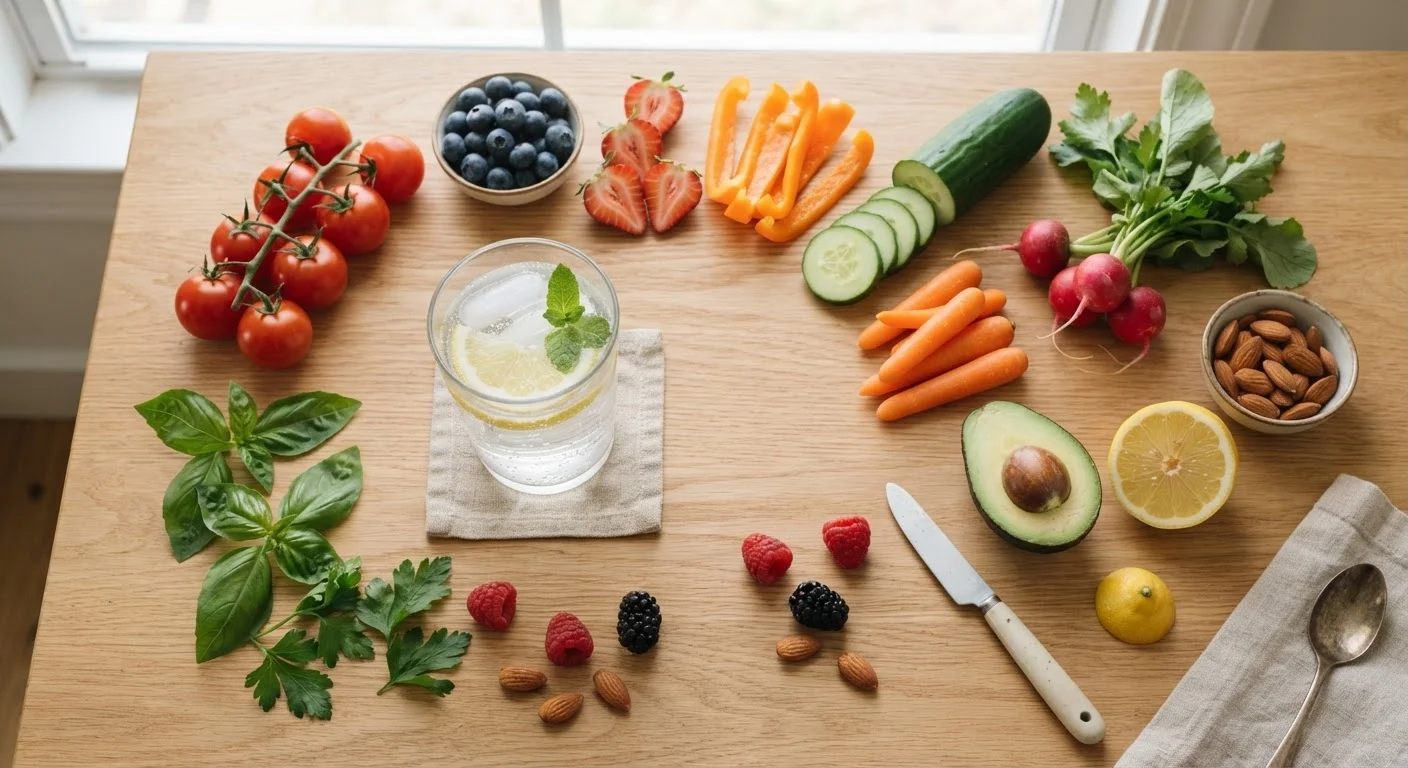
Produce like cucumbers, watermelon, oranges, and leafy greens are more than 90% water by weight. Soups, smoothies, and oatmeal also contribute meaningfully to daily fluid intake. A diet built around whole, minimally processed foods tends to deliver more hydration naturally than one heavy in dry, packaged products.
On the flip side, a high-sodium diet pulls water into the bloodstream to dilute excess salt - raising your hydration needs. High-protein diets increase the work your kidneys do to process nitrogen waste, which requires more water. And alcohol and caffeine, while they do provide some fluid, can have mild diuretic effects in larger amounts.
If you're noticing signs that your diet might not be fully balanced, it's worth exploring our article on recognizing nutritional gaps - dehydration can sometimes look like a nutrient deficiency.
Practical Ways to Align Hydration with Eating Well
You don't need to overhaul your routine to improve how hydration and nutrition work together. Small, consistent adjustments tend to be more sustainable than dramatic changes.
- Drink water before and during meals. This supports saliva production and digestive enzyme activity - both important first steps in breaking food down.
- Eat more water-rich foods. Prioritizing fruits, vegetables, and broth-based soups builds hydration into your meals naturally.
- Notice thirst versus hunger. Mild dehydration can feel like a food craving. Drinking a glass of water and waiting a few minutes before eating can help you read your body's signals more accurately.
- Pace your fluid intake. Sipping steadily throughout the day tends to support hydration better than drinking large amounts all at once.
For more day-to-day strategies, our guide to smarter eating habits includes practical hydration checkpoints you can weave into any week.
Hydration needs also shift across life stages - children, older adults, and pregnant individuals have distinct fluid requirements. See our article on nutrition across life stages for more on how those needs evolve.
A Simple Hydration Check Before Meals
Try drinking a small glass of water about 10-15 minutes before sitting down to eat. This gives your body time to assess whether it was thirsty rather than hungry, and it supports the early stages of digestion. It's a low-effort habit that can make a noticeable difference over time.
This article is for general informational purposes only and is not a substitute for personalized medical or dietary advice. Consult a qualified healthcare professional for guidance tailored to your individual health needs.