

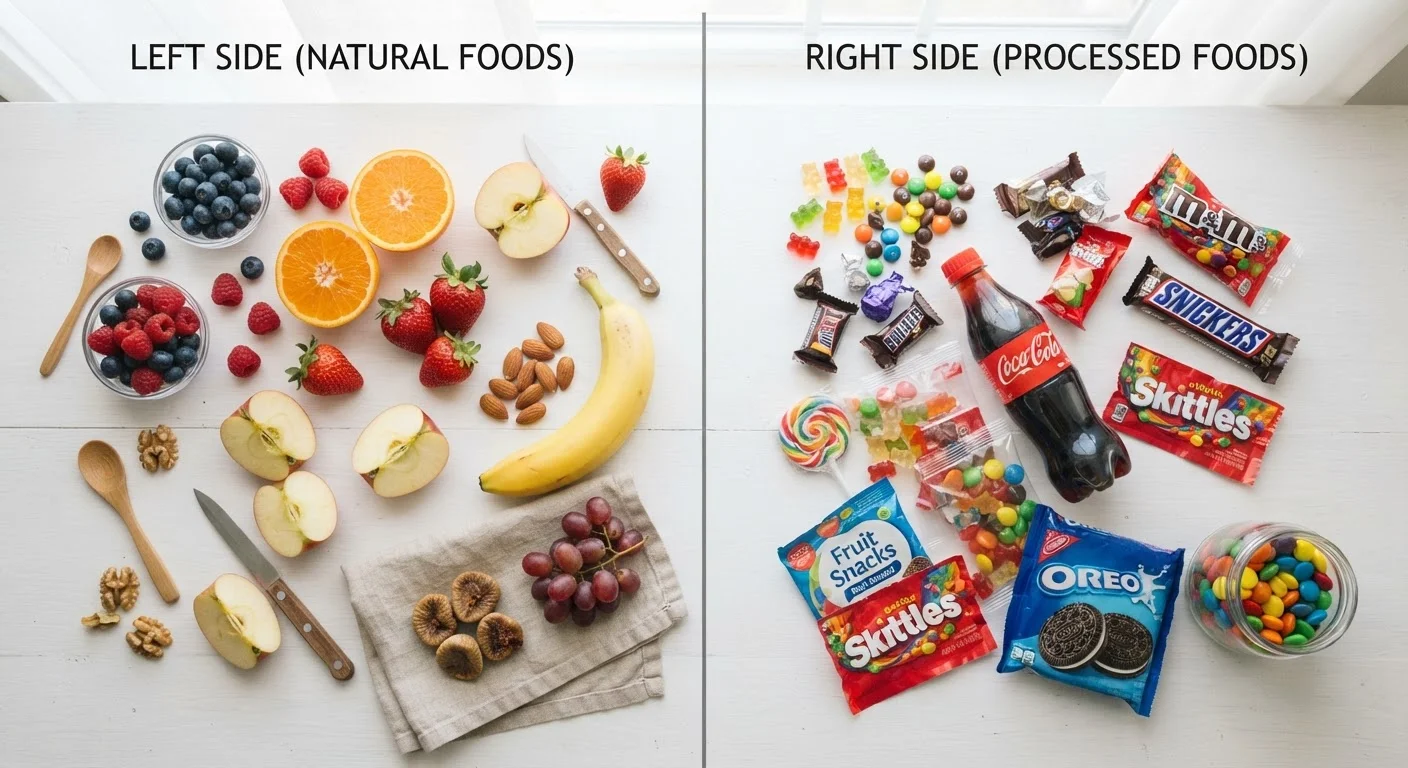
Key Takeaways
- Natural sugars come bundled with fiber, vitamins, and minerals that slow absorption and support health.
- Added sugars are incorporated during processing and provide calories with little to no nutritional benefit.
- Current U.S. dietary guidelines recommend limiting added sugars to less than 10% of daily calories.
- The body processes glucose and fructose similarly regardless of source, but food matrix context changes the overall effect.
- Reading nutrition labels can help you distinguish added sugars from naturally occurring ones.
- Whole fruits, vegetables, and dairy remain nutritious choices even though they contain natural sugars.
Option A
Natural Sugar
The sugar that comes packaged with nutrients.
Best for: People seeking sweetness alongside fiber, vitamins, and minerals from whole, minimally processed foods.
Option B
Added Sugar
The sugar added during processing or preparation.
Best for: Understanding what to limit - the form of sugar most consistently linked to health concerns in current dietary guidance.
If you're trying to cut back on sugar for general health
Limit Added Sugar
Current dietary guidelines point to added sugars - not naturally occurring ones - as the primary target for reduction. Whole fruits and dairy remain nutritionally valuable.
If you're managing blood sugar under medical guidance
Consult your healthcare provider
Both types of sugar affect blood glucose. A qualified healthcare professional can help you determine the right approach for your individual needs.
If you want to build practical, sustainable eating habits
Natural Sugar (in whole foods)
Choosing whole foods naturally lowers added sugar intake while delivering fiber and micronutrients - making the shift easier to sustain long term.
What Makes a Sugar 'Natural' or 'Added'?
The distinction between natural and added sugar isn't about the molecule itself - chemically, the sucrose in an apple and the sucrose stirred into a cookie dough are identical. What differs is context: where the sugar comes from, what surrounds it, and how your body encounters it.
Natural sugars are those found inherently in whole foods. Fructose in fruit, lactose in milk, and glucose in vegetables are all natural sugars. They arrive alongside fiber, water, protein, vitamins, and minerals - a nutritional package that shapes how quickly sugar enters the bloodstream.
Added sugars, by contrast, are incorporated during food manufacturing or home preparation. This includes white table sugar, high-fructose corn syrup, honey stirred into a beverage, and agave drizzled over yogurt. The U.S. Food and Drug Administration (FDA) requires added sugars to be listed separately on the Nutrition Facts label, making it easier than ever to identify them at a glance.
Just as the whole grains vs. refined grains distinction comes down to what's been stripped away during processing, the added-vs.-natural sugar divide is largely about what else remains in the food when sugar arrives.
How the Body Responds Differently
When you eat a whole orange, its fiber slows gastric emptying, moderating how quickly fructose reaches the liver and bloodstream. The result is a gentler rise in blood glucose. Drink an equivalent amount of fructose in a sweetened beverage - with no fiber present - and the curve is steeper and faster.
This food matrix effect is a key concept in nutrition science. Research published in journals such as Nutrients and The American Journal of Clinical Nutrition supports the idea that the surrounding nutrients in whole foods meaningfully influence metabolic response, even when total sugar content is similar.
| Criterion | Natural Sugar | Added Sugar |
|---|---|---|
| Source | Inherent in whole foods | Added during processing or prep |
| Common examples | Fructose in fruit, lactose in milk | Cane sugar, high-fructose corn syrup, honey in beverages |
| Accompanying nutrients | Fiber, vitamins, minerals, water | Typically none (calories only) |
| Blood sugar impact | Moderated by food matrix | Often faster, steeper absorption |
| Listed on nutrition label | Under Total Sugars | Separately as Added Sugars |
| U.S. dietary guidance | No specific limit for whole foods | Under 10% of daily calories recommended |
Repeated, high intake of added sugars has been associated in population studies with increased risk of weight gain, type 2 diabetes, cardiovascular disease, and dental cavities. Naturally occurring sugars in whole foods, at typical dietary amounts, are not linked to the same outcomes in healthy individuals. That said, anyone managing a specific health condition should speak with a qualified healthcare professional about their individual dietary needs.
Understanding this distinction also pairs well with looking at how different types of dietary fat affect health - because both fat and sugar are nutrients where type and source matter far more than simply avoiding them entirely.
Reading Labels and Making Practical Shifts
The 2020-2025 Dietary Guidelines for Americans recommend keeping added sugars below 10% of total daily calories. For a 2,000-calorie diet, that works out to about 50 grams - roughly the amount in a single large flavored latte or a medium soft drink.
10%
Daily calorie limit for added sugars
Per the 2020-2025 Dietary Guidelines for Americans, added sugars should account for less than 10% of total daily calories.
~17 tsp
Average daily added sugar intake in the U.S.
NHANES dietary surveillance data suggests Americans consume, on average, well above the recommended limit for added sugars each day.
39 g
Added sugar in a typical 12 oz. cola
A standard 12-ounce can of cola contains roughly 39 grams of added sugar, approaching the daily recommended ceiling in a single serving.
Spotting added sugars on a label is more straightforward now that FDA regulations require a dedicated "Includes X g Added Sugars" line under Total Sugars. Common names to watch for in ingredient lists include: corn syrup, dextrose, maltose, evaporated cane juice, and fruit juice concentrate.
Practical shifts that don't require calorie-counting:
- Choose whole fruit over juice. Even 100% fruit juice removes most fiber while concentrating sugar.
- Flavor plain yogurt yourself. Vanilla or fruit-flavored yogurts often contain several teaspoons of added sugar per serving.
- Rethink beverages. Sweetened drinks are the largest single source of added sugars in the American diet, according to federal dietary surveillance data.
- Cook at home more often. Restaurant and packaged foods frequently add sugar where you'd least expect it - breads, sauces, and dressings.
This article is for general informational and educational purposes only and is not a substitute for professional medical or dietary advice. Please consult a qualified healthcare provider before making significant changes to your diet, especially if you have a health condition.