

Key Takeaways
- Car batteries typically last 3-5 years before performance begins to decline.
- Extreme cold and heat both accelerate battery degradation.
- Short trips prevent the alternator from fully recharging the battery.
- Parasitic drain - from accessories left on - is a common hidden culprit.
- Regular voltage checks can catch a failing battery before it leaves you stranded.
- Keeping terminals clean and secure is one of the simplest ways to extend battery life.
Car Battery
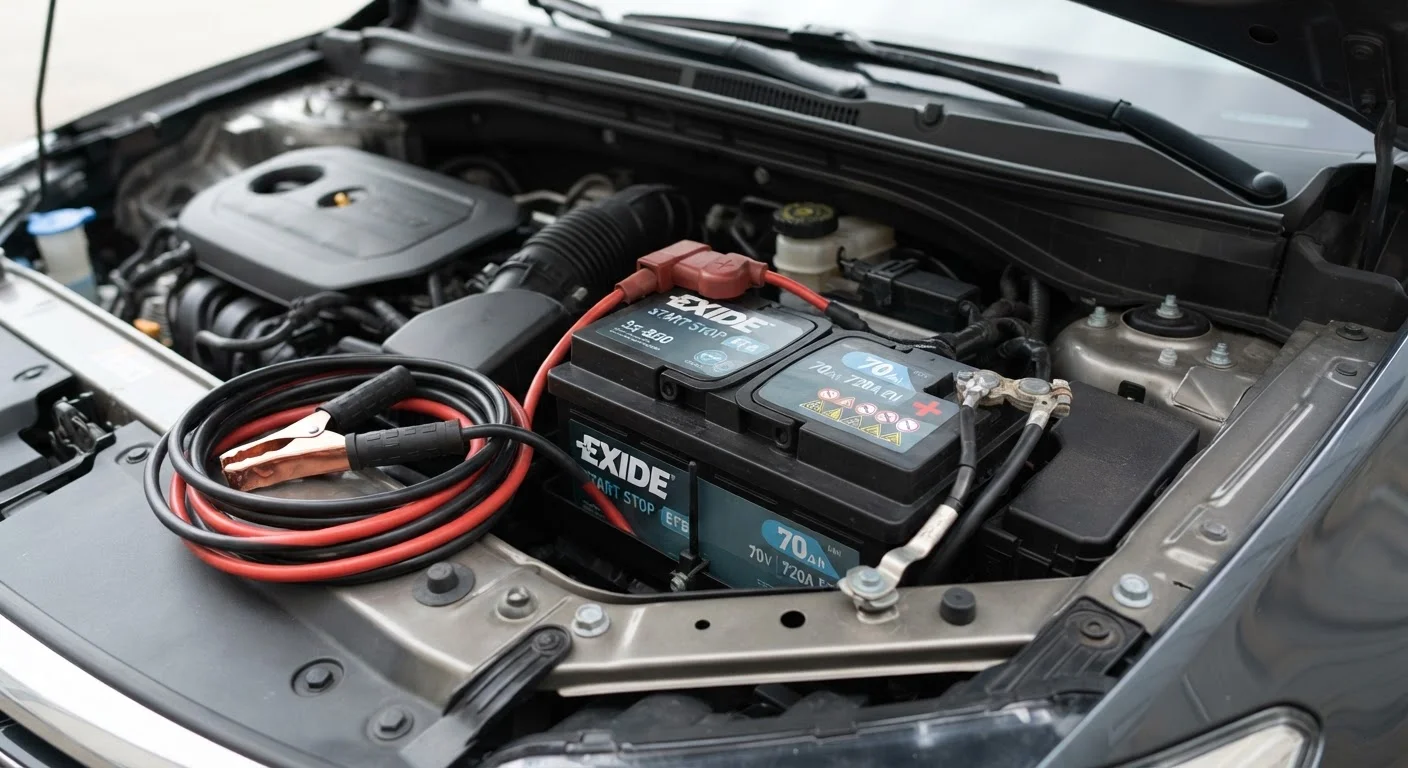
A car battery is a rechargeable energy storage unit that provides the electrical current needed to start your engine and powers accessories when the vehicle isn't running. Unlike your phone battery, it's designed to deliver a large burst of power quickly rather than sustain a slow, steady discharge over hours. Once the engine starts, the alternator takes over and recharges the battery while you drive.
Most passenger vehicles use a 12-volt lead-acid battery rated in cold cranking amps (CCA) - a measure of how much current it can deliver at 0°F for 30 seconds without dropping below a minimum voltage.
What Actually Causes a Battery to Die
Car batteries don't fail at random - they follow predictable patterns. The most common cause of complete failure is simply age. As a lead-acid battery cycles through thousands of charge and discharge cycles, its internal plates gradually degrade and its capacity shrinks. By the time most batteries hit the 4- to 5-year mark, they may still start the car on a warm morning but fail entirely on a cold one.
Temperature is the other major factor. Heat accelerates the chemical degradation inside the battery - summers in warm climates are particularly hard on battery internals. Cold weather, meanwhile, reduces the battery's ability to deliver current just when the engine needs the most help to start. It's why battery failures cluster in winter months.
Short-trip driving is a less obvious but significant contributor. Each engine start draws a heavy current from the battery; the alternator recharges it during normal driving. But if your daily routine involves only a few minutes of driving at a time, the alternator may never fully restore what each startup consumed. Over weeks, the battery loses ground.
3-5 years
Typical car battery lifespan
Industry consensus from automotive maintenance organizations places average lead-acid battery life in this range under normal use.
~50%
Capacity loss at 32°F vs. 80°F
Battery Council International data indicates cold temperatures can reduce effective battery capacity by roughly half compared to moderate conditions.
1 in 4
Vehicles with underperforming batteries
AAA battery testing programs have historically found that a significant share of tested vehicles carry batteries operating below acceptable load thresholds.
Finally, parasitic drain - any electrical draw occurring when the vehicle is off - can quietly kill a battery. A dome light left on, a faulty relay, or an aftermarket audio system that doesn't fully power down can pull enough current overnight to leave you with a dead battery by morning.
Warning Signs to Watch For
Batteries rarely fail without giving some notice. The challenge is recognizing the signals before they escalate. Slow engine cranking - that sluggish, labored sound when you turn the key - is often the first sign that a battery is struggling to deliver adequate power. If you hear it once on a cold morning, don't dismiss it.
Electrical irregularities are another indicator. Dimming headlights at idle, a dashboard warning light shaped like a battery, or accessories behaving erratically can all point to a charging system problem - whether that's the battery itself or the alternator. A simple voltage test (available free at most auto parts stores) can distinguish between the two.
Corrosion around the battery terminals - a white or bluish powdery buildup - doesn't cause failure directly, but it increases electrical resistance and reduces the efficiency of every charge and discharge. A terminal that looks corroded should be cleaned promptly. See our guide to catching small problems early for a broader look at warning signs drivers commonly overlook.
Test Your Battery Before Winter
Most auto parts retailers offer free battery testing with a digital load tester. This checks not just current voltage but how the battery performs under the electrical demand of starting - the condition that actually matters. Testing in fall, before cold weather hits, gives you time to replace a borderline battery on your schedule rather than a tow truck's.
Practical Steps to Extend Battery Life
You can't stop a battery from aging, but several habits meaningfully slow the process. The most impactful: drive regularly and for long enough to allow a full recharge. If your vehicle sits for extended periods, a battery maintainer (sometimes called a trickle charger) keeps the charge stable without overcharging.
Keep the terminals clean and firmly connected. Loose or corroded connections reduce charging efficiency and can cause intermittent starting problems that are hard to diagnose. A simple cleaning with a wire brush and a baking soda solution removes corrosion without damage - though if you're not comfortable working around a battery, a shop can handle it quickly.
Minimize electrical load when the engine is off. Sitting in a parked car with the radio running, phone charging, and climate fans on draws from the battery without the alternator running to compensate. It's a habit that adds up over time.
Finally, take advantage of seasonal checkups. Battery performance degrades faster in temperature extremes, making spring and fall ideal times for a quick voltage and load test. Our seasonal vehicle prep guide covers this and other condition-based checks worth building into your routine. For a broader look at how maintenance needs evolve over a vehicle's lifetime, see our comprehensive roadworthy guide.