

Key Takeaways
- Insurers must provide a written explanation for every claim denial, citing specific policy language.
- You have a formal right to appeal a denial through your insurer's internal review process.
- State insurance departments offer free complaint and mediation services to policyholders.
- Keeping thorough documentation - photos, police reports, correspondence - strengthens any appeal.
- An independent appraiser or public adjuster can provide an objective second opinion on damage.
- Legal remedies, including bad faith claims, are available when insurers act unreasonably.
What you will need
Why Claims Get Denied - and What the Denial Must Include
Receiving a claim denial can feel like a dead end, but it is rarely the final word. Insurers deny claims for a range of legitimate reasons - an exclusion in your policy, a lapse in coverage, a missed reporting deadline, or a dispute over who was at fault. They also sometimes make errors. Understanding the difference matters, because your response strategy depends on the reason cited.
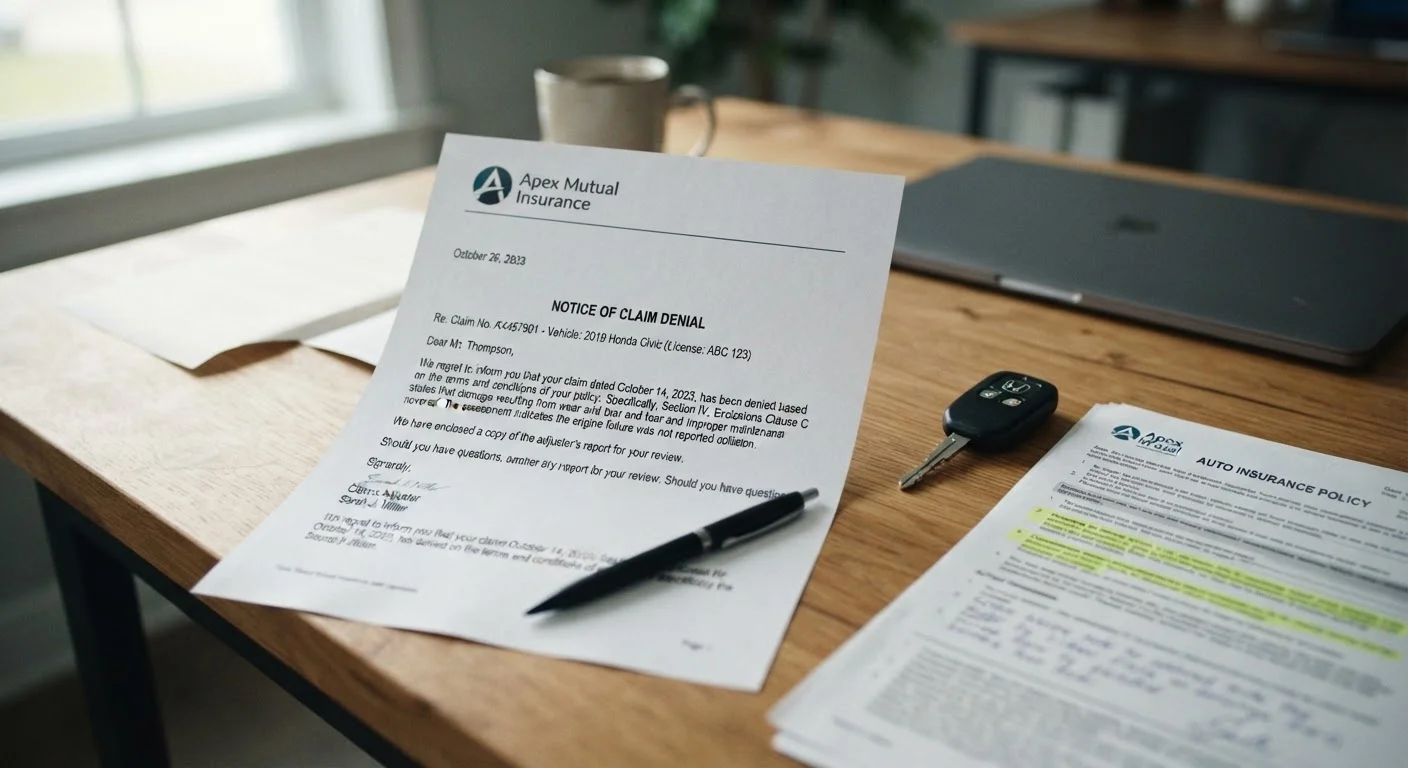
Under insurance regulations in every U.S. state, an insurer must send you a written denial notice that clearly states the specific grounds for the decision. This notice should reference the exact policy provision, exclusion, or condition being applied. If the denial letter is vague or simply says the claim is "not covered" without citing language from your policy, that itself may be a procedural violation you can raise with your state regulator.
Before you do anything else, pull out your actual policy document. If you need help interpreting what you're reading, our guide on reading your auto insurance policy explains how a policy is structured and where the critical details live. Match the denial reason against the language in your declarations page, exclusions section, and any endorsements. Coverage disputes often come down to definitions buried in that text.
Watch Out for Policy Deadlines
Auto insurance policies typically contain strict deadlines for reporting claims, submitting appeals, and initiating legal action - sometimes as short as one or two years from the date of the incident. Missing these windows can permanently bar you from recovering payment, regardless of the merits of your claim. Review your policy's conditions section and your denial letter carefully for any dates mentioned, and act promptly.
What You Need Before You Appeal
A strong appeal is a documented appeal. Gather everything relevant before you contact your insurer or any outside authority.
What you will need
Written Denial Notice
Identifies the specific policy provision the insurer is relying on - the foundation of any appeal.
Full Insurance Policy Document
Allows you to verify whether the cited exclusion or condition actually applies to your situation.
Photographic Evidence
Visual documentation of vehicle damage supports your account of the incident and its severity.
Police or Incident Report
Official record of the accident or event that corroborates key facts like date, location, and involved parties.
Independent Repair Estimate
Provides an objective cost assessment that can counter the insurer's valuation if disputed.
Public Adjuster
A licensed professional who can evaluate your claim independently and advocate on your behalf during disputes.
Step-by-Step: How to Challenge a Denied Claim
Follow these steps in order. Each one builds on the last, and skipping ahead - for instance, filing a state complaint before exhausting the internal appeal - may slow the overall process.
Request the Full Claim File
Contact your insurer in writing and ask for a complete copy of your claim file. Most states give policyholders the right to access all materials the insurer used to reach its decision - adjuster notes, inspection reports, photographs, and internal communications. Reviewing this file often reveals factual errors or overlooked evidence you can address directly in your appeal.
Submit a Formal Written Appeal to Your Insurer
Every insurer is required to maintain an internal appeals or dispute resolution process. Write a concise appeal letter that identifies the specific denial reason, quotes the relevant policy language you believe supports coverage, and attaches all supporting documentation - repair estimates, photos, the police report, medical records, and any expert opinions. Be factual and specific; avoid emotional language.
Get an Independent Damage Assessment
If the denial hinges on a dispute about the extent or cause of damage - for example, the insurer argues pre-existing wear rather than collision damage - you can hire a licensed public adjuster or independent appraiser to evaluate the vehicle independently. Their written report can serve as counter-evidence in your appeal. Many auto policies also include an appraisal clause that allows each side to appoint an appraiser, with a neutral umpire breaking any tie.
File a Complaint With Your State Insurance Department
If the internal appeal fails or the insurer does not respond within the required timeframe, file a formal complaint with your state's insurance regulatory authority. Submit your documentation, the denial letter, and a clear timeline of your communications. The regulator will contact the insurer and require a formal response, which sometimes prompts a reconsideration.
Consider Mediation or Legal Action
Some states offer free or low-cost mediation programs specifically for auto insurance disputes. Mediation is non-binding in most cases but can resolve disagreements faster than litigation. If mediation fails or is unavailable, and you believe the insurer has acted in bad faith or breached the contract, consult an attorney who specializes in insurance law. Many work on a contingency basis for bad-faith cases, meaning no upfront legal fees.
Document Everything From Day One
The strongest appeals are built on thorough records. From the moment you file a claim, keep dated notes of every conversation, save all emails, and photograph any damage before repairs begin. Gaps in documentation are one of the most common reasons appeals stall. If your policy language is unclear to you, our plain-language auto insurance guide can help you get oriented before you engage your insurer.
When to Escalate Beyond Your Insurer
If the internal appeal does not resolve the dispute, you have two primary escalation paths: your state insurance department and the civil courts.
State insurance department complaint: Every state has an insurance commissioner or equivalent regulator whose office accepts consumer complaints at no cost. Filing a complaint does not guarantee a specific outcome, but regulators can require the insurer to justify its position in writing, and a pattern of unjustified denials can draw regulatory scrutiny. Look up your state's department on the National Association of Insurance Commissioners (NAIC) website for direct contact information.
Bad faith claims: Insurance law in most states holds that insurers have a duty to deal with policyholders fairly and in good faith. If an insurer denies a claim without a reasonable basis, delays payment unreasonably, or fails to properly investigate, it may be acting in bad faith - a legal theory that can entitle you to damages beyond the original claim amount. This area of law is complex and varies by state; consult a licensed attorney who handles insurance disputes before pursuing this route.
It also helps to ensure your coverage is correctly structured going forward. Understanding what your policy actually covers - and what it does not - reduces the chance of future surprises. Our overview of common auto insurance coverage myths outlines the gaps drivers most frequently overlook.
This article provides general information about insurance rights and processes. It is not legal or insurance advice tailored to your situation. Policy terms, state regulations, and individual circumstances vary. Consult a licensed insurance professional or attorney for guidance specific to your case.