

Key Takeaways
- Collision coverage pays for damage to your vehicle when it hits or is hit by another object.
- Comprehensive coverage handles damage from events like theft, weather, fire, and animal strikes.
- Neither coverage is required by law, but lenders often require both on financed or leased vehicles.
- Both coverages come with a deductible - the amount you pay out of pocket before insurance kicks in.
- Whether you need one, both, or neither depends on your vehicle's value and your financial situation.
Option A
Collision Coverage
Protection for impacts your vehicle is involved in.
Best for: Drivers who want their own vehicle repaired or replaced after an accident, regardless of who was at fault.
Option B
Comprehensive Coverage
Protection for damage caused by events outside your control.
Best for: Drivers who want protection from theft, weather, animals, and other non-collision risks.
If you drive a newer or financed vehicle
Both Collision and Comprehensive Coverage
Lenders typically require both, and the vehicle's value makes the premiums worth considering to protect your investment.
If you're worried about accidents you cause or that occur in parking lots
Collision Coverage
Collision coverage applies regardless of fault, making it relevant for everyday driving incidents beyond just major crashes.
If you live in an area prone to hail, flooding, or vehicle theft
Comprehensive Coverage
Natural events and theft are specifically covered under comprehensive, and regional risk can make this coverage especially practical.
If your vehicle is older and has low market value
Neither may be cost-effective
When a vehicle's value is low, the premiums plus deductible can exceed what an insurer would pay out - worth calculating carefully.
What Each Coverage Type Actually Does
Auto insurance policies can feel like a maze of overlapping terms, but collision and comprehensive coverage have a clear dividing line: what caused the damage. Understanding that distinction is the foundation for knowing what you're actually paying for.
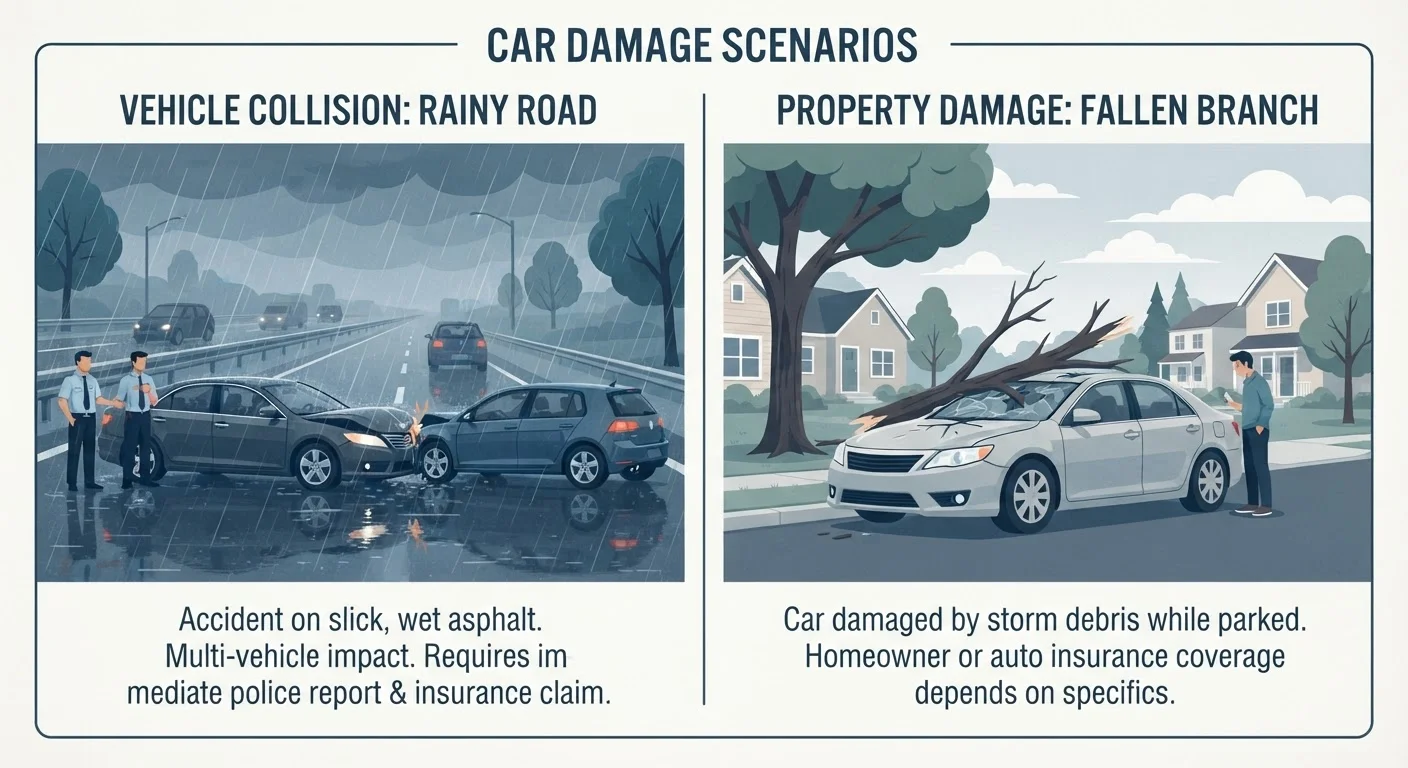
Collision coverage pays to repair or replace your vehicle when it sustains damage from a collision - whether that's hitting another car, striking a guardrail, or rolling over. Importantly, it applies regardless of who was at fault. If you rear-end another driver or someone backs into your parked car, collision is generally the coverage that addresses your vehicle's damage.
Comprehensive coverage steps in for damage caused by events that aren't collisions. Think: a tree branch falls on your roof during a storm, your car is stolen, a deer runs into your door, or hail dents your hood. These are situations beyond the typical driving encounter. Comprehensive also typically covers fire damage, flooding, and vandalism.
For a broader look at how these fit into your overall policy, see our plain-language guide to auto insurance.
| Criterion | Collision Coverage | Comprehensive Coverage |
|---|---|---|
| What triggers a claim | Impact with another vehicle or object | Theft, weather, animals, fire, vandalism |
| Fault requirement | Not required - covers regardless of fault | Not applicable - non-collision events |
| Deductible applies | Yes | Yes |
| Legally required | No (lenders may require it) | No (lenders may require it) |
| Covers theft | No | Yes |
| Covers weather damage | No | Yes |
| Covers hitting an animal | Generally no | Yes |
| Covers a single-car rollover | Yes | No |
Deductibles, Premiums, and How Claims Work
Both collision and comprehensive coverage come with a deductible - the amount you agree to pay out of pocket before your insurer covers the rest. Common deductible amounts range from $250 to $1,500, though this varies by policy. A higher deductible generally means a lower monthly premium, and vice versa.
When you file a claim, your insurer will assess the damage and determine a repair cost or, if the vehicle is totaled (meaning repair costs exceed the vehicle's actual cash value), issue a payout based on the car's pre-damage market value - not what you originally paid for it.
~$290/yr
Average annual comprehensive premium (U.S.)
According to the National Association of Insurance Commissioners (NAIC), average comprehensive premiums have generally been lower than collision premiums in recent years.
~$490/yr
Average annual collision premium (U.S.)
NAIC data consistently shows collision as the more expensive of the two optional coverages, reflecting the higher frequency of collision claims.
1 in 8
Drivers estimated to be uninsured
The Insurance Research Council has estimated that roughly one in eight U.S. drivers lacks insurance, underscoring why your own vehicle coverage matters.
One key practical note: comprehensive claims generally don't affect your premiums as significantly as collision claims do, since they involve events outside your control. That said, claim history and insurer practices vary, so review your policy terms or speak with a licensed agent about how a specific claim might affect your rate.
Drivers often misunderstand what triggers each type of claim. Our article on common auto insurance coverage myths covers several of these misconceptions in detail.
When You're Required to Have Them - and When to Consider Dropping Them
No U.S. state requires collision or comprehensive coverage as part of its mandatory minimums. However, if you're financing or leasing a vehicle, your lender will almost certainly require both. This protects their financial interest in the vehicle. Once a loan is paid off, that requirement typically disappears - leaving the decision to you.
The key calculation is straightforward: compare your annual premium cost plus your deductible against what the insurer would likely pay out if the vehicle were totaled. If those costs approach or exceed your car's actual cash value, the coverage may offer limited financial benefit. This is a general framework - your own situation, risk tolerance, and local conditions all factor in.
For more on how coverage tiers work together, our comparison of full coverage vs. minimum coverage explains what those labels actually include and when each makes sense.
This article is for general informational purposes only and does not constitute personalized insurance or financial advice. Coverage terms, premiums, and requirements vary by state, insurer, and individual policy. Consult a licensed insurance agent or adviser for guidance specific to your situation.